Playing With Numbers on a Hundreds Chart

A hundreds chart is an excellent math tool for children.  It provides a tangible framework for a child to begin to understand the structure of our number system.   Working with a hundreds chart introduces a child to basic concepts such as counting to 10 and more complex ideas like relationships between numbers in a base 10 system.
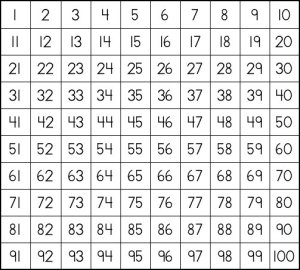
 

An online interactive hundreds chart can make ‘math play’ fun.  You can add color to a chart, erase numbers to better see patterns, adjust the numbers shown and more.   Here’s a great online interactive hundreds chart that will do just that.  You can add color, use the built-in calculator,  block out numbers and more on this HUNDREDS GRID


One of the best ways to learn with a hundreds chart is to just fiddle around with it.   A child can learn so much from simply taking time to interact with the numbers in columns, rows and even diagonally.  Look for patterns while adding or subtracting, practice skip-counting, look for groupings of numbers, etc.

A visual  math learner will enjoy seeing the numbers and patterns made by using the colors and adjustment features on the math chart.  A reluctant math learner may find enjoyment in the play aspect of the interactive chart.  Give it a try!
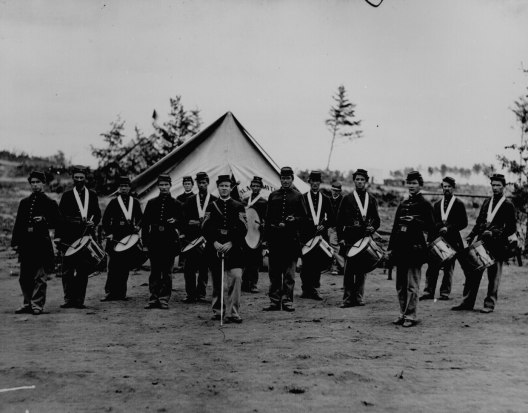
The Civil War Trust – A US History Resource

Between middle school and high school,  many homeschoolers cover  US history twice and US Government once.   That means a need for wide variety of Civil War resources.  Fortunately, the Civil War Trust website has it all.  Click on the Education link and you will discover primary source documents, animated maps, photographs, videos, quizzes- more than enough material for either a survey of the Civil War period or an in-depth study.  The teacher lesson plans are categorized by grade level from elementary to high school.  There are even gifted and talented level lesson plans for the student that needs a challenge.  The printable and downloadable lesson plans are organized by themes and include links to worksheets and media supplements.

If you prefer to use only non-fiction materials in your history studies, you will find everything you need on this site.  Your Civil War study can focus on reading and analyzing primary sources with a wealth of newspaper opinion pieces, letters, speeches and other historic  documents available.  If you happen to own a pair of 3-D glasses, you will find the stereoview photographs- the 19th century version of 3-D photography to be especially intriguing.

The Civil War Trust is more than just an amazing history resource.  The Trust also has a goal of reclaiming and preserving important Civil War sites throughout America.  So far, they have saved more than 40,000 acres. Impressive.  This is a must-bookmark website.


Beyond Your Four Walls: Ideas to Expand Learning Opportunities for your Children

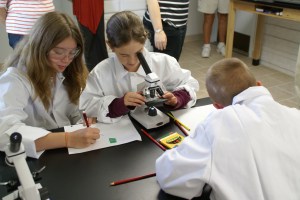
Looking to move beyond worksheets at your kitchen table? Perhaps there is no homeschool co-op in your area or the co-op does not meet your needs. On the hunt for interesting and different learning opportunities for your children but can’t think of anything? Here are a few ideas to get your creative juices flowing. Use this list to help you search for what is available in your local area.

Zoos/Animal Preserves
-Zoology classes/tours
-Day/Summer camps
-Volunteer opportunities/Internships

Cultural Associations
-Language/culture classes
– Cooking lessons/demonstrations

Sewing/Crafting classes
– Sewing /quilting stores
– Craft stores

Orchestras/Symphonies/Music Associations
-Music lessons
-Mentoring
-Job Shadowing/Internships

Construction
-Building supply stores
-Building trade association internships/shadowing

Jr. Master Gardener classes
-Community gardens
-Botany classes
-Beekeeping classes
-Wild edible plant classes

Jr. Master Naturalist classes
-Nature preservation projects
-Hiking clubs

National or State Parks/ Nature Preserves
-Outdoor skills
-Lecture series
-Canoeing/Boating tours/courses
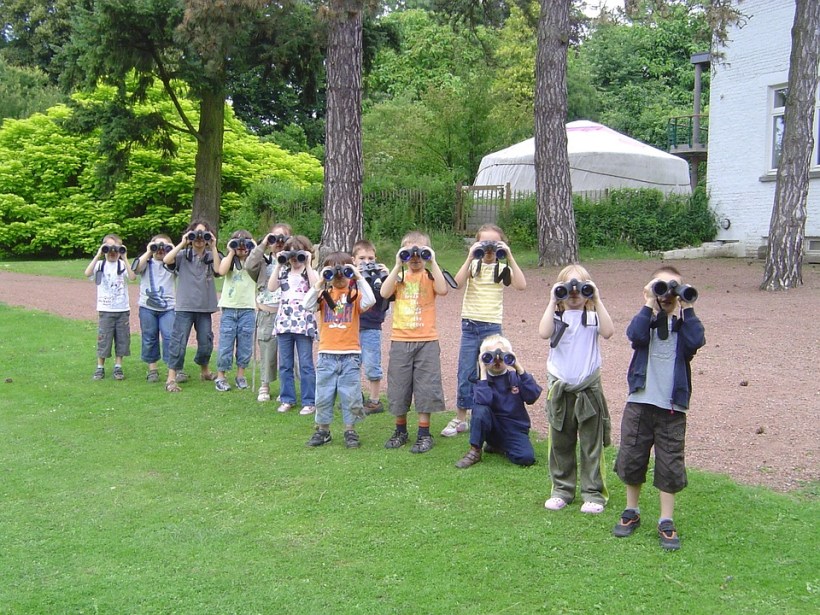
-Bird watching trips
-Jr. Ranger program

4-H Club
-Everything from sewing to livestock showing to Lego robotics

Interest Club Activities
-Astronomy club sky watching outings
-Science shows/demonstrations
-Kite flying outings
-Photography groups
-Blacksmithing lessons
-Engineering clubs
-Running/5K clubs

Living History
-Reenactment groups
-Living history days at museums/historic sites

Science or Art Museums
-Day camps
-Internships
-STEM classes
-Maker spaces

Local Libraries
-Craft days
-Book/Author talks
-Volunteer opportunities

Local Trade Associations
-Job Shadowing
-Internships

Community/Jr. Colleges
-Dual enrollment
-Certificate courses
-Summer day camps
-Exercise classes/Open Swim
-Language classes
-Cooking classes
-Music or Art classes

Hospitals/Medical Centers
-Volunteer opportunities
-Job Shadowing
-Internships
-Training courses

Tell the World – The Full Film

“Tell the World” shares the compelling story of a small group of farmers from the northeast region of the United States who would go on to set the foundation of the Seventh-day Adventist Church. Since the 19th century, the Church has been at the forefront of matters relating to health, education, communication and Biblical interpretation. 

You can learn more about the film at Tell the World

The 154 minute film can be viewed for free on You Tube.

Free Online Math Manipulative Apps

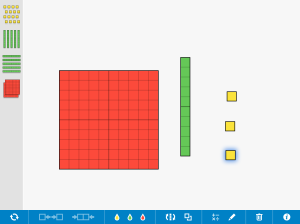
Manipulatives make math more accessible for children, especially for hands-on and visual learners.   Often an abstract concept becomes more concrete for a child when they have the opportunity to build their number sense with tangible items.

base-10-blocks

These free math manipulative apps from The Math Learning Center are handy tools for a variety of math applications.  Ten different apps are available, from pattern shapes, to an interactive number line , ten frames and more. The apps are not only available for Apple/Windows and Chrome, they are also available as web apps for those not using a tablet or smartphone.  You can find the manipulatives HERE.

Free Adventist History Resources

Free resources for those families who would like to incorporate Adventist history into their homeschool studies.

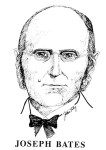
JosephBatesTN


Adventist Pioneers Coloring Pages courtesy of  Adventist Heritage Ministry.  

Audio stream of over 100 Adventist pioneer stories courtesy of the University Park SDA church in Oregon.

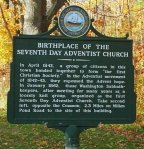
ld road sign1


                            Lest We Forget : A 5 part printable unit study for upper elementary- jr. high aged students.

Our Adventist Heritage is another set of free printable resources and project ideas looking at                               the lives of early Adventist church pioneers.

450px-Family,_Origins_and_Heritage_Master_Award

There are several Pathfinder awards dealing with Adventist Church history.  Combine them with other doctrinal & Bible awards to earn the Master award for that category.


Don’t forget the Adventist Church’s official Office of Archives, Statistics and Research website– chock-full of photographs,
online archives and more.  An excellent resource for a high school level research project.


Reading Aloud is for All Ages!

Becoming a Nation of Readers (Anderson, Hiebert, Scott and Wilkinson, 1985) presented among its findings that “the single most important activity for building the knowledge required for eventual success in reading is reading aloud to children.” This landmark  Commission on Reading report also indicated reading aloud in the home is an essential contributor to reading success, and that reading aloud… is “a practice that should continue throughout the grades.”

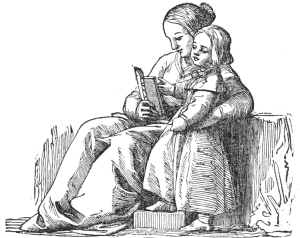
What powerful motivation to include reading aloud as part of a homeschooling schedule!  Most families however, see read-aloud time asMother_reading_to_child_1850 an activity for younger children only.  But as the report states, the practice should continue because the benefits of reading aloud don’t diminish as children grow older.

Pre-Readers

For the very young child, being read aloud to sends a multitude of important messages. The time spent with the reading parent is a vitally important bonding time. The young child gets the message that the act of reading is important, fun and desirable. Even though the child may not begin to read himself for several years, the underlying knowledge needed for reading success is being developed.


Emerging/Growing Readers

As a child enters his emerging reader years, the act of being read to still maintains a place of importance. Motivation becomes key factor in reading success, and being read aloud to keeps that motivation alive. It shows that reading is important and is a skill valued by the family. While the emerging reader listens, he takes note of the sounds of words, how punctuation is used, and begins to develop a personal vocabulary. As the books read aloud become longer, and the words become more difficult, a growing reader is able to gain access to new material with support.

Older Readers

One might think that reading to an older child is not a valuable exercise, but that is far from the truth.  It is one of the best ways to promote independent reading in older readers.  Because most children listen at a higher level than they read, reading aloud is an opportunity to present material they may have difficulty accessing on their own.   Reading aloud may motivate a reluctant reader to try material previously thought too difficult. Reading aloud to older readers also stimulates fluency and vocabulary growth. In addition, taking the time to discuss the reading material is excellent preparation for higher level critical thinking and writing.

Save