Your Child’s First Textbook

Come, ye children, hearken unto me: I will teach you the fear of the LORD.” Ps. 34:11

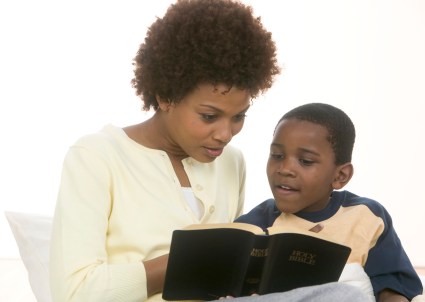
The very first textbook to be used for the education of our children is the Bible. Day by day, we are to use the Bible to lead our children to Christ. We are to begin with short lessons, simplified so as to be easily understood. “In these simple stories may be made plain the great principles of the law of God.” Education, 185. Our goal is to direct to our children the commandments of God as standard for living, to teach them to use the Bible as a guide for life. As we use the Bible to introduce our children to God, they will be introduced to His character and their characters will be influenced as a result.

How should we teach our children? The pen of inspiration gives us guidance in creative ways to teach Bible lessons to our children. “ The use of object lessons, blackboards, maps, and pictures, will be an aid in explaining these lessons, and fixing them in the memory. Parents and teachers should constantly seek for improved methods. The teaching of the Bible should have our freshest thought, our best methods, and our most earnest effort.” Education, 186.

Let us renew our energies to consistently present to our children the most important lessons they will ever learn.

Beginning Your Homeschool Journey

There are a variety of reasons that parents choose to home educate their children.  Perhaps you have family or friends who homeschool and you’ve decided to give it a try.  Some families are dissatisfied with the quality of education or the moral influences in the school their children are currently attending.  Maybe you just can’t squeeze enough money from your already tight budget to afford church school, and you don’t consider public school an option. The list could go on and on.  As Seventh-day Adventist Christians I believe that homeschooling gives us, as parents, the best opportunity to raise our children for the glory of God and lead them to a personal relationship with Jesus Christ as their Savior and friend.

  • Before you get bogged down with the mechanics of homeschooling – methods, books, plans and schedules – take the time to earnestly seek the Lord in prayer and the study of his Word. Take all of your hopes, expectations, doubts, and misgivings about home education to Him. Seek His direction and wisdom.
  • Research and study homeschooling. *Here are a few essential reads recommended by AHE-List members: Education by Ellen G. White.   Anything by Dr. Raymond Moore, but especially Home Grown Kids, Home-Spun Schools, Home Style Teaching and The Successful Homeschool Family Handbook. The Adventist Home Educator Handbook and Homeschooling with a Meek and Quiet Spirit by Teri Maxwell.
  • Get connected with your state’s homeschooling organization and become familiar with your local homeschooling laws so you will know what is required.
  • Talk to other homeschoolers, but try to remember that each family is different and will homeschool in a way that works for their own family’s situation. Don’t try to imitate, but instead be prepared to see a variety of homeschooling styles.
  • Establish your own Philosophy of Education. Write down the reasons you want to home school and save this document for future reference.  It will be a tremendous benefit later when you get discouraged and need to re-focus on why you are teaching your children at home. You will probably add to this list as as times goes on and become an experienced home educator. Also write down the Bible verses and Spirit of Prophecy quotes that helped you make your decision.
  • Be prepared to answer questions and concerns from family members, friends and even church family. If your church has a school, your reasons for making this decision may be misunderstood. You’ll want to be able to talk about your decision with others in a way that doesn’t condemn their choices or preferences and put them on the defensive, though you may not always be successful. Don’t worry. As time goes on the results of your decision will shine through your children and skeptics will become believers.
  • Make sure your spouse is in agreement. You may be the one responsible for planning and teaching, but you will need your spouse’s support both financially and emotionally. Your children need to know Mom and Dad are united in this decision.

Now you can move on to choosing methods and books, laying out plans and making schedules. You’ve begun the journey of a lifetime!

Copyright 2010 – The Adventist Home Educator

The More Things Change…

houseIt is amazing to look back nearly 45 years and see what inspired a mother to make what was then considered a radical choice- to homeschool her children.   Patricia Heidenry’s article for the New York Times from 1975 –Home Is Where The School Is – is an interesting and inspiring and still relevant read.

Why True Education?

Why should we as Seventh-day Adventist families seek out and strive to follow the principles of True Education? First and foremost, because it follows the principles laid out in the Bible. The Bible is our sure and safe guide for educating our children. We can never go wrong if we choose to make the Bible the foundation of our homeschooling efforts. Those same ideals are amplified in the Spirit of Prophecy.

A secular educational program has individual achievement and acclaim as its goal. True Education seeks to lead our children’s hearts and minds to higher, more eternal ideals. Why settle for an education that allows a child to “…gain the whole world but lose his own soul” (Mark 8:36)?

True Education is education for the whole person. It develops not only the intellectual faculties, but also the physical and spiritual parts as well. Don’t we want our children to be fully developed in all areas of their lives? As you seek to follow the principles of True Education, it will quickly become clear that it is not simply a philosophy or curriculum, it is a way of life that will deeply enrich all aspects of your family life.

Suggested reading to learn more about True Education- available free online:
Education
Child Guidance
Fundamentals of Christian Education

Sabbath Playlist~ The Purpose, Privilege and Principles of Homeschooling

Considering homeschooling for the very first time?  Thinking about what homeschooling can mean for your household?  What main goal should parents be striving towards when homeschooling?  Tom and Alane Waters of Restoration International inspire and encourage in a  past talk that reminds us that Christian homeschooling is much more than just choosing curriculum.   The link below takes you to their talk hosted on Audioverse.

Click HERE for The Purpose, Privilege and Purpose of Homeschooling


Family Worship as Homeschool Teacher Training

The importance of Bible instruction in the home needs no explanation for any Christian parent. We happily teach our littlest ones simple Bible stories and sing Bible songs to them. As they grow, we work on having a vibrant family worship/Bible study time at home.  Later, when parents start to think about a formal education for their child and they consider homeschooling, they often write themselves off as having no teaching ability or skills.  Wrong!   What many parents don’t realize that family worship and Bible study is where one begins to develop and strengthen skills as a teacher.  Future homeschooling parents, you have already started your “student teaching” with family worship!


Remember when you stood in the ABC at camp meeting trying to decide which devotional book or study guide would work best?  That was the beginning of learning to evaluate curriculum.  As you plan worship and Bible study times for your family, you are developing your lesson planning skills.   When you find that a particular book or activity does not meet the needs of your child and you adapt what you are doing to a video or song- that is simply adjusting the curriculum to meet the learning style of your child.  The time spent on preparing Bible crafts or learning finger plays does more than simply make Bible learning time more special for our children. These creative efforts for Bible study plant seeds for future inspiration – which leads to creative science or history lessons.

Be encouraged.  Look at your family worship time with new eyes.  It holds more blessings than you realize.  Consider how you are developing skills that will easily transfer over to math and reading lessons.

Where Do I Start? The First Four Lessons for New Homeschoolers

One of the first questions asked by new homeschooling parents is, “Where do I start?” Most are thinking the answer will guide them to the best set of workbooks, curriculum set, or videos.  As Seventh-day Adventist homeschoolers, we have been blessed with inspired answers on the subject in  Child Guidance   and  Education .   Sadly, this inspired guidance is often ignored and worldly advice is taken first instead.  Don’t miss out on the eternal benefits that come from these valuable first lessons!  They will lay a foundation for a blessed homeschool experience.

Are your children older and you have recently chosen to take them out of a classroom setting?  These  first lessons still hold true!  Focus your ‘deschooling’ transition time on these four lessons as you establish your homeschool,  learn your children’s learning styles and homeschooling needs.  Simply adapt to your children’s age.

There are parents who have learned this information long after starting to homeschool.  They took a break from academics to make these lessons a habit before resuming their regular curriculum.  Sounds radical at first, but makes total sense.


The important lessons that come before teaching our little ones to read and write.

Setting the Table

 Obedience & Responsibility

Obedience and responsibility are the very first lessons we should teach our children. Diligent, daily work as parents at teaching our young children to obey and become useful, reliable members of the family is essential. These character-building lessons are spiritually important, because they help our children also learn to obey God and take the responsibilities of the Christian life seriously. When the time comes for our children to begin their formal academic education, the transition will be smoother and we as parents will find our new roles as reading and math teachers to be more enjoyable.
 

Mother and Son Reading Bible Together

Bible

As Christian parents, the importance of Bible instruction in the home needs no explanation. What we fail to remember is that this is where we as parents can begin to develop and strengthen our skills as teachers. As we plan our worship and Bible study times for our families, we are working on our lesson planning skills. The time spent on preparing Bible crafts or learning finger plays does more than simply make Bible learning time more special for our children. These creative efforts for Bible study plant seeds for future inspiration – which leads to creative science or history lessons.

Nature Study

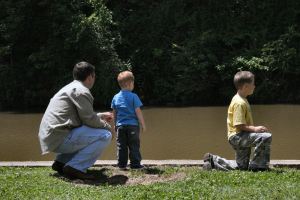
The idea of nature study is intimidating to some parents, but the opportunities it affords are priceless. Because we know thatfile000767038449 nature is God’s second book, we can think of nature study as a supplement to our Bible lessons. As we introduce our little ones to the wonders of the world around them, we are establishing a distinctly Christian worldview in their hearts and minds. In addition, we are gently awakening observation skills, and strengthening thinking and reasoning skills at the same time. We can develop these important learning skills in young ones who are not yet ready for formal academic study.


Following these principles of True Education will lay a sure foundation for your homeschool.   Put it to prayer.