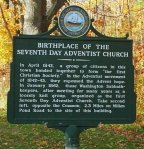
Free Adventist History Resources

Free resources for those families who would like to incorporate Adventist history into their homeschool studies.

JosephBatesTN


Adventist Pioneers Coloring Pages courtesy of  Adventist Heritage Ministry.  

Audio stream of over 100 Adventist pioneer stories courtesy of the University Park SDA church in Oregon.

ld road sign1


                            Lest We Forget : A 5 part printable unit study for upper elementary- jr. high aged students.

Our Adventist Heritage is another set of free printable resources and project ideas looking at                               the lives of early Adventist church pioneers.

450px-Family,_Origins_and_Heritage_Master_Award

There are several Pathfinder awards dealing with Adventist Church history.  Combine them with other doctrinal & Bible awards to earn the Master award for that category.


Don’t forget the Adventist Church’s official Office of Archives, Statistics and Research website– chock-full of photographs,
online archives and more.  An excellent resource for a high school level research project.


Reading Aloud is for All Ages!

Becoming a Nation of Readers (Anderson, Hiebert, Scott and Wilkinson, 1985) presented among its findings that “the single most important activity for building the knowledge required for eventual success in reading is reading aloud to children.” This landmark  Commission on Reading report also indicated reading aloud in the home is an essential contributor to reading success, and that reading aloud… is “a practice that should continue throughout the grades.”

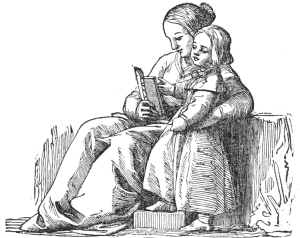
What powerful motivation to include reading aloud as part of a homeschooling schedule!  Most families however, see read-aloud time asMother_reading_to_child_1850 an activity for younger children only.  But as the report states, the practice should continue because the benefits of reading aloud don’t diminish as children grow older.
Pre-Readers

For the very young child, being read aloud to sends a multitude of important messages. The time spent with the reading parent is a vitally important bonding time. The young child gets the message that the act of reading is important, fun and desirable. Even though the child may not begin to read himself for several years, the underlying knowledge needed for reading success is being developed.


Emerging/Growing Readers

As a child enters his emerging reader years, the act of being read to still maintains a place of importance. Motivation becomes key factor in reading success, and being read aloud to keeps that motivation alive. It shows that reading is important and is a skill valued by the family. While the emerging reader listens, he takes note of the sounds of words, how punctuation is used, and begins to develop a personal vocabulary. As the books read aloud become longer, and the words become more difficult, a growing reader is able to gain access to new material with support.

Older Readers

One might think that reading to an older child is not a valuable exercise, but that is far from the truth.  It is one of the best ways to promote independent reading in older readers.  Because most children listen at a higher level than they read, reading aloud is an opportunity to present material they may have difficulty accessing on their own.   Reading aloud may motivate a reluctant reader to try material previously thought too difficult. Reading aloud to older readers also stimulates fluency and vocabulary growth. In addition, taking the time to discuss the reading material is excellent preparation for higher level critical thinking and writing.

Save

Free College Prep Webinar- Feb. 11th

southern

Southern Adventist University

presents a free webinar

College Prep 101

Webinar for Home School Students and Parents

on Thursday, February 11th at 4pm EST.

Topics Include:

  • Scholarships, FAFSA, & other financial aid
  • Key elements needed on a high school transcript
  • Community college vs 4-year university
  • Required testing (ACT, SAT)
  • SmartStart
  • Important deadlines
  • Q&A session*
  • + more!


Please RSVP by emailing webinar host Shana Michalek at
smichalek@southern.edu or click the link below.
Webinar link will be sent to you after you RSVP.

The deadline to RSVP is February 10.
For more information, call 423.236.2568.

Click here to RSVP

Bird Feeders Full? Binoculars Ready?

What effect has El Nino had on bird migration across the world?  Your homeschoolers can help find out the answer to that question and more.  It is nearly time for the Great Backyard Bird Count– an easy nature study activity that makes a major contribution to science.  Lots of AHE homeschoolers around the world participate in this yearly bird count.  The Bird Count makes a great foundation for a bird unit study.   Click HERE if you’d like to download .pdf file of bird unit study ideas compiled by AHE parents.

GBBC_Social-Media_final1-300x300

The Great Backyard Bird Count (GBBC) is a free, fun, and easy event that engages bird watchers of all ages in counting birds to create a real-time snapshot of bird populations. Participants are asked to count birds for as little as 15 minutes (or as long as they wish) on one or more days of the four-day event and report their sightings online at birdcount.org. Anyone can take part in the Great Backyard Bird Count, from beginning bird watchers to experts, and you can participate from your backyard, or anywhere in the world.

Resources for Your College-Bound Writers

College- level writing is a challenge for many college freshmen.  The first assigned research paper can be a seemingly insurmountable barrier to success.   The expectation will be that they know how to properly use in-text citations, to prepare bibliographies and have a basic grasp of writing process.   The use of basic grammar and usage rules that are reflected in a college-level writing style will also be a given.   The following three resources are extremely useful for preparing your student to be a confident writer.

a writer

OWL -The Purdue Online Writing Lab is one of the best college writing resources available on the web.   There are APA and MLA  formatting guides,  mechanics/grammar practice exercises and even a full collection of materials specifically for writers in grades 7-12. There are also some very helpful vidcasts to add to your YouTube playlist.  This website is a ‘must bookmark’ resource and deserves a dedicated hour of browsing.

A small buff-colored paperback entitled, The Elements of Style is often a part of the first set of textbooks a college freshman purchases.  This classic reference book on usage and composition is available free online.   It provides a good overview of the basic knowledge that college-level writers need.   This would be excellent to use with a high school senior- these lessons created by a homeschooling parent to go with the book are excellent! (Scroll down to find the assignments.)

BibMe. Bookmark this link! It is a FREE fully automatic bibliography maker.   An easy and quick way to generate citations and create  a printable works cited page.   Seriously, bookmark this link!


ADVENTures in Prophecy Scripture Cards

This is a wonderful SDA resource perfect for family worship for December.

“Each of these twenty-five sweet cards has the prophecy regarding the birth, life, death, and resurrection of Jesus Christ followed by the fulfillment of each prophecy found in Scripture for you to read together as a family.”christmas-adventures-in-prophecy

Click on the image above  to go directly to the A Virtuous Woman page featuring these free printable pages.


College Webinar Today!

Don’t forget that Kaylene Chadwick, undergraduate admissions counselor at Andrews University, will be presenting a “Preparing for College” webinar today!

today-calendar-11.jpgTo make sure you are ready at 1 pm EST- download Zoom prior to the event.  Here is a reminder of the login information:

Log In (Thursday, November 12 from 1 pm to 3 pm EST):

  Webinar ID: 237 817 924

The “Preparing for College” webinar will focus on the following areas:

  • Finances—don’t settle! Learn how your child can afford the college of their choice.
  • Academics—learn which courses are right for your child and how they can be academically ready.
  • Mentally prepared—every new educational phase is different. Discover the best way for your child to make the transition!
  • Q & A segment—a chance for you and your child to ask questions and prompt additional discussions.