Hymns and Scripture Songs as Music Study

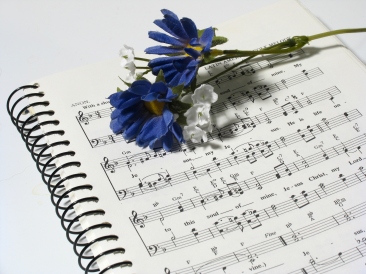
An interesting way to add music to your home school curriculum is with the study of hymns  and/or the memorization of Scripture songs.       The use hymns and Scripture songs for music can easily be tailored to fit your family.

 The value of song as a means of education should never be lost sight of. Let there be singing in the home, of songs that are sweet and pure, and there will be fewer words of censure, and more of cheerfulness and hope and joy.

Messages to Young People, 292

Organize Your Study

Choose the number of hymns and/or scripture songs that you would like to study for the year.  Some families prefer to concentrate on just one hymn or song per month, others may rotate through two or three at one time.  You could further refine your hymn/song study to align with your Bible curriculum or a particular period in history.  It might be interesting to study several hymns from one author, or choose hymns that fit a particular theme. You could select the hymns sung by church pioneers  or choose to learn  new hymns to add to your family’s worship repertoire.

In regards to hymn study, there are so many details to choose from that will make your study interesting:choirbook21
*Author of the hymn
*Composer of the music
*History of the tune if is a traditional tune
*Scriptural reference that goes with the tune
*Date and circumstances behind the hymn
*The hymn as poetry
*Memorize the hymn
*Learn to play the hymn on whatever instrument you choose
*Object lessons that the hymn may teach
*Using the lyrics for handwriting practice/copy work
*Listening to both instrumental and vocal versions of the hymn


Hymn & Scripture Song Resources

Sing A Bible Verse–  Free sheet music for more than 300 original songs by Wayne Hooper provide an easy way for children – and adults – to memorize Bible verses.

Thy Word Creations – Sells books and CDs for Scripture memorization with music.

Adventist Book Center – Don’t forget there is a companion book to the Seventh-day Adventist Hymnal that gives background information for each hymn.  There is also Early Advent Singing, which includes a history and story about each hymn from early Adventist history.

The SDA Digital Hymnal website is a collection of midi files and other resources based on the Seventh-day Adventist Hymnal.
The Cyber Hymnal website contains over 8,000 hymns.  It is an excellent hymn study resource with lots of author and composer biographies.

Hymns for Kid’s Heart features free sheet music as well as free mp3 files for a nice selection of hymns.  You can also purchase the full-featured book that includes author biographies and a devotional for each hymn.

The best free hymn study resource that I’ve found on the web is the Squidoo lens by  blogger and  homeschooling mom, Jimmie.  She shares some great free hymn study note booking pages that she created, as well as a web page full of good ideas.

Here is  a printable/downloadable .pdf  version of this post  to add to your notes:   Hymn Study pdf


The value of song as a means of education should never be lost sight of. Let there be singing in the home, of songs that are sweet and pure, and there will be fewer words of censure, and more of cheerfulness and hope and joy.

Messages to Young People, 292

Faith Journal, Part Two

Years ago, I had started a homeschool journal in which I kept notes on where God worked to help guide us into homeschooling and lead us with our homeschooling. I also kept quotes and Bible texts in there to encourage me. My journal allowed me to return, revisit a situation and share the details more accurately.

While my homeschool journal was nice and it encouraged me immensely, it was specific for homeschooling. I was able to share with other homeschool parents and it encouraged them, but when I shared it with other church members or family members, they often did not receive the testimonies willingly, because the homeschooling was something they did not do and often could not relate to. For some it simply made them mad to think that God worked through our lives in our homeschooling. I realized that for some, I need to share my testimony of blessings and works in our lives that were not related to homeschooling. I realized that since my journal was “topical”, I did not always recall instances of blessings when God worked miracles with our van, with our grocery money, etc. I realized that by not writing down or not sharing, I had forgotten those blessings and I could not share the testimony with others.

I realized that the Bible affords us an account of our past. It is the Word of God to encourage us that God is with us and has been with us. Sometimes in the rushed life we live, we forget our own personal blessings and how God is with us… with “me”. If I can forget, I am sure my kids will forget as well.

We live in times that are fast paced. Our children move from one thing to the next in record time. Sometimes the moments are lost as soon as they change directions to another activity. I wanted a way that my children could learn to reflect on the works of God in their life and to be able to review it at later times to encourage them or enable them to share their testimonies.
Because I love journals, I naturally thought of creating a Faith Journal. This was a way they could improve at their writing skills, all the while documenting the blessings and the works God has done in their lives. I love it when we can add something to our studies that is practical for life, and not just an assignment. They are learning essential writing skills, while they are documenting something that is very important for their faith in God to grow, keeping their faith strong, and helping them to organize their thoughts so that they might share their testimonies more readily.

Here is what I am doing and how I am implementing it with my younger set of children.
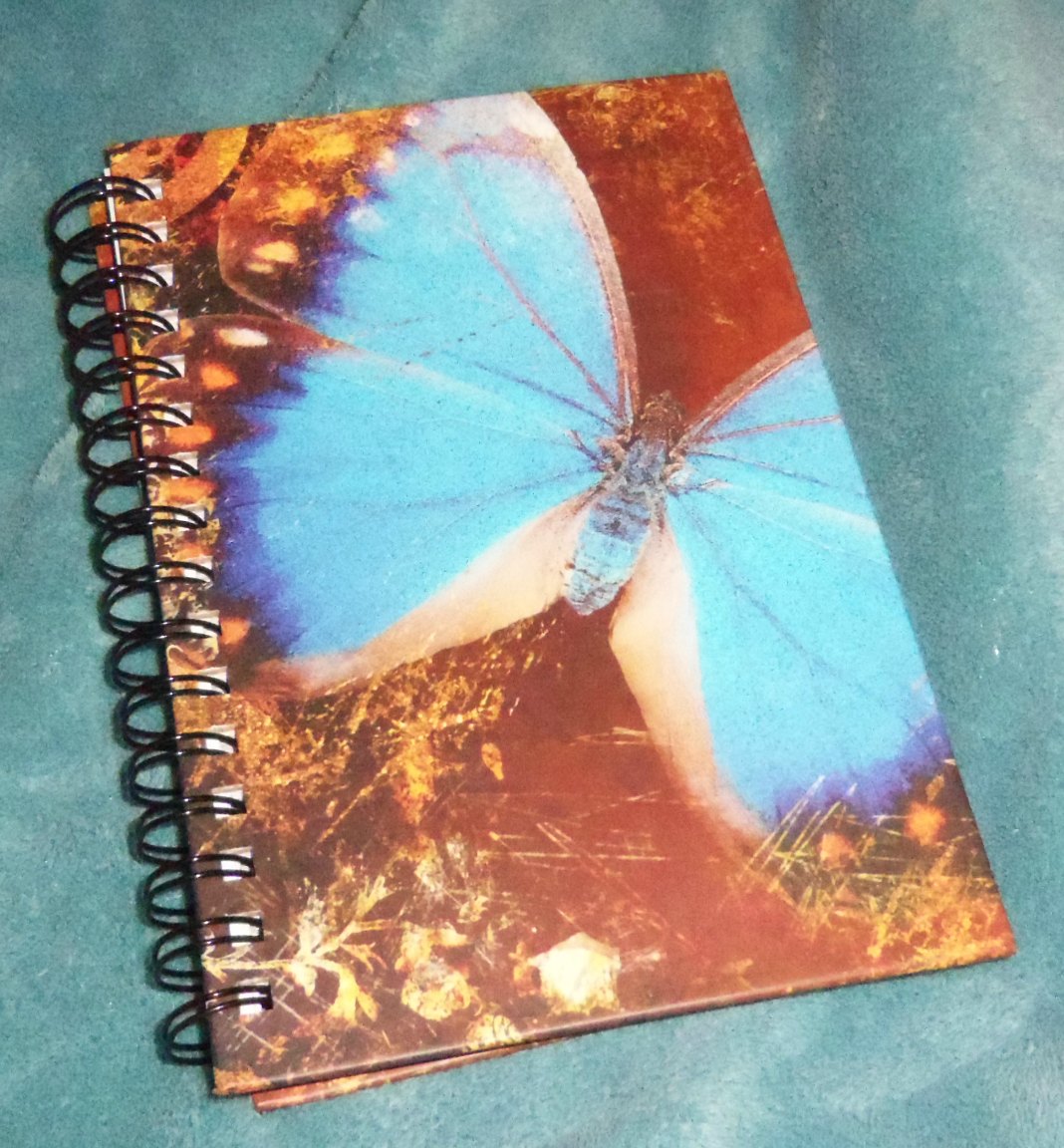
butterflyjournal

I am purchasing a special journal book. I have one daughter that prefers a leather cover. I personally like the wire bound journals with hard front and back covers. My young ones sometimes prefer just a simple composition book. But I make the point to make it look special, because this journal in particular will have something very precious, a record of their trials, their growing faith, and a remembrance of God working in their life. What is more special than that? My journal has a picture of a butterfly, which reminds me that as I grow in faith, God is changing me. My 9 year old is not thinking that deeply, yet, so I will guide her to pick out a nice journal, knowing that the accounts will be special to her someday.

In the beginning of the journal, we will do some copy work. I chose to record the verses that were shared in Ministry of Healing, pages 100-102. These are all verses that share the vision of the meaning of the journal.

With my nine year old, her reflections will most likely at first be joint reflections, family observations, as she learns to develop that awareness of God working in her life through the family. A thankfulness journal that I mentioned yesterday can help in awakening the little things in life and even some of the bigger events and how God is working through us and others. This journal however is different in that we are writing down a testimony of how God is working in our own personal lives. It is a deeper reflection of events that we pass through. We will choose to see God and reflect on it and record the details as much as we can remember, so that we can recall it at later dates. In my own personal experience, some reflections will come at a much later date, as we see how a situation in our past was working to bring a blessing down the road. Or maybe a hurt in our past is healed by a current outcome in our lives. Or maybe in our studies, we understand truth just a bit more that we can see how God was working in our lives all along. My nine year old will struggle to think very deeply at first, but through guidance and examples, she will learn how to record things that happened in her life. I may need to write it for her as she dictates an event to me, but as she gets older and understands the purpose of the journal, she can take over and do the writing herself. I need to be careful not to make the event my event and take away my child’s own impressions. It is okay to share a personal observation from your point of view, but if your child has a definite thought on how God worked in their life, then we should allow them to record that thought, as long as it is not an incorrect thought theologically.
Also, in the midst of the journal, there will be times that a verse or a poem will have a direct impact on their thoughts or feelings of a situation. Similar to a nature journal, we will include in our journals those things that increase our faith, not only the specific situations, but a verse that was personally touching and maybe why it was so touching. I will also allow them time to doodle in their journals. Doodling can be reflective of a time that they were reflecting on God’s goodness.

Our journals will not be used every day. They will be used to record specific instances in our lives that boosted our faith. An example would be of my third daughter, who diligently prayed for her grandfather every day in her prayer journals that God would help Grandpa be able to see. He was told by doctors his condition was such that he would likely lose his sight within a year. Over 5 years later, my daughter was still praying and at a doctor’s visit the doctor was saying how he didn’t understand how her grandfather could still see. The complications were such that he shouldn’t see, but he was. Her grandfather told the doctor, it is only by the prayers of my granddaughter. Her faith is working through me. He gave a personal testimony of his eye troubles and the doctor’s comments through the years and shared it with our church one Sabbath. It was very touching. My daughter’s personal faith in the power of prayer was greatly strengthened. This would be a time that we would sit down and record the details and put it into the journal. While the testimony was of God working in her grandfather’s life, it was her own prayers that were pursued on a daily basis for her grandfather, that she could reflect on the goodness of God listening to her prayers, as her grandfather had stated he had given up hope long ago; he was not praying for healing, but his granddaughter was.

Keep the journal handy; put it into a worship basket for your child, or a special drawer or shelf where they keep their worship materials so they know where to look for it when they have an opportunity to add to their own personal testimonies of God working in their lives. Encourage your child to add to it when an occasion arises, perhaps substituting a writing assignment in lieu of documenting in their Faith Journal. Let them know that it is a priority to reflect on how God is moving in their life and treat it as such. Remember this journal isn’t just an assignment or something to fill out and accomplish. It is our life work to reflect on how God has worked in our lives and share that testimony with others. The journal simply helps a child (and an adult) to gather their thoughts, to record their thoughts, to remember the situations so that they may actively share their testimonies of Jesus in their lives with others.

Happy Journaling!
Faith Journal, Part One

ministry of healing

I was recently reading in Ministry of Healing the section titled “My Praise Shall Be Continually of Thee,” beginning on page 100. It talks of how when Christ helped others, that He asked them to share what works He had rendered unto them. This builds up the faith of those around us, but mostly builds the faith of the one doing the sharing. When we share, we speak it, and we hear it. These are proven ways for us to learn and remember. Back in Bible times, the feasts and festivals gave opportunity for God’s people to pause and remember. They spoke of God’s works and remembered His goodness. It increased their faith at the same time.

I don’t know about you, but I want my children’s faith to be strong, unstoppable, and dependable. We are told in the New Testament of how our faith needs to be used in order to grow. Our testimony of God’s works, also, is another way in which our faith will grow. Personal testimony is a much stronger way for us to grow in our faith. On page 100 of Ministry of Healing it states, “It is for our own benefit to keep every gift of God fresh in our memory. By this means faith is strengthened to claim and to receive more and more. There is greater encouragement for us in the least blessing we ourselves receive from God than in all the accounts we can read of the faith and experience of others.”

I got to thinking about how as an adult, it is sometimes hard for us to share a memory of when God worked in our lives. Children when asked to share, often just shrug their shoulders as if they don’t understand what you are trying to ask them. Many think they are too young to have a testimony of their own. This is wrong. In Psalms 71:5, the Bible states “You are my trust from my youth.” We need to be teaching our children how to recognize their faith and to recall it.

I know there are many ways to do this, and I try to teach my kids lessons when they happen, hoping that they will recognize God in our day-to-day encounters. We go over an event and share God’s blessings together. We pray and thank God for His work in our lives. This is a wonderful way to begin to recognize the works and blessings of God in our lives. We share these with others at Sabbath School, prayer meetings, AY and sometimes with friends and family. What a wonderful way to witness!

However, we often, like the Israelites, forget the blessings and forget the works of God in our lives. When we come across new friends or acquaintances in our lives, we can be a light to others by sharing our own personal testimonies. But if we don’t remember them, our faith dwindles, our faith does not remain strong and we cannot share as easily the blessings that God has rendered unto us in our lives. We like the Israelites may turn from God because we have forgotten the God who works wonders for us.

So, I got to thinking. How did the Israelites remember the blessings of God? One way is to have specified times to recall certain events. For many people I know, they keep a thankfulness journal that they can recall the blessings of the past year on Thanksgiving. They fill in 3 to 5 items a day that they are thankful for. I like that idea, but I wanted my children to remember specific blessings from God so that their faith would be strengthened and that they could share these things more with others as a testimony of God’s goodness in their lives. In Revelation 12:17 it reads, “And the dragon was enraged with the woman, and he went to make war with the rest of her offspring, who keep the commandments of God and have the testimony of Jesus Christ.” Do my children recognize how God is working in their own personal lives? Do they have a testimony of Jesus that they can share with others? This is what I want to build.

In the next blog post, I will share the idea of the Faith Journal with you. Perhaps you will also come up with other ideas on how to build this area as well. Be prepared to share in the comments your own ideas, tomorrow, as well!

A Psalms 28:7 Testimony

Are you facing a seemingly insurmountable obstacle?  Feeling discouraged today?  Here is some encouragement for you. This testimony was recently shared by my brother-in-law at the Savannah (GA) First Seventh-day Adventist Church.

Create A Christian Character Traits Unit Study

Creating a Christian character traits lapbook would make an excellent Bible-based unit study or special activity-based worship series for your family.  The Character lapbook page at Homeschool Share has some great ideas and printables to get you started.  Homeschool Helper Online also has Character Studies resources.   Pick and choose from among these free resources to create a study that suits your family’s needs.

The Bible Timeline – A New Resource

The Bible TimelineHere’s a wonderful new resource from Amazing Facts that is sure to be a blessing to your homeschool Bible & History studies.  An interactive Bible timeline!  The website describes itself this way:

“With more than 850 interconnected entries, the Bible Prophecy Timeline is a comprehensive study tool that allows you to explore every character and major event of the Bible, from the creation of the world to last-day prophecies. Each entry in the Timeline contains a brief but insightful article with interesting facts about the person or event, plus artwork and full Scripture references and passages to help you find it in the Bible.” 

Click the image above or the following link to learn more –The Bible Timeline

Thinking About High School ~Bible~

Graduation cap and textbooks


Thinking about high school Bible curriculum? Things to consider as you make your choices: Does your child have a clear understanding of the beliefs of the Seventh-day Adventist church? Has your child ever read extended portions of the Bible? Has your child ever read a Spirit of Prophecy book?Does your student want to study alone or with you or even the pastor? If your student has not yet developed the habit of a personal devotional time, then you have both a starting point and goal for a Bible curriculum. Otherwise, start with an end goal in mind and discuss with your high schooler ways to accomplish that goal. Since most high schoolers are at the point of independent study, your primary responsibility will be to provide your student with the materials that fit his learning style.

Suggestions for study:
*Use a Bible reading plan to read through the Bible in a year or two.
*Read or listen through the Conflict of the Ages series (original/study guides) (modern English)
*Pair Bible reading with Conflict of the Ages series with Encounter study series(scroll down to bottom of page)
*Complete a Bible marking plan, either themed or doctrinal-based
*Read a how-to-study-the-Bible book (podcast)
*Take a dual-enrollment Bible class online from an SDA college/university(Southern) (Andrews)
*Work with pastor or bible worker in giving Bible studies to others