AHE Website Maintenance scheduled for tonight

Hello everyone!

I wanted to let you know that the AHE website will be down temporarily. We will be moving to a new server. The domain name of adventisthomeducator.org will move to the new server tonight sometime after 9pm central time. It may be unavailable for a couple days, depending on how many unexpected problems occur. Please pray that our move goes smoothly!

The website will be available until 9pm central time, for sure… if you need to access something. After 9pm CT, please use the following link to get to the old site, if you need to reach information.

www.sdahe.wordpress.com

Blog posts may be interrupted… but we will do our best to get everything transferred without too much confusion!

Praying you are all well today!
Warmly,
Melissa

Faith Journal, Part Two

Years ago, I had started a homeschool journal in which I kept notes on where God worked to help guide us into homeschooling and lead us with our homeschooling. I also kept quotes and Bible texts in there to encourage me. My journal allowed me to return, revisit a situation and share the details more accurately.

While my homeschool journal was nice and it encouraged me immensely, it was specific for homeschooling. I was able to share with other homeschool parents and it encouraged them, but when I shared it with other church members or family members, they often did not receive the testimonies willingly, because the homeschooling was something they did not do and often could not relate to. For some it simply made them mad to think that God worked through our lives in our homeschooling. I realized that for some, I need to share my testimony of blessings and works in our lives that were not related to homeschooling. I realized that since my journal was “topical”, I did not always recall instances of blessings when God worked miracles with our van, with our grocery money, etc. I realized that by not writing down or not sharing, I had forgotten those blessings and I could not share the testimony with others.

I realized that the Bible affords us an account of our past. It is the Word of God to encourage us that God is with us and has been with us. Sometimes in the rushed life we live, we forget our own personal blessings and how God is with us… with “me”. If I can forget, I am sure my kids will forget as well.

We live in times that are fast paced. Our children move from one thing to the next in record time. Sometimes the moments are lost as soon as they change directions to another activity. I wanted a way that my children could learn to reflect on the works of God in their life and to be able to review it at later times to encourage them or enable them to share their testimonies.
Because I love journals, I naturally thought of creating a Faith Journal. This was a way they could improve at their writing skills, all the while documenting the blessings and the works God has done in their lives. I love it when we can add something to our studies that is practical for life, and not just an assignment. They are learning essential writing skills, while they are documenting something that is very important for their faith in God to grow, keeping their faith strong, and helping them to organize their thoughts so that they might share their testimonies more readily.

Here is what I am doing and how I am implementing it with my younger set of children.
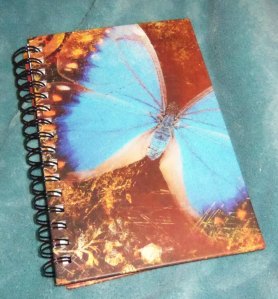
butterflyjournal

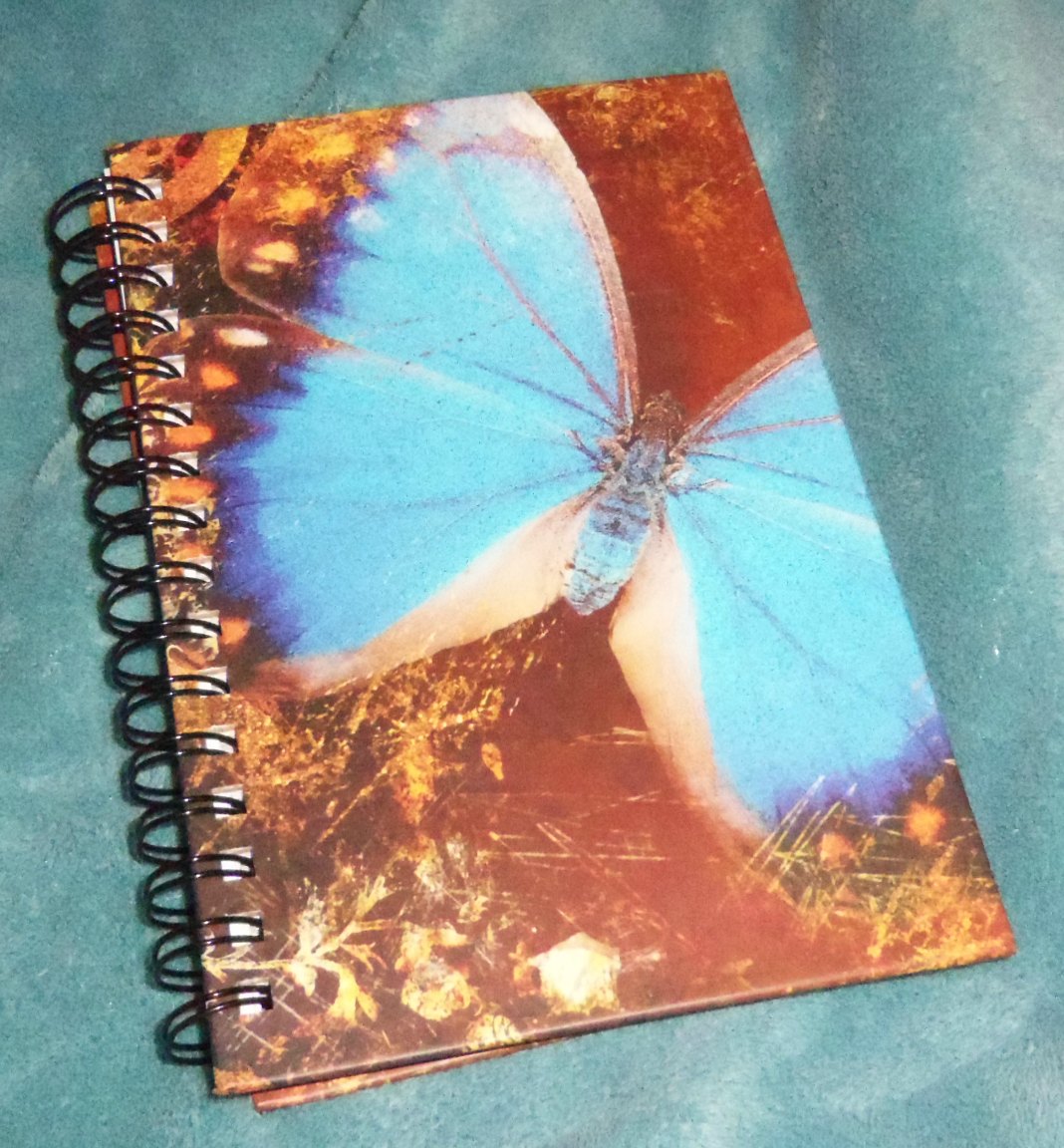
I am purchasing a special journal book. I have one daughter that prefers a leather cover. I personally like the wire bound journals with hard front and back covers. My young ones sometimes prefer just a simple composition book. But I make the point to make it look special, because this journal in particular will have something very precious, a record of their trials, their growing faith, and a remembrance of God working in their life. What is more special than that? My journal has a picture of a butterfly, which reminds me that as I grow in faith, God is changing me. My 9 year old is not thinking that deeply, yet, so I will guide her to pick out a nice journal, knowing that the accounts will be special to her someday.

In the beginning of the journal, we will do some copy work. I chose to record the verses that were shared in Ministry of Healing, pages 100-102. These are all verses that share the vision of the meaning of the journal.

With my nine year old, her reflections will most likely at first be joint reflections, family observations, as she learns to develop that awareness of God working in her life through the family. A thankfulness journal that I mentioned yesterday can help in awakening the little things in life and even some of the bigger events and how God is working through us and others. This journal however is different in that we are writing down a testimony of how God is working in our own personal lives. It is a deeper reflection of events that we pass through. We will choose to see God and reflect on it and record the details as much as we can remember, so that we can recall it at later dates. In my own personal experience, some reflections will come at a much later date, as we see how a situation in our past was working to bring a blessing down the road. Or maybe a hurt in our past is healed by a current outcome in our lives. Or maybe in our studies, we understand truth just a bit more that we can see how God was working in our lives all along. My nine year old will struggle to think very deeply at first, but through guidance and examples, she will learn how to record things that happened in her life. I may need to write it for her as she dictates an event to me, but as she gets older and understands the purpose of the journal, she can take over and do the writing herself. I need to be careful not to make the event my event and take away my child’s own impressions. It is okay to share a personal observation from your point of view, but if your child has a definite thought on how God worked in their life, then we should allow them to record that thought, as long as it is not an incorrect thought theologically.
Also, in the midst of the journal, there will be times that a verse or a poem will have a direct impact on their thoughts or feelings of a situation. Similar to a nature journal, we will include in our journals those things that increase our faith, not only the specific situations, but a verse that was personally touching and maybe why it was so touching. I will also allow them time to doodle in their journals. Doodling can be reflective of a time that they were reflecting on God’s goodness.

Our journals will not be used every day. They will be used to record specific instances in our lives that boosted our faith. An example would be of my third daughter, who diligently prayed for her grandfather every day in her prayer journals that God would help Grandpa be able to see. He was told by doctors his condition was such that he would likely lose his sight within a year. Over 5 years later, my daughter was still praying and at a doctor’s visit the doctor was saying how he didn’t understand how her grandfather could still see. The complications were such that he shouldn’t see, but he was. Her grandfather told the doctor, it is only by the prayers of my granddaughter. Her faith is working through me. He gave a personal testimony of his eye troubles and the doctor’s comments through the years and shared it with our church one Sabbath. It was very touching. My daughter’s personal faith in the power of prayer was greatly strengthened. This would be a time that we would sit down and record the details and put it into the journal. While the testimony was of God working in her grandfather’s life, it was her own prayers that were pursued on a daily basis for her grandfather, that she could reflect on the goodness of God listening to her prayers, as her grandfather had stated he had given up hope long ago; he was not praying for healing, but his granddaughter was.

Keep the journal handy; put it into a worship basket for your child, or a special drawer or shelf where they keep their worship materials so they know where to look for it when they have an opportunity to add to their own personal testimonies of God working in their lives. Encourage your child to add to it when an occasion arises, perhaps substituting a writing assignment in lieu of documenting in their Faith Journal. Let them know that it is a priority to reflect on how God is moving in their life and treat it as such. Remember this journal isn’t just an assignment or something to fill out and accomplish. It is our life work to reflect on how God has worked in our lives and share that testimony with others. The journal simply helps a child (and an adult) to gather their thoughts, to record their thoughts, to remember the situations so that they may actively share their testimonies of Jesus in their lives with others.

Happy Journaling!
Faith Journal, Part One

ministry of healing

I was recently reading in Ministry of Healing the section titled “My Praise Shall Be Continually of Thee,” beginning on page 100. It talks of how when Christ helped others, that He asked them to share what works He had rendered unto them. This builds up the faith of those around us, but mostly builds the faith of the one doing the sharing. When we share, we speak it, and we hear it. These are proven ways for us to learn and remember. Back in Bible times, the feasts and festivals gave opportunity for God’s people to pause and remember. They spoke of God’s works and remembered His goodness. It increased their faith at the same time.

I don’t know about you, but I want my children’s faith to be strong, unstoppable, and dependable. We are told in the New Testament of how our faith needs to be used in order to grow. Our testimony of God’s works, also, is another way in which our faith will grow. Personal testimony is a much stronger way for us to grow in our faith. On page 100 of Ministry of Healing it states, “It is for our own benefit to keep every gift of God fresh in our memory. By this means faith is strengthened to claim and to receive more and more. There is greater encouragement for us in the least blessing we ourselves receive from God than in all the accounts we can read of the faith and experience of others.”

I got to thinking about how as an adult, it is sometimes hard for us to share a memory of when God worked in our lives. Children when asked to share, often just shrug their shoulders as if they don’t understand what you are trying to ask them. Many think they are too young to have a testimony of their own. This is wrong. In Psalms 71:5, the Bible states “You are my trust from my youth.” We need to be teaching our children how to recognize their faith and to recall it.

I know there are many ways to do this, and I try to teach my kids lessons when they happen, hoping that they will recognize God in our day-to-day encounters. We go over an event and share God’s blessings together. We pray and thank God for His work in our lives. This is a wonderful way to begin to recognize the works and blessings of God in our lives. We share these with others at Sabbath School, prayer meetings, AY and sometimes with friends and family. What a wonderful way to witness!

However, we often, like the Israelites, forget the blessings and forget the works of God in our lives. When we come across new friends or acquaintances in our lives, we can be a light to others by sharing our own personal testimonies. But if we don’t remember them, our faith dwindles, our faith does not remain strong and we cannot share as easily the blessings that God has rendered unto us in our lives. We like the Israelites may turn from God because we have forgotten the God who works wonders for us.

So, I got to thinking. How did the Israelites remember the blessings of God? One way is to have specified times to recall certain events. For many people I know, they keep a thankfulness journal that they can recall the blessings of the past year on Thanksgiving. They fill in 3 to 5 items a day that they are thankful for. I like that idea, but I wanted my children to remember specific blessings from God so that their faith would be strengthened and that they could share these things more with others as a testimony of God’s goodness in their lives. In Revelation 12:17 it reads, “And the dragon was enraged with the woman, and he went to make war with the rest of her offspring, who keep the commandments of God and have the testimony of Jesus Christ.” Do my children recognize how God is working in their own personal lives? Do they have a testimony of Jesus that they can share with others? This is what I want to build.

In the next blog post, I will share the idea of the Faith Journal with you. Perhaps you will also come up with other ideas on how to build this area as well. Be prepared to share in the comments your own ideas, tomorrow, as well!

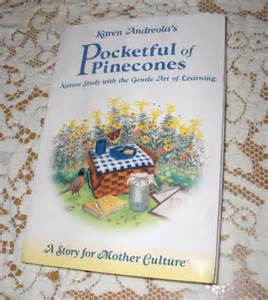
Book Review: Pocketful of Pinecones by Karen Andreola

Pocketful of Pinecones

Nature Study with the Gentle Art of Learning

A Story for Mother Culture

Pocketful of Pinecones

Pocketful of Pinecones is not a book your child would read, but rather a book for Mom to read.  This book is a historical-fictional type book, mixed with good science.  Karen weaves a fictional story around personal experiences and true stories that she has heard through the years.  Her goal in writing the book was to give an honest report of what nature study may look like in the life of a family.  She is sharing the Charlotte Mason way of teaching nature study to your children.

As a Seventh-day Adventist, you will run across an occasional mention of Saturday shopping or Sunday church activities.  This did not bother me, but it is in there, nonetheless.  I really liked the style of the Charlotte Mason way of Nature Study.  This is very much in line with how Ellen White instructed us to introduce our children to nature.

While I believe she did a great job sharing this style of teaching, I personally would add more emphasis on God’s creation.  Meaning, I would want to be reminding my children, if they are quite young about how God’s creation was so interesting, so unique, so particular to details, etc. I would try to add in a few object lessons a bit more often.  I believe the book may have shared that aspect once or twice, and her goal was to include as many different instances in teaching nature study to our children, not to repeat the same style over and over again.  So I am not disappointed, as the different ways to easily or naturally include nature study into our days is important.  However, my personal style would be to focus on bringing my children to God as the creator more often or to focus on object lessons within the nature study.

The book offers an appendix Supplement of specific Charlotte Mason quotes and pages to read.  They are interesting and very much in line with counsel from Ellen White.   Also included is a Suggested Reading appendix, in which she referenced different titles of works in her book, and also titles that she feels are useful for additional nature study references.  I have not read all of those titles, so I cannot verify whether they are good suggestions or not.    She then ends the section of Appendices with how she came up with the story line and how she gathered the different stories.

Overall, I really enjoyed the book.  I feel it gives an honest look of how nature study over an entire year might play out.  She goes through seasons, and has days or even a week or more where nothing is touched and they come back to nature study.  This book is a journal style book of the Mom’s recollections of the day, so the dates are scattered, which is often a realistic view of nature study.  While we can schedule nature study in our days from 10 to 10:30 a.m., it often becomes more natural and fulfilling to take time to notice nature in your days as you come across it.   I like this style of teaching, more of a taking time to smell (and observe) the roses in life.

~

Your turn!  Please rate this curriculum if you have used it in your homeschool and feel free to leave a comment so others can learn more about this product.


If you have used something in your homeschool and would like to review it here, please contact us at adventisthomeducator@gmail.com

Curriculum Review: Draw and Write Through History

Draw and Write Through History

Written by  Carylee Gressman and Illustrated by Peggy Dick

 BestDealAd

I pulled down these books to do this review and the children took off with them!  Our children LOVE these books.  This is a very engaging program.  They are filled with “fun facts,” extra challenges, and a helpful Bibliography at the end of each book for additional reference material and study.  It is designed for ages 8+, but can easily be used with younger children.  Ours have enjoyed it as young as five and six years old.  From the title, it covers three subjects, but we have used it for four.

Art-  The step by step drawing lessons are easy to follow.  Our children just pick up the books and start following along.  There are simple tips for the artistically challenged yet room for the more advanced to add lots more detail.

 Book4

Handwriting-  These are the Zaner Bloser Cursive.  Each book starts with a simple review of the letters.  It would be easy to copy the handwriting assignments in print for younger children.  There are only 4-5 handwriting pages in each book, except the “Creation through Jonah,” which has 7.  I add more handwriting assignments, using some of the additional fun facts or verses from the Bible.

History-  The history lessons are simple.  They are meant to supplement another History program and could be used with any teaching approach.  They are perfect for “Story of the World” or “Mystery of History.”  We used “Pilgrims, Pirates, and Patriots” with “Light and the Glory for Children” by P. Marshal and “In God We Trust” by J. Ashcroft.  Our children’s favorite has been “Creation through Jonah.”  We used a pictorial History Encyclopedia and the Bible with it.  We scrap-booked that year and then entered the books in the county fair.  It was great fun!

 DrawWriteBook1

Science-  There is also a fair bit of Science in these.  Again, the sprinkling of fun facts helps direct us to further study about God’s creation and some of man’s inventions.  The Research Ideas and Science Facts are also a big help.  The boys especially want to start building things, like catapults, sail boats, and cool armor.

This program could be used as a base for a fun year of Unit Study or they can be supplemental to a more structured curriculum.  They would also be a lot of fun for summer to keep the children busy when they are cooped up in the house on very hot days!  You can find Draw and Write Through History at  http://www.drawandwrite.com/.

Review by Dawnita F.

~*~

Thanks, Dawnita, for your review!  If you have used something in your homeschool and would like to review it here, please contact us at adventisthomeducator@gmail.com

Your turn!  Please rate this curriculum if you have used it in your homeschool and feel free to leave a comment so others can learn more about this product.

Curriculum Review: Rod and Staff Reading, Grades 1-4

Curriculum Review:  Rod and Staff Reading Program, Grades 1 – 4

Review by Dawnita F.

rsreading2014c


We have used Rod & Staff Reading since the beginning of our homeschooling journey.  At first, it was simply the easiest choice.  There was little available in the mid 1990’s and we borrowed from another homeschooling family.  We have always loved the fact they teach Bible through fourth grade.  The stories are simple and Biblicaly correct.  The curriculum is Mennonite, so the pictures are sweet black and white drawings.  We giggle at the concept of Adam and Eve in little Amish looking outfits, but it is modest and sweet.  There are a few brief mentions of Sunday as the Sabbath and day of rest.  These are easily edited and give great opportunities to discuss the differences in churches and the origin of Sunday worship.

 rsreading2014

The first year workbooks are a lot of fun.  There are three workbooks; phonics, reading workbook, and worksheets with fun cut and paste projects.  The phonics lessons are sound, simple, and easy to understand.  They begin going through the alphabet, sound by sound, beginning with vowels then work through blends and beyond.  The reading workbooks implement vocabulary, spelling, and reading comprehension.  The children also learn their colors and begin learning to recognize similarities, differences, and sorting.  The worksheets provide activities that can be displayed or shared with grandparents that help reinforce the Bible stories they are learning.

The second year workbooks make a big jump in demand in time, work, and attention.  We’ve only had two of our six children that did well with them.  Even then, we did a lot of it orally so as not to be spending too much time in seat-work.  Since I do have the teacher’s books, I sometimes will go through and look at what they would be doing if we had the workbooks and implement some of the questions in our discussion or ideas into our notebook time.  By the third year, we would rather our children be copying straight out of the Bible and looking up words directly from the dictionary.

 rsreading2014b

All in all, we have used Rod & Staff reading books 1st through 4th grade with all six of our children.  We do take breaks between books for Frog & Toad or little nature readers.  It’s a nice feeling to know our children are “reading through the Bible” each year as they are learning to read and becoming more literate.  By the time they finish the fourth grade book, they are prepared to read directly from the Bible with good comprehension and to read library books.

Thanks, Dawnita, for your review!  If you have used something in your homeschool and would like to review it here, please contact us at adventisthomeducator@gmail.com

Your turn!  Please rate this curriculum if you have used it in your homeschool and feel free to leave a comment so others can learn more about this product.

Is Water In Your Homeschool Routine?

water-glass-7I have been thinking about how I, myself, struggle with drinking enough water during the day.  I wasn’t raised to consider that drinking water is a priority that we need to keep tabs on in our life.  I was like the sheep led to water once a day and I began to think that drinking water was just something you did when you had a break and you had nothing else to do.  I realized now that as I am trying to really work at this habit and how hard it is for me, that I’d really like my kids to have it easier.  I want them to drink water automatically more out of habit, other than because they have a headache or some other water related problem.

During this last year, I’ve done a lot of thinking about my health.  I wasn’t horribly unhealthy, but I started having a few health issues.  I’d go to the doctor and everything related to my issues came up normal.  Strange.  My husband did some reading and laughed and said, “It is your bad habit, you need to be drinking more water.”  I realized, too, that I have 3 of my 5 children that do not like to drink water, either.

Now, it isn’t like I have not tried to drink water, I just don’t think about drinking water.  I prayed and realized I needed to be more diligent about it.  I need to make deliberate choices, otherwise I am simply too busy for it to happen.

I wanted to share a couple reasons why drinking water is important for us as homeschoolers.  Our body is made up of over 70% water.  Our brain alone consists of about 85% water.  Water can prevent issues such as ADD and depression.  Water helps you think faster and helps you to be more focused.  You will also experience greater clarity and creativity in your thinking.  If you want to learn more, you can go to this website, Water Benefits Health,and read more, or simply search about water and the body’s needs.

If keeping hydrated is more than just flushing toxins out of our body, but part of helping us to learn better, we really need to keep on this and be deliberate in our choices of drinking water!  Now, I knew all this.  I’ve learned it in my nurse’s training, I’ve taught it to many during health seminars at church, it’s part of the NEWSTART principle we often hear about.  But that didn’t help me “do it”. I needed to sit down and actually figure out how to conquer my bad habit of not drinking enough water.  I also needed to figure out how to teach my kids to do the same, so that they would find learning more fun and less frustrating.

There are various rules for how much water you should be drinking.  Some say 8 – six ounce glasses a day, some say 8 eight ounce glasses a day.  Others say ½ ounce per pound of body weight per day, and still others say if you are active it should be 2/3 ounce per pound of body weight.  Whatever rule of thumb you use, if you are getting less than 4-6 glasses of water a day, I think it is important for us to up our intake.  This would actually make a good math and health lesson one day to actually figure out how much water you and your kids each need to drink and then figure out a plan to get it done.

I’m in the process of tweaking our plan right now, and thought that maybe you all might want to join our family as we seek to increase our water intake so that our brains will function to the best of their ability by giving them the water they need to work properly.

Feel free to share in the comment sections, ideas that work for your family to get all that water in each day.  I’m sure it will help others that are struggling to find a way to make it work for them!