Thou shalt keep therefore his statutes, and his commandments, which I command thee this day, that it may go well with thee, and with thy children after thee, and that thou mayest prolong thy days upon the earth, which the LORD thy God giveth thee, for ever.
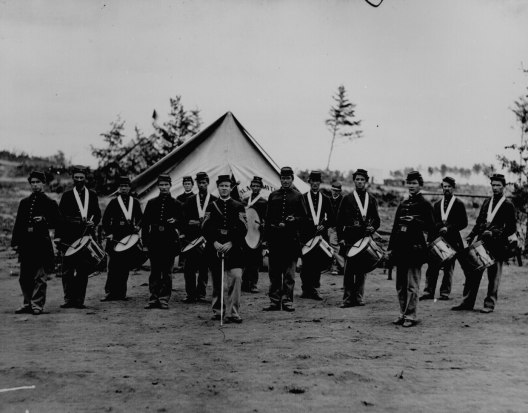
Between middle school and high school, many homeschoolers cover US history twice and US Government once. That means a need for wide variety of Civil War resources. Fortunately, the Civil War Trust website has it all. Click on the Education link and you will discover primary source documents, animated maps, photographs, videos, quizzes- more than enough material for either a survey of the Civil War period or an in-depth study. The teacher lesson plans are categorized by grade level from elementary to high school. There are even gifted and talented level lesson plans for the student that needs a challenge. The printable and downloadable lesson plans are organized by themes and include links to worksheets and media supplements.
If you prefer to use only non-fiction materials in your history studies, you will find everything you need on this site. Your Civil War study can focus on reading and analyzing primary sources with a wealth of newspaper opinion pieces, letters, speeches and other historic documents available. If you happen to own a pair of 3-D glasses, you will find the stereoview photographs- the 19th century version of 3-D photography to be especially intriguing.
The Civil War Trust is more than just an amazing history resource. The Trust also has a goal of reclaiming and preserving important Civil War sites throughout America. So far, they have saved more than 40,000 acres. Impressive. This is a must-bookmark website.
While working at Farmer’s Market several years ago, we met another vendor who shared with us a great tip for reviving an old patch of rhubarb. I hadn’t had a chance to try it out until last year and I am pretty excited about the results!
Tip: Rhubarb plant roots will continue to thicken and twist around one another. Heavy picking can increase the timing of this process. This will decrease the productivity of the plant. To keep the plant healthy and to increase yields, you will want to dig up the roots and divide your plant in early spring…just as the buds are coming up, but before leaves begin to open.
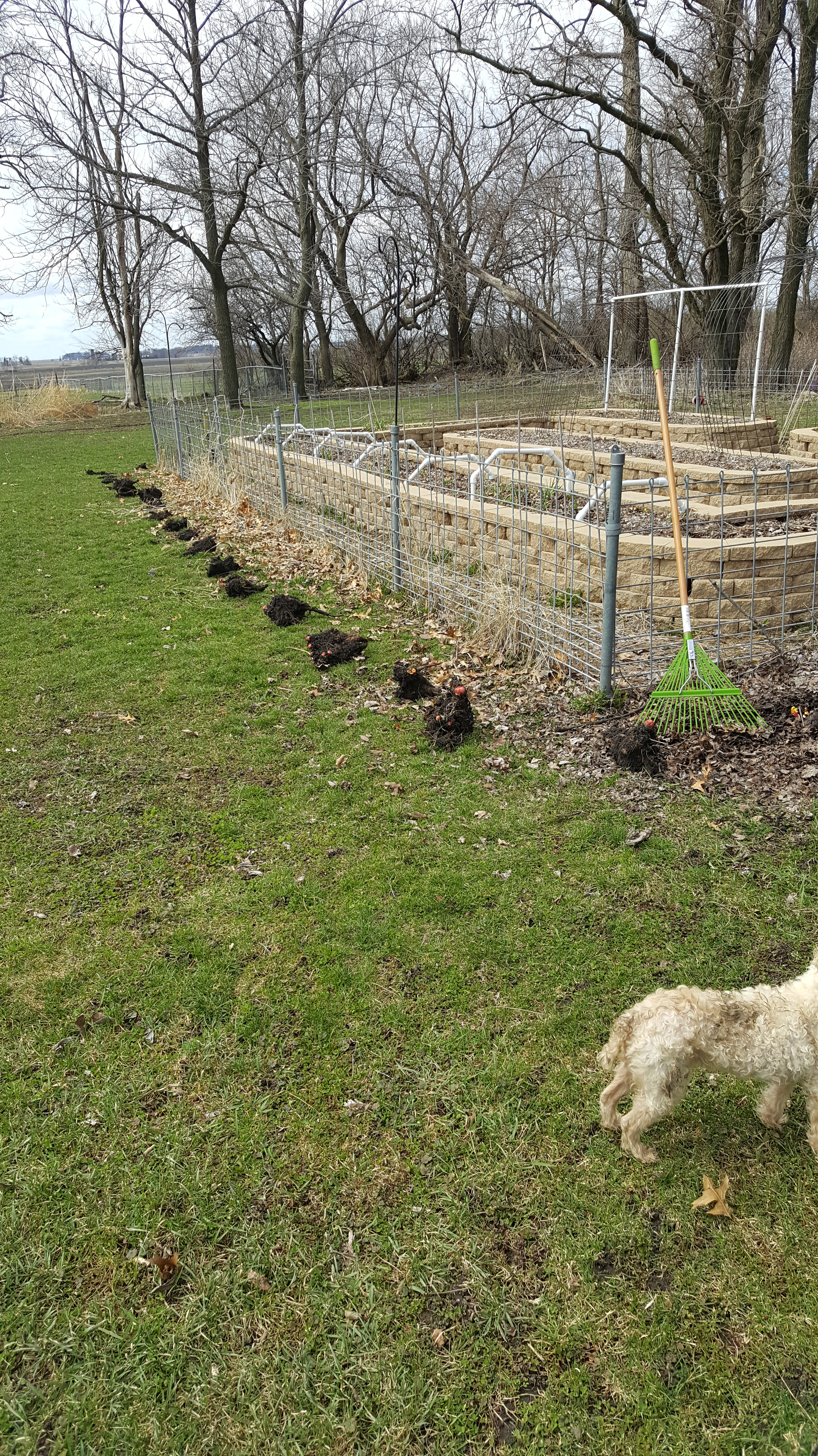
Last year I divided two older plants into 10 new plants. (If you have no room for that many new plants, consider giving some away to your neighbors or friends). This year I divided 3 plants into 20.
You will need to dig about a foot away from the plant and dig down at least a foot to 18 inches to get underneath the established roots of the plant you intend to divide. After digging it up, you will want to divide it into smaller pieces. Twist the roots to try to divide with minimal breaking. I found I still heard roots breaking and snapping off, but the plants still all grew back. I tried to keep each clump with at least one bud (up to 2-4 buds) with some roots connected to it. Plant in a new hole, like you would for a bush, dig a hole twice as wide and much deeper so that the soil is not as compacted around the new transplant. Keep the buds at ground level as they were before. Fill soil under and around the transplant. Rhubarb enjoys full sun and even partial shade (if you are trying to figure out where to place them in your yard).
This first year, do not pick from the new plants, let them get established. The second year, pick lightly so you do not stress the transplant. The third year you can pick as heavily as desired.
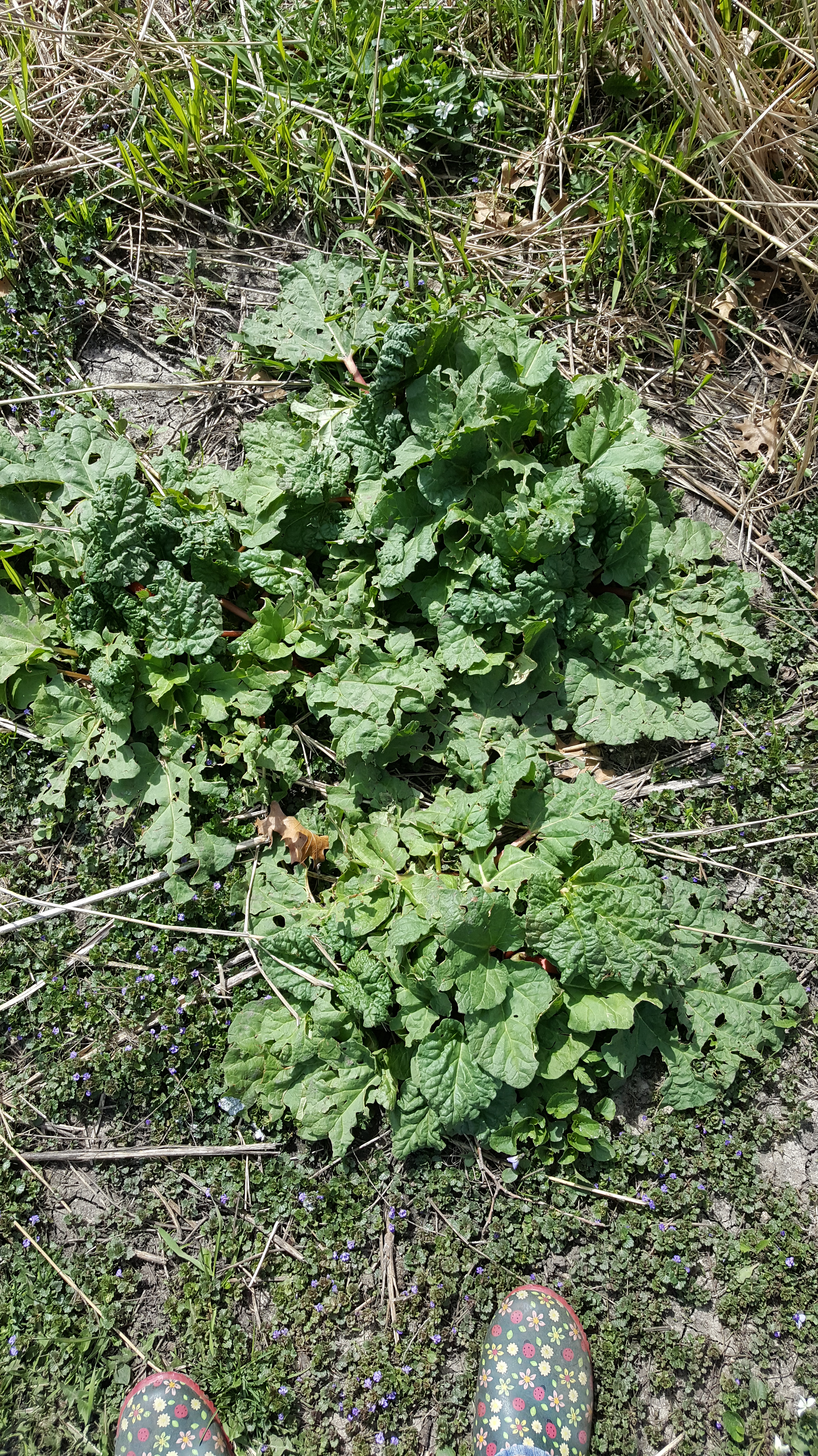
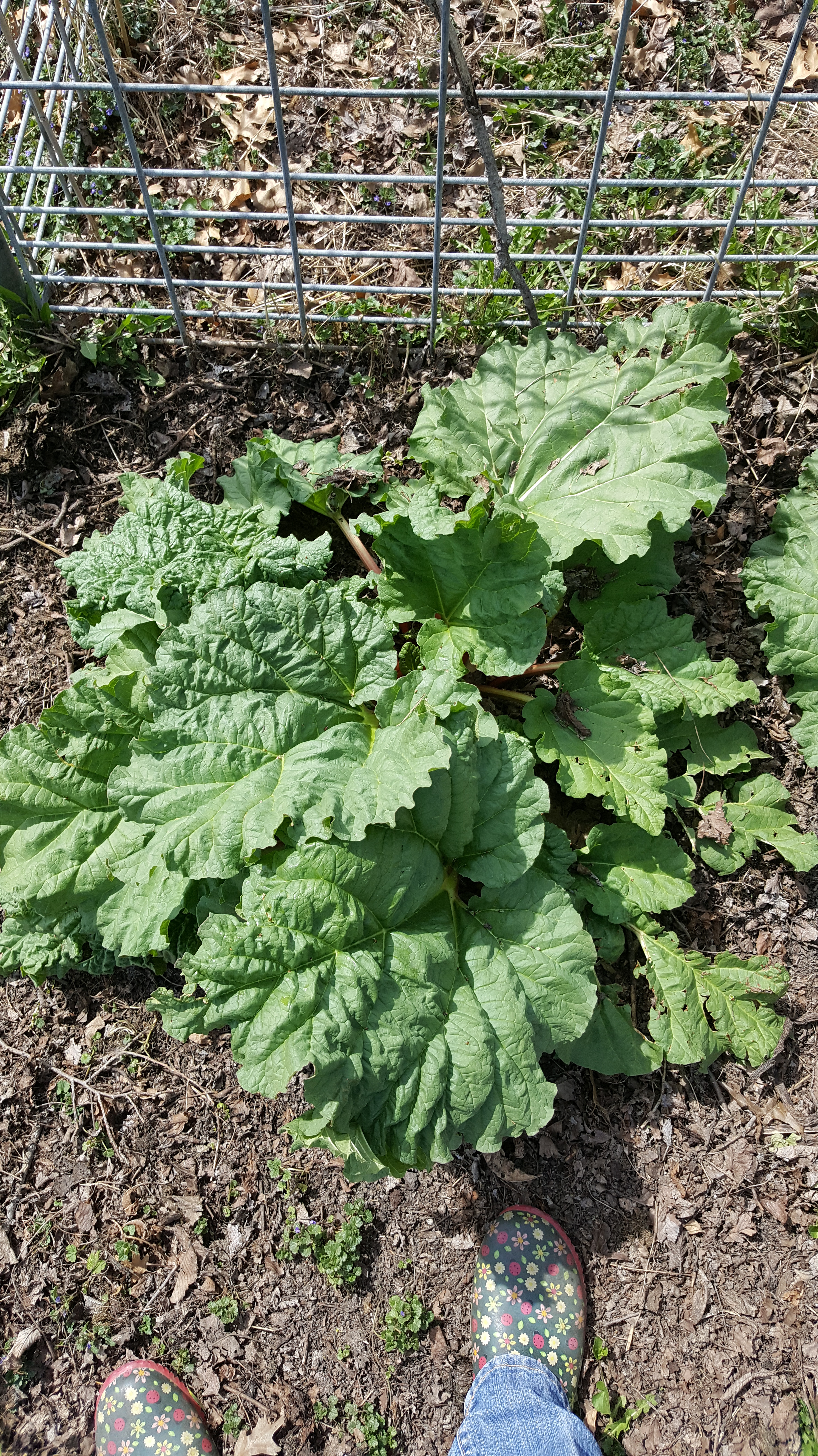
I stood the same distance from an old patch above (first picture in this post) and the 2nd year transplants below. You can visibly see how much healthier the transplant is. It has larger leaves and longer thicker stems.
I thought of a few spiritual applications as I was writing this post. I will share a couple below, but I invite you to comment additional thoughts, as well. This helps all of us to recognize spiritual thoughts in nature/gardening and we can share these with our children, too.
*We can wear ourselves out by too much work and not enough rest, just like over-picking can decrease the productivity of a rhubarb plant.
*Challenges in our lives can be like the dividing of the plant and help us grow to be more productive.
*It reminds me of the Stewardship of Talents found in Matthew 25:14-30.
* One plant can supply our family with a couple rhubarb desserts or a batch or two of jam . If I divide that plant into 5, I now can share with others and still have plenty for us at home. When I share of what the Lord has given me, He will bless what is left and often you will find what’s left is enough to supply our needs.
Fathers and mothers, connect with your children. Pray with them. Encourage them. They need encouragement. Why? Because the fallen angels will bring the most beautiful things to present before them in various ways, and they will think that is the highest education. If they can get that education, they will think it is the very highest education that they can have. The highest education that we can have is to be God’s obedient children. It is to have a mind subject to Christ, who laid aside His royal robes and kingly crown and came into our world as a little child to bear all the infirmities of children, and He gave the evidence to all that He had the mind of God, and was doing it. He made all that sacrifice, and at last He was stretched on the cross at Calvary. But before that He was in prayer.


 Fathers and
 The Adventist Home Educator