
The LORD hath appeared of old unto me, saying, Yea, I have loved thee
with an everlasting love: therefore with loving kindness have I drawn thee.
Jeremiah 31:3
The LORD hath appeared of old unto me, saying, Yea, I have loved thee
with an everlasting love: therefore with loving kindness have I drawn thee.
Jeremiah 31:3

All winter long I made grand bean-growing plans. Come spring, I was going to have an abundance of fresh tender green pods. After looking over my seed stash, I made my choices. My planting list both bush and pole flat Romano beans as well as pole yard-long beans .
Beans generally have one of two types of growing habits: bush or pole. Bush beans grow with a bushy habit, usually no more than 2 ft tall. Bush beans will occasionally send out tendrils, but don’t need the support of a trellis. Pole beans, on the other hand, can easily grow to 6 to 8 ft tall- even more if growing conditions are optimal. Pole beans feature lots of vining tendrils that will grab whatever support it can find to help it climb.
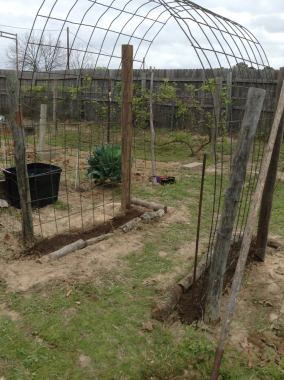
In late winter I erected a cattle panel trellis for the pole beans. I prepared the soil at the foot of the trellis for planting. Soon it was warm enough for bean germination. I planted pole Romano beans on one side of the trellis and pole yard-long beans on the other side. And then I waited. Nothing. In the meantime I planted bush Romano beans. The bush beans germinated and popped through the soil. Pole beans, nothing. After amending the soil a second time, I replanted another set of both pole beans, thinking perhaps I had used seed that was too old. I waited, and again nothing. I planted one side a third time with pole Romano beans. Still nothing. Strange! Meanwhile the bush Romano beans grew quickly, began to flower and produce beans.
I planted a fourth packet of beans on one side of the trellis, this time a packet of traditional green beans- Blue Lake pole beans. On the other side, I planted an old packet of cucumbers. For fun, I threw out a few nasturtium seeds. Amazingly, everything in the 4th planting germinated!
In a few weeks my trellis will be filled with a wild mix of edible flowers, cucumbers and beans. I think I will like this crazy mix even more than what I originally had planned. What if I had given up after the first packet of seeds did not come up?
I wanted something to grow on my DIY trellis so badly that I just kept planting and planting until I achieved success. I just kept going.
This experience with pole beans has given me much food for spiritual thought. I need to have this same determination in my walk with Christ and my witness for Him. My quest for a Christ-like character can’t stop at the first sign of discouragement. I must keep going, keep trying, keep persevering! I need to keep planting seeds of His Love everywhere I go. Amending the soil of hardened hearts in those I encounter with kindness and unselfish service. This is not the time to quit. Keep planting!
“And let us not be weary in well doing: for in due season we shall reap, if we faint not.”
-Galatians 6:9

“Let mothers come to Jesus with their perplexities. They will find grace sufficient to aid them in the management of their children. The gates are open for every mother who would lay her burdens at the Saviour’s feet…. He … still invites the mothers to lead up their little ones to be blessed by Him. Even the babe in its mother’s arms may dwell under the shadow of the Almighty through the faith of the praying mother.”
The Adventist Home, 274
The Joy Bells Quartet from Papua New Guinea share the secret to having joy bells in your heart.
A hundreds chart is an excellent math tool for children. It provides a tangible framework for a child to begin to understand the structure of our number system. Working with a hundreds chart introduces a child to basic concepts such as counting to 10 and more complex ideas like relationships between numbers in a base 10 system.
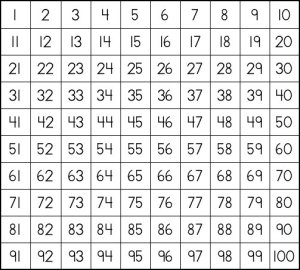
An online interactive hundreds chart can make ‘math play’ fun. You can add color to a chart, erase numbers to better see patterns, adjust the numbers shown and more. Here’s a great online interactive hundreds chart that will do just that. You can add color, use the built-in calculator, block out numbers and more on this HUNDREDS GRID
One of the best ways to learn with a hundreds chart is to just fiddle around with it. A child can learn so much from simply taking time to interact with the numbers in columns, rows and even diagonally. Look for patterns while adding or subtracting, practice skip-counting, look for groupings of numbers, etc.
A visual math learner will enjoy seeing the numbers and patterns made by using the colors and adjustment features on the math chart. A reluctant math learner may find enjoyment in the play aspect of the interactive chart. Give it a try!
Tomatoes – Determinate or Indeterminate
Did you know there are two distinct types of tomatoes? Tomatoes grow in two different ways. The two types of plants are referred to as determinate and indeterminate tomatoes. Here are some differences that I have found.

Determinates grow for their growing period and put on fruit all at once. The plant has a definite limit to its growing capacity or ability to put on fruit. This is a type of tomato that you would like to have in your garden if you are choosing to can your tomatoes. You will get a large crop all at once. They do well being supported with tomato cages.

Indeterminates do not have a limit to its growing capacity, except by its external physical limitations. Indeterminates will continue to grow, as long as they are supported and the weather allows. These vines have been known to grow up to 12 feet or longer. They grow best with a strong support system so the long vines do not break. These plants put on tomatoes at regular intervals, so if you only have a couple plants, you will need to be creative with your planning for preserving your tomatoes. If you have a lot of these plants, you will have a continuous supply of tomatoes for processing, eating fresh, and sharing.
What type of tomato plant you choose will be largely determined by your garden space, your ability to support the plant and your plans for the fruit.
I find that for canning, I like a paste or Roma tomato or a smaller round tomato like Marglobe. Many of these are determinates (but not all of them). I like the determinate varieties because they all come ripe at one time so I can pretty much be done with tomatoes in a 2 week period of time. This is wonderful for canning purposes.
For fresh eating, I like to have tomatoes over a longer period. I have found that indeterminate varieties are wonderful for this purpose. As long as you keep the tomatoes picked, they seem to continue to produce until the end of your growing season. These plants are good to get in early in your garden season so you have a longer continuous supply.
Over the years, the seed companies did not always (and still do not) mention whether a tomato variety is a determinate or an indeterminate type of growing tomato. Gardeners would get jealous over their neighbor’s tomato plants that grew 10 feet tall, while their own remained at a meager 4 feet height. Others watched as some picked a large crop for canning purposes and they were struggling to find enough tomatoes to get a batch for canning. I have been in both categories and it wasn’t until the last couple years that I finally discovered this interesting fact about tomatoes.
So, what can we learn from the types of tomatoes?
We each have different styles of growing and producing fruit.
A typical evangelistic campaign of sending out flyers and having a 3-4 week long session of meetings produces a crop of believers that we work with to produce a harvest. Does it work? Yes.
We also have another style of witnessing in which we put out feelers and have Bible studies with a smaller group, but on a more continuous basis. It produces fruit often in smaller quantities, but in a more continual pattern. Does this work? Yes.
In our homeschool setting, we will find that some children thrive with a large motivated project while others thrive with smaller more steady forms of input and output expectations.
Each style has its own type of work associated with it and its own expected response of success. I have learned there are benefits to the two different types of tomatoes for my home garden. I believe there are also benefits to the different styles of sharing Jesus with those we meet, to the learning styles within our families/homeschools, and to the style of teaching (sometimes switching it up is better for obtaining a different response). Knowing the growing style of the plant helps you to care for it better; knowing the learning styles of those around us, helps us to help them grow better, as well.
To learn more about determinate and indeterminate tomatoes, see the link below:
Should You Grow Determinate or Indeterminate Tomato Plants?
Please share more spiritual insights that determinate and indeterminate tomatoes bring to mind with you in the comments below.
 The Adventist Home Educator