Thoughts on Schedules, Part 1 of 2

Many of us know that a schedule or healthy routine is good for us. However, many of us are too busy or stubborn to sit down and make a schedule that really works for us. We figure that we know what we have to do and that going through the motions to “create a schedule” is unnecessary. Some even feel that orderliness is overrated, that it doesn’t matter what order you get it done as long as you get it done. We’re going to explore some reasons why a schedule is important for homeschooling families.

For many of us, the parent that stays home is usually not confined to a regular work schedule. That allows us to be flexible in our days. However, being flexible shouldn’t mean just flinging order out the window just so we can say we are free to do as we please. Many homeschool parents are heard to say, “We aren’t sending our kids to school, so we don’t have to set our days like the school. We have freedom to set our days how we wish.” While this is true, many of us struggle from time to time to set our days according to any schedule.Get Up

One problem homeschooling parents have with scheduling is the feeling of being tied down. We know we have freedom to make changes, so we do. We also know that routines are good for sleeping, eating and more and yet we’re so afraid to be tied down, that we sometimes throw out all routines all together. We want to challenge you to look at schedules and routines, not as a way to tie you down, not as a way to make you just like the schools and not as a way to take your freedoms away, but to rather use them as a tool to help you accomplish all that God desires for your home and children.

God created the world with order. He gave us days and years and seasons.

In Ecclesiastes 3:1-8 it says,

“To everything there is a season, A time for every purpose under heaven: A time to be born, And a time to die; A time to plant, And a time to pluck what is planted; A time to kill, And a time to heal; A time to break down, And a time to build up; A time to weep, And a time to laugh; A time to mourn, And a time to dance; A time to cast away stones, And a time to gather stones; A time to embrace, And a time to refrain from embracing; A time to gain, And a time to lose; A time to keep, And a time to throw away; A time to tear, And a time to sew; A time to keep silence, And a time to speak; A time to love, And a time to hate; A time of war, And a time of peace.”

We have seasons in our lives. As parents, we have seasons in our lives. As homeschoolers, we will also have seasons in our lives. If we keep this thought in perspective, we won’t feel so tied down to the house and feel as if our lives revolve around potty training, sounding out words, and washing dishes.

In having a home, a schedule is important. We all need sleep; we all need to be fed. Some spouses need to work; some of us need to work. Chores need doing and kids need tending to. There is much to be done in the home and having an orderly home allows us to get it done with less frustration.

With homeschooling, we have just added some elements that most families do not have to contend with. We will be having our children with us all day long. They will be in the home all day long to create messes and get into things. We also have extra books and projects sitting on tables and in rooms that other families do not have to work around. We have essentially chosen a path that is a little harder on us to keep the home neat and orderly.

Alarm ClockOur days are filled not just with 2-4 hours of study work, which some think to mean that we are done with school for the day. Homeschooling is a different type of lifestyle that needs some direction to get it all done. Many of us focus on the fact that we’re home “schooling” and our thoughts tend to think about how we can make everything a learning experience. Yet in doing that, we often forget about the part of the day in which we must carry out the mundane duties of daily living. Sometimes we get them done; sometimes we do not and we think, “Tomorrow will be a better day.” We begin to procrastinate on things that are important, even if we’ve tried to assure ourselves that they are definitely less important than what we accomplished.

“It is the faithful performance of everyday duties that brings the satisfaction and peace that come to the true home worker. Those who neglect to bear part of the responsibilities of the home are the ones who are troubled with loneliness and discontent; for they have not learned the truth that those who are happy are happy because they share the daily routine of work which rests upon the mother or other members of the family. Many are leaving unlearned the most useful lessons, which it is essential for their future good to understand.” {CG 352.4}

A schedule is a tool to help us create routines in the home that are healthy, that help us grow, that keep us happy, and that keep us moving forward. There are many different scheduling resources out there and we will share some with you at the end of Part Two. The best advice however that we can give you is to take this to God in prayer. Ask Him to lead you to that which is right for your family and your home. God knows your circumstances and He has answers for you.

Tomorrow: Part 2 of Thoughts on Schedules

On Solid Ground ~ Day 5: Fixing Broken Parts

Welcome to the  fifth and last day of  On Solid Ground, our special Homeschool Week of Prayer.   Have you been blessed?   Today Pastor  Reeves will share with us : Fixing Broken Parts.

VideoExpired

The theme song lyrics can be found by following this link.  My Hope is Built on Nothing Less  Please sing along with us!  Videos are now available for you to learn sign language to the theme song.

A special thanks to the Bull family from northern Iowa for providing our special music today!

Today’s Prayer Focus: Pray for the decisions that have been made this week, both in your life, in your family and the other families watching.  Pray that God will give us all strength to rise up and follow Him in a mighty and determined way.  Pray for our hearts to be totally and truly committed to God. 

Thanks to all of you who have commented, it has  been so thrilling to hear from homeschool families all over the world.  Pastor Reeves would love to hear from you!  Leave your questions, prayer requests or greetings in the comment form below.

Programming Note:  **The Week of Prayer videos will be posted on the AHE blog only until Sunday, March 10th.**                For those of you subscribing by email, please note that the video may not show up in the email.  Please visit the blog site directly to view the videos.

A special thank you to everyone who has helped out!  Another special thanks to those who have commented here and there and everywhere… 🙂  It has been wonderful getting to know you all.  We’re glad that you’ve all been able to be a part of this special Week of Prayer for Homeschoolers event.  For those that missed any messages, you can catch up through Sunday, March 10th. If that isn’t possible, be watching for details about how to get DVD’s so you can watch as well.  We will post details on the blog and in the next month’s newsletter. 

Learn Sign Language for Our Week of Prayer Theme Song

You may have noticed in our Week of Prayer videos that during the theme song, there is some sign language being used.  We thought you would enjoy learning some of that sign language this week as you are singing along.  In this video we’ve slowed it down and we walk you through the first verse of signs.

You may need to turn up the volume as we talk rather softly.  You may notice some fan feedback noise from the computer it was recorded on.  The webcam offered the ability to mirror the image so that you can learn the signs by following us, instead of trying to reverse them if we did it with a camera.  It isn’t the best recording, but it is adequate for it’s purpose.

Verse One and Chorus

~~~***~~~

Verse Two

~~~***~~~

Verse 3

~~~***~~~

Verse 4

~~~***~~~

Have fun practicing!

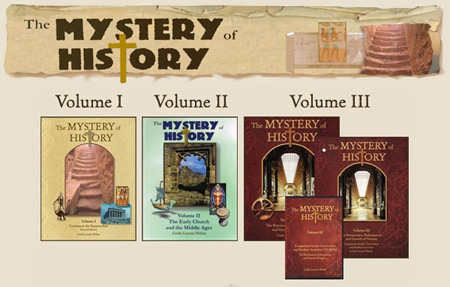
Curriculum Review: The Mystery of History by Linda Lacour Hobar

CURRICULUM REVIEW – THE MYSTERY OF HISTORY by Linda Lacour Hobar


The Mystery of History is a three, soon to be four, volume series that combines world history and Biblical history in a chronological format. For example you will read the lesson about Joshua, Jericho and Rahab (1470 BC) right before the lesson on King Tut (1333 BC) and realize that Joshua and King Tut lived only a few decades apart. The curriculum is designed for use with 3rd-8th graders, but there are adaptations for older and younger students so you can use it to teach all of your children one history lesson together.


The volumes cover the following:

Volume I – Creation to the Resurrection

Volume II – The Early Church and the Middle Ages

Volume III – The Renaissance

Volume IV – Revolutions and Rising Nations (In progress, not yet completed.)


At the beginning of each quarter there is a summary of events around the world to introduce you to the time period you will be studying. Your students will begin each week with a very short What Do You Know? Pretest. This exposes them to new terms that they will be studying and is designed to pique their curiosity. Pretest grades aren’t recorded.


There are about 100 lessons in one volume and the author recommends doing three lessons per week if you are following a traditional 36 week school year. The lessons are written at about a 6th grade level and can be read by the student, by the teacher or both.


After every lesson there is an activity section where the activities are broken down into age groups of Younger Students, Middle Students and Older Students. The activities are designed to reinforce the material from the lesson and help them retain what was learned. There is often more than one activity listed and you can pick and choose to find one that suits your child’s learning style. The students also make memory cards as they go along to reinforce what they’ve learned.


At the end of every third lesson there is a review, a time line activity, some map exercises, and a quiz. At the end of each quarter there are quarterly work sheets to help students sum up what they’ve learned. At the end of each semester there is a test over the previous two quarters.


The book has very detailed instructions on making the memory cards and time line There are also tips on grading. In the back of the book there is a list of books for recommended reading and videos that go along with each lesson. These recommendations are also broken down into categories of the different age groups. There is also an answer key in the back of the book for the exercises, quizzes, worksheets, tests and pretests.


There are several items that can be purchased for each edition. The one that is absolutely necessary is the book. The other items are not necessary, but can be handy. There are audio books available, in CD or down-loadable MP3 format, that read the stories for you. A CD Rom of Printable Reproducibles is available. You can select and print items such as pretests, exercises, quizzes, worksheets, tests, and outline maps, as well as items from the appendices. Without this you would be photocopying from the book itself. There are several other items available that you can find at the Mystery of History website – http://www.themysteryofhistory.info/index.shtml – such as a time line sets, lapbook kits and coloring pages.


SDA NOTES

You will occasionally come across a lesson that we, as Seventh-day Adventists, see in a different light. It is easy to just skip reading that lesson & present it from an Adventist perspective. For example, Constantine is presented in a favorable light for making Sunday a holy day. Obviously we have a totally different opinion on Constantine. I showed the Constantine section from the video The Seventh Day to cover that lesson. The lessons are short and easy to look over ahead of time in order to catch little things like this.


One thing I think most Adventists will appreciate is how Volume I doesn’t dwell on the myths of the Greek and Roman gods in the way many ancient history books do. While a god is mentioned occasionally in the context of the lesson, your children won’t be studying them. For example the lesson on the Olympic games mentions that the women’s games were named after the goddess Hera. That’s it. There was no background on the myths of Hera at all. Just a brief mention of her name. The lesson on Stonehenge avoided the pagan religious associations and brought out that nobody really knows why it was built. It mentions several possibilities and focuses on how it might have been built instead of the why.


In Volume II you may want to cover a few of the lessons in a different way or skip them. Examples would be The Apostles Creed, stories about different “saints”, legends of King Arthur and Beowulf.  My son was Junior High age when we covered this and I chose to go over the lessons and discuss them from an Adventist perspective.


I personally didn’t find anything in Volume III that I felt I needed to approach in a different way. Even if you do, it is very easy to skip or change the presentation of the lesson in question. As of now Volume IV isn’t finished yet, but I feel confident that it will be in the same format and easy to adapt.


MY THOUGHTS

Personally, I absolutely loved this curriculum. My son didn’t like history until we started using The Mystery of History. We were both so disappointed that Volume IV didn’t come out in time for him to use it for 9th grade. Here are the things I like most about it:


  •       You can teach several grade levels at once by going over the lesson together and using different activities and enrichment materials for each age level of your children.


  •       It can be as hands on as you want it to be. There are many things to do in this curriculum, but you don’t have to do them all. Pick and choose what fits your family and your children the best.


  •      You cover history, some Bible, and geography all at the same time, in an interesting and fun way.


I will warn you that the first time I picked this up at a curriculum fair it was so overwhelming that I didn’t buy it. I thought it looked like too too much work. When I went back the next year I look at it again, came home and read some reviews and decided I would give it a try. I’m so glad I did. Just remember when you’re using it that you don’t have to do everything recommended. This is a curriculum that is meant to be adapted to your family and lifestyle. It’s not meant to rule over you and bog you down.

Review by Susie S.

Now it’s your turn. You can rate this product by hovering over the stars below.  Please feel free to add additional comments that may be helpful for others in making a decision towards using this product. 

We appreciate those that are helping with curriculum reviews. If you’d like to help out by writing one or more reviews, please email Melissa at adventisthomeducator@gmail.com

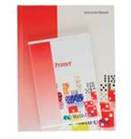
Review for Math-U-See Primer

Product Description

In the Math-U-See Primer level your child will learn not only how to write numerals but also addition and subtraction, basic counting, skip counting, geometric shapes, telling time, and they will be introduced to the manipulative block system.  The Primer level is an introduction of math for the beginner learner, similar to Kindergarten level.

SDA Notes

This math program is hands-on, with block manipulative purchase a must (available from Math-U-See).  The children do not just observe and try and copy, but they are touching, feeling, building, and moving with math.  A rote memorization is not the focus, but rather an understanding.  A child should be able to hold a pencil and write curved lines (for number formation).   The program is not filled with silly animations or cartoons, is simple (not busy) yet attractive, so a child’s eye can easily move from one section of a workpage, to another section.

My Thoughts

Although Primer is geared for children who have not been introduced to numbers, it is a great program to begin math in the homeschool.  From the beginning, Steve Demme sets the foundation of important concepts, such as “units”, decimal street, and the concept of zero.  Key words are introduced at the earliest level and age, so that later on, a child will have heard the terms previously and can immediately understand more difficult concepts.  From a family with two engineers and extensive math background, this is a solid Math program that sets the stage for the correct understanding of math and its comprehension.   A Teacher DVD can be purchased with the textbooks.  For my first curriculum purchase, I opted to buy the DVD.  The children enjoy Mr. Demme and his laid-back yet accurate math teaching and gain encouragement seeing other homeschool children in the video.  The DVD is not needed, however, as every word and concept is written in the Teacher Textbook.  The student textbook offers 6 pages (front and back) of workbook per lesson (30 lessons total), with 3 of the pages offering review that covers previous lessons.  Also, Math-U-See offers two electronic sources – drill pages that are done online and a worksheet generator that can be used to print even more review workbook pages.  This is a great investment and a great beginner program.

Review by Nikki G.

Now it’s your turn. You can rate this product by hovering over the stars below.  Please feel free to add additional comments that may be helpful for others in making a decision towards using this product. 

We appreciate those that are helping with curriculum reviews. If you’d like to help out by writing one or more reviews, please email Melissa at adventisthomeducator@gmail.com

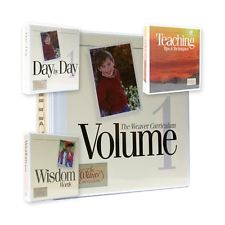
Currriculum Review: The Weaver Curriculum

Product Description: (from the Alpha Omega website)

The Weaver Curriculum is a unique unit-based, Christian homeschool curriculum. For grades PreK-12th, this family-based curriculum uses the same daily Bible theme as a foundation and then creates lessons for each student. Your students are then studying the same main subject the same time with individual lesson assignment geared to each student’s grade level. For example if you were teaching about the plagues of Egypt, your student would learn about frogs in science, Egyptian topography in geography, pharaohs in history, and so forth. Using this one-room schoolhouse type teaching, students are able to glean information from each other.

In this Christian homeschool curriculum, hands-on lessons include experiments, maps, murals, timelines, models, field trips, and more! The Weaver Curriculum is as flexible as it is fun. Parents can decide what topics to teach and what activities to do. Divided into volumes and supplemental volumes, this Christian homeschool curriculum uses binders to organize student lessons by grade level. Multiple subjects are included within each volume and woven into lessons, unlike separated subject focuses like other curriculums. Subjects covered are Bible, Social Studies, Science, Geography and History, Language Arts, Health, and Art.

SDA Notes:

This was a curriculum that Raymond and Dorothy Moore suggested, and they used to carry it in their catalog.  While they later taught others how to create your own unit studies, they found a unit study curriculum often helped parents think outside of the traditional school method of teaching and help them discover the unique method of unit study.

A friend once mentioned that you can easily follow the Bible study portion and add to it SDA thoughts by pulling out the SDA Bible Concordance and reading the appropriate sections as you prepare for your lessons so that you have that information in your thoughts as you teach it to your children.  This can be a great way for parents to get a good study out of it alongside of their children.   Another idea might be using SOP books alongside with your Bible study for older children, for example, Patriarchs and Prophets could be used alongside of Volume One.

My Thoughts:

I have used Volume One twice.  The first time, I used it with 3 of my kids and I found it took a lot of preparation to get all of the activities accomplished and finding all the books we needed to find.  I spent a lot of time at the library searching for books, some of which are not easily available.  If I took books out on library loan, sometimes they didn’t get to me in time for the unit or got to me too early, so the books were hard to use in relation to where we were at.  I found the easiest thing was to go to the library and search topically for books, and use newer books if the older books were not available.  I also found the supplement to be a little difficult to use (the supplement is the book for 7th-12th graders).  The suggestions seemed way ahead of my 7th grader at the time and I struggled to find just one or two items per chapter to add to our studies.  However, I later found out that for that grade level that is all one actually needs.

This second time around, I am doing it with only one child and I am finding the planning much easier.  I am not trying to compile hands on projects for 3 kids, but just for one, which is more manageable for me.  The assortment of books is not as varied, so I do not feel as flustered with needing bi-weekly library visits.  I do have quite the collection of books, and often can find something at home that is comparable to what we need to learn.

I like the thoroughness of the curriculum.  I like that I don’t have to always plan a unit study and that someone has done the work for me, even bringing alternatives so I can switch it up, if we already understand a concept.  I think it is important however to relax and not feel you need to accomplish everything… there is a lot in each Volume and you can easily skip many things and still be doing enough.

There are some helpful things to know with Weaver that will make planning and implementing it much easier.  Try to get the main resources ahead of time.  You often can find these on used book boards or eBay or Amazon.  Skim the book lists so you have an idea of the topics being taught so you can find appropriate books easier.  Join the Unofficial Weaver email list and use their website for additional ideas and helps.  I found this the most helpful, because often someone has already taken the time to figure out an alternative craft that works much easier… or perhaps a review sheet, or sharing field trip ideas and more.

The Day by Day’s are not necessary, but are very helpful for finding age appropriate materials for the study.  It will make planning much easier on you, as well.  The early editions of these are printed so that you need to turn your notebook and it takes up more table space.  The newer editions are printed the same as the other materials in the Volume, so you can put them together and not be turning your book back and forth.  It is best to use similar editions (with the volume package) for page numbers to match up as well.

Wisdom Words is a K-6 Language Arts program that goes along with the Weaver program.  The Day by Day will refer to this book in its Language Arts assignments.  What is nice is if the concept is too hard, you can go back a year and try to work at that level for that concept… or, similarly, move ahead if your child is able.

Teaching Tips and Techniques is a nice book for the parent.  It has helps for ideas for teaching and using the Weaver Curriculum.  It is not necessary, but if you have time to go through it, you may find some tips to make teaching unit studies easier for you.

The Volumes are the main resource of the curriculum.  In it, you will have the Bible Lessons, vocabulary, book lists, field trip ideas, Science, Social Studies, and Language Arts ideas.  It is color coordinated by grade level, so it is easy to find your materials.  It is suggested to take a 2 week time span and make plans.  It is easiest to remove the two week section from the large binders and put it altogether into a smaller binder that you can work with on a daily basis. Just remember to put it back.  When I went back to the volume after not using it for several years, I was missing a unit and I had to hunt for quite a while to find it.

The Supplement Volumes for grades 7-12, are nice if you want to combine your older children into the study.  I have found my children at that age typically are ready to study on their own, but sometimes it is nice to add them in for an occasional lesson to have some family fun together.  So while I agree you can use this curriculum for grades K-12, I prefer different programs for my older children so they can work more independently without needing the constant planning and direction from me.

All in all, I think it is a great program.  The biggest thing I found and heard from others is the amount of teacher planning in the program, which again I think is felt more heavily the more kids you have using it at the same time.  The kids typically enjoy it, but the parents are ones that can burn out with the planning.  However, it is a great way to learn how to create unit studies if you haven’t used one before.  You can jump right in and feel confident you are doing what you are supposed to be doing.

Review by:  Melissa B.

Now it’s your turn. You can rate this product by hovering over the stars below.  Please feel free to add additional comments that may be helpful for others in making a decision towards using this product. 

We appreciate those that are helping with curriculum reviews. If you’d like to help out by writing one or more reviews, please email Melissa at adventisthomeducator@gmail.com

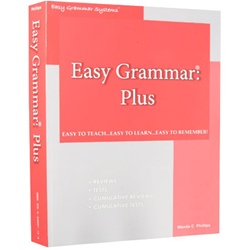
Review: Easy Grammar Plus

Easy Grammar Plus by Wanda C. Phillips

Review by: Melissa B.

Product Description:  Easy Grammar Plus is part of the series Easy Grammar.  It is a one year grammar program for Grades 7 and up.  There is a Student Workbook and a Teacher’s Guide.  The Teacher’s Guide contains reproducible pages of the Student Workbook.  You can copy the pages, or use them directly from the Teacher’s Guide or purchase the separate Student Workbook. The program consists of mastering the prepositions first, as they are the hardest for many to figure out.  Then the other grammar concepts are worked on.  There is a lot of review allowing for concepts not to be lost: each day you do one worksheet, cumulative review, test, or cumulative test.  This program is one where your child can work on their own quite easily with minimal parent involvement.  The program uses underlining, circling, and labeling to identify the parts of speech.  It does not use the diagramming tree that some other programs use.

SDA Notes:  Nothing objectionable.

My Thoughts:  We used this during one year (with journaling and other writing assignments) of their high school years for a refresher of grammar.  (Each child used it a different year, one 12th, one 11th, and another 9th grade.)  We did not use the previous Easy Grammar products and jumping into Easy Grammar Plus was not a problem for my three daughters who used it.  We had used Winston Grammar in 7th grade to cover grammar and we found the programs were similar with how they identified the parts of speech.   My daughters were able to work independently.  We copied pages from the Teacher’s Guide for two children and I found that was inconvenient and keeping the papers together was difficult.  For my third child, I bought the Student Workbook and was more than happy to pay the extra, it made both of us happier.  I think that having a Student Workbook separate from the Teacher’s Guide also decreases the temptation to cheat.  We found the program fit our learning goals without being overly complicated, we were happy with it and plan to use this again with other children.

Now it’s your turn. You can rate this product by hovering over the stars below.  Please feel free to add additional comments that may be helpful for others in making a decision towards using this product. 

We appreciate those that are helping with curriculum reviews. If you’d like to
help out by writing one or more reviews, please email Melissa at adventisthomeducator@gmail.com