September Links and Ideas


September is here!  For many of us, Fall is just around the corner.  A few links and ideas to add a bit of interest and learning fun to this month.
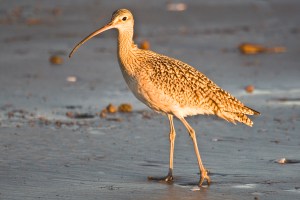
Long-billed Curlew in evening sun, Morro Strand State Beach, Mor

Nature study ideas for September –  The Nature Conservancy’s bird for September is the Long-billed Curlew.  Click the name of the bird to learn the other names that it goes by.   The aster and the morning glory are the flowers for September.  Wouldn’t it be fun to press the flower of the month for a year and create a collection of pressed flowers?

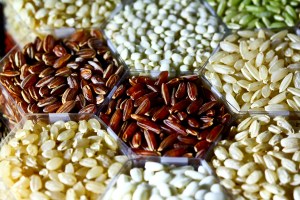
September is Whole Grains Month.  The perfect month to add a new grain to your meal plans. What about trying a new bread recipe? Following a recipe is math, science and technical reading all rolled into one. Homeschooling fun!  And you get bread!
September 12th is National Day of Encouragement.  Why not celebrate by writing notes to friends and family.  Everyone appreciates a bit of encouragement!

September 24th is Punctuation Day.   Here’s a free printable punctuation poster in both UK English and US English.


**Research topics/ideas with a September connection:

The first Continental Congress assembled in Sept. 1774.  In 1776, the Continental Congress changed the name of the new American nation from the United Colonies to the United States.

Composer George Fredrick Handel finished Messiah on Sept. 14, 1741 after working on it nonstop for 23 days.

The Mayflower ship departed England, bound for America on Sept. 16, 1620.



August Links and Ideas

August is here!  A few links and ideas to add a bit of interest and learning fun to the month.

Nature study ideas for August-  The Nature Conservancy’s bird for August is the amazing Painted Bunting.    The gladiolus and poppy are the flowers for August.  Why not take a day to learn more about these beautiful creations?

meteor

The Perseid meteor shower will be in ‘outburst’ this year, meaning they should show up at double the usual rate.  The peak of the meteor shower should be around August 12th.

Children’s Day is celebrated in August in several countries.  Why not create your own children’s day celebration?  Interview some seniors you know about their childhoods.  Learn what children used to wear and do for fun 50, 100 or 150 years ago!


Research topics/ideas with an August connection:

Anne Frank penned her last diary entry on August 1, 1944.

Christopher Columbus set sail on August 3, 1492 with the Nina, Pinta and Santa Maria.

The Krakatoa volcano eruption, one of the most catastrophic in recorded history, occurred on August 26, 1883.


*Perseid meteor image source: Kim MyoungSung


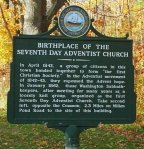
Free Adventist History Resources

Free resources for those families who would like to incorporate Adventist history into their homeschool studies.

JosephBatesTN


Adventist Pioneers Coloring Pages courtesy of  Adventist Heritage Ministry.  

Audio stream of over 100 Adventist pioneer stories courtesy of the University Park SDA church in Oregon.

ld road sign1


                            Lest We Forget : A 5 part printable unit study for upper elementary- jr. high aged students.

Our Adventist Heritage is another set of free printable resources and project ideas looking at                               the lives of early Adventist church pioneers.

450px-Family,_Origins_and_Heritage_Master_Award

There are several Pathfinder awards dealing with Adventist Church history.  Combine them with other doctrinal & Bible awards to earn the Master award for that category.


Don’t forget the Adventist Church’s official Office of Archives, Statistics and Research website– chock-full of photographs,
online archives and more.  An excellent resource for a high school level research project.


July Links and Ideas

**July is National Blueberry Month!  How about using Pickyourown.org to find a U-Pick blueberry farm near you?  What about whipping up a batch of blueberry muffins in time for National Blueberry Muffin Day on July 11th?   Yum!

eagle

**The Nature Conservancy’s  bird of the month is the Bald Eagle.   Why not spend a few days learning about this beautiful creature?

**International Day of Friendship is July 30th,  giving you time to write and mail  letters to new friends and old.

**Apollo 11 orbited the moon in July 1969.   Check out this kid-friendly NASA website and find out what’s going on in space right now.


Research topics/ideas with a July connection:

Amelia Earhart

Annexation of Hawaii

U.S. Patent Office

Johann Sebastian Bach

Sitting Bull

Wait for It, Wait for It….

So your three year old is telling you about the new swing at the park.  The story is taking forever and a day.   You are so tempted to finish his sentences for him!    Here are a few reasons to ‘wait for it’ and let your child get that story out on his or her own.

talking


Your child is developing his oral narrative skills.     Your child is learning how to put sentences together that focus on a central thought or theme.  She increasing her descriptive vocabulary by repeating words and phrases that she has heard you use to tell her story.  He is practicing sequencing skills in relating what happened first, then next and finally.  She is beginning to clue in on the idea of cause-and-effect.    Those skills are a vital part of speech & language development; foundational skills for learning to read and write.

Take a deep breath.  Listen and be encouraging as the story progresses.  Remind yourself that this is homeschooling at its most organic.  No lesson plans needed.

References:
Ripley, Kate.  Developing Narrative Skills.  March 2012. Rosebowl, Southampton.

Reading Aloud is for All Ages!

Becoming a Nation of Readers (Anderson, Hiebert, Scott and Wilkinson, 1985) presented among its findings that “the single most important activity for building the knowledge required for eventual success in reading is reading aloud to children.” This landmark  Commission on Reading report also indicated reading aloud in the home is an essential contributor to reading success, and that reading aloud… is “a practice that should continue throughout the grades.”

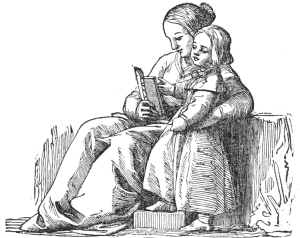
What powerful motivation to include reading aloud as part of a homeschooling schedule!  Most families however, see read-aloud time asMother_reading_to_child_1850 an activity for younger children only.  But as the report states, the practice should continue because the benefits of reading aloud don’t diminish as children grow older.
Pre-Readers

For the very young child, being read aloud to sends a multitude of important messages. The time spent with the reading parent is a vitally important bonding time. The young child gets the message that the act of reading is important, fun and desirable. Even though the child may not begin to read himself for several years, the underlying knowledge needed for reading success is being developed.


Emerging/Growing Readers

As a child enters his emerging reader years, the act of being read to still maintains a place of importance. Motivation becomes key factor in reading success, and being read aloud to keeps that motivation alive. It shows that reading is important and is a skill valued by the family. While the emerging reader listens, he takes note of the sounds of words, how punctuation is used, and begins to develop a personal vocabulary. As the books read aloud become longer, and the words become more difficult, a growing reader is able to gain access to new material with support.

Older Readers

One might think that reading to an older child is not a valuable exercise, but that is far from the truth.  It is one of the best ways to promote independent reading in older readers.  Because most children listen at a higher level than they read, reading aloud is an opportunity to present material they may have difficulty accessing on their own.   Reading aloud may motivate a reluctant reader to try material previously thought too difficult. Reading aloud to older readers also stimulates fluency and vocabulary growth. In addition, taking the time to discuss the reading material is excellent preparation for higher level critical thinking and writing.

Save

Curriculum Review: Mastering the Basic Math Facts

“Students who simply memorize math facts miss a prime opportunity to expand their understanding of equations. Problem solving is the central focus in today’s math classrooms. To be a successful problem solver, students must be able to accurately compute answers, but more than that, they must be able to figure out how to build equations that correspond to problem situations.” – Susan O’Connell and John SanGiovanni. 

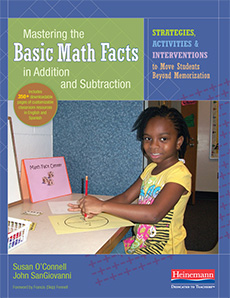
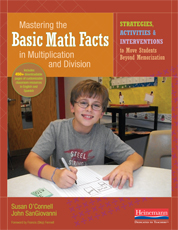
My two new favorite elementary math homeschooling resources are Mastering the Basic Math Facts in Addition and Subtraction  & Mastering the Basic Math Facts in Multiplication and Division.  Both books are by Susan O’Connell and John SanGiovanni .    Two simple books jam-packed full of resources to help your student move beyond simple rote memorization and into an understanding of number relationships and how to use those relationships in math problem solving.

mbmfas

What I enjoy most about both books is that they move far beyond pen and pencil drill sheet practice.  In the addition and subtraction book, each chapter focuses on a specific set of addition facts.  Within the chapter you are given ways to help your student see the “big ideas” of that set of facts, activities to do to explore the facts and targeted practice work. Lots of fun games and practice work ideas are given that meet a variety of learning styles.   The addition facts are then connected to their related subtraction facts to complete the picture.  The same process is used with multiplication and division.

There is a literature link for each set of facts.  The literature link is a fun way to introduce a math concept using a picture book.  I was able to find videos of almost all of the picture books being read aloud on online.  The books are also easily found at your local library.  Mastering Basic Math Facts includes guidance in how to connect the featured literature to the facts as well as math activities based on the picture books to help your child make math connections with other ideas that they know and understand.

The VERY BEST feature of these two books is that the purchase of these books includes a link to 350+ pages of downloadable resources to accompany the book!  Each game, worksheet and literature activity mentioned is a pdf printable in English or Spanish.  The resources are organized by chapter so it is easy to print what you need for the day.  mbmfmd

Although the book is meant for a classroom setting, I have found it totally accessible for a homeschool parent.   I have worked through the Addition and Subtraction book with my student and look forward to completing the Multiplication and Division book.   The math games are fun and don’t require much effort to put them together.   The targeted practice activities were engaging, and I appreciated the higher-level thinking skills that the thought questions require.

This is a valuable book if you are looking to strengthen your student’s basic math fact skills or introducing math facts for the very first time.  If you have a hands-on learner or a very visual student, this book will help meet their needs. Parents of special needs students will the strategies included  This book also makes for great summer math practice with low prep for the parent.  The table of contents, a sample chapter and a free downloadable sample of each book is available at the publisher’s website.