“God has given inquiring minds to youth and children. Their reasoning powers are entrusted to them as precious talents. It is the duty of parents to keep the matter of their education before them in its true meaning; for it comprehends many lines. They should be taught to improve every talent and organ, expecting that they will be used in the service of Christ for the uplifting of fallen humanity.”
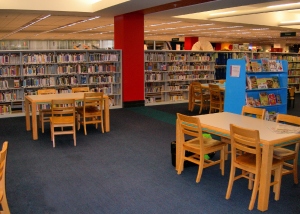
The local public library can be a homeschooling family’s best resource. Here are some ideas for taking maximum advantage of libraries in your area:
Don’t just try the nearest library, make an effort to visit all of the libraries available to you in your area. Different amenities may be available at each location. Get cards from multiple libraries if necessary. Don’t forget to see if the colleges and universities in your area will allow you to check out materials. Colleges with teacher education programs often have excellent educational materials.
Be sure to pick up fliers listing the resources and activities available at each library. What classes, story times, lecture series and tutoring programs are available?
Take time to meet the children’s librarian as well as the reference librarian. These librarians are excellent resources for unit study ideas and research projects. They can alert you to resources that you may not know about. Share what you are planning to study for the year. Many times children’s and reference librarians are looking for ideas on new books to order, and your curriculum plans may help.
Check to see if your library offers inter-library loans for books and videos.
What online resources does your library offer? Online catalogs are very helpful for searching from the comfort of home. Can you renew your library books online? Does your library give out passwords for special online collections and sites?
If your library does not give receipts for books checked out, make it a habit to have your children complete a library book log to keep track of how many books to return. Assign a child to mark the due date on a calendar as soon as you return home.
Are there conference or meeting rooms available for you to reserve to work on a project? A conference room may be a more comfortable space to work in if you are also bringing younger children along.
Does the library have display space available for larger homeschool projects? Perhaps your library may allow your child to display his science project for a week or two.
Are there special library privileges for teachers that you can also use, such as longer check-out dates, or sets of themed materials. It never hurts to ask!
Are there library-related service projects available for your child to participate in? Sorting books for a book sale, organizing display cases, etc.
There has been a great discussion on the AHE-List about how to create unit studies. I was inspired to create a printable of ideas for creating a fun multi-disciplinary unit study based on the Adventurer Club award Spotter. Print the requirements for the Spotter award first, and then this spotter unit study idea list for additional activities.
Join the AHE-List if you’d like to ask questions and share ideas about homeschooling from a Seventh-day Adventist perspective.
There has been a great discussion on the AHE-List about how to create unit studies. I was inspired to create a printable of ideas for creating a fun multi-disciplinary unit study based on the Adventurer Club award Spotter. Print the requirements for the Spotter award first, and then this spotter unit study idea list for additional activities.
Join the AHE-List if you’d like to ask questions and share ideas about homeschooling from a Seventh-day Adventist perspective.
There has been a great discussion on the AHE-List about how to create unit studies. I was inspired to create a printable of ideas for creating a fun multi-disciplinary unit study based on the Adventurer Club award Spotter. Print the requirements for the Spotter award first, and then this spotter unit study idea list for additional activities.
Join the AHE-List if you’d like to ask questions and share ideas about homeschooling from a Seventh-day Adventist perspective.
November! The year 2010 will soon be in the history books. If you need printable calendars for 2011, Donna Young offers a nice variety for homeschool planning as well as for homemaker notebooks.
A Thanksgiving lapbook is a fun way to do a mini US history unit study. This Squidoo page is full of great links to printables and ideas. It even features two links to AHE Mom Rhonda’s photos of Thanksgiving lapbooks her children made few years ago! (Zippy, JD Boy)
For a Thanksgiving lapbook from another perspective, here’s a great link full of ideas for a Native American lapbook. Remember, lapbooks can be expanded or simplified based on your child’s abilities and your time and resources.
Do you need basic math fact printables? Math Fact Cafe features flashcards, drill worksheets, and build-your-own worksheet printables as well as materials for working with time and money.
Training children to be helpers at home lightens the mother’s load as well as teaching children responsibility and diligence.
It can be overwhelming; a home to care for, meals to prepare, laundry, errands. Then there are the children that you feel convicted to educate at home. How do you get it all done?
You don’t. Meaning, YOU- the mother, should not bear the burden of “getting it all done” alone. Children are the junior partners in the home, and as such, must learn to take on a portion of the responsibility of keeping the family firm running smoothly.
“God wants the children of all believers to be trained from their earliest years to share the burdens that their parents must bear in caring for them.” AH, 238
We as parents take great care in planning an excellent curriculum for our children, but often forget an important detail: True Education involves not only the head, but also the hands. Teaching our children to participate in the running of the household is just as much a part of True Education as is scripture memory, or nature study or mathematics.
“Children and youth should take pleasure in making lighter the cares of father and mother, showing an unselfish interest in the home. As they cheerfully lift the burdens that fall to their share, they are receiving a training which will fit them for positions of trust and usefulness. Each year they are to make steady advancement, gradually but surely laying aside the inexperience of boyhood and girlhood for the experience of manhood and womanhood. In the faithful performance of the simple duties of the home boys and girls lay the foundation for mental, moral, and spiritual excellence” AH 288
Is there a simple task that your younger child could do with a little training? Sweeping, folding laundry, collecting the trash? What simple meal that your older child could learn to prepare independently? Do your children rinse their own plates and stack them in the dishwasher after each meal? Have you taught ironing so that your child can prepare everyone’s clothes for Sabbath? As you consider your lessons for the coming weeks, remember to include lessons on appropriate homemaking skills for your children. True Education is educating the whole child.
“The Saviour’s early years were useful years. He was His mother’s helper in the home; and He was just as verily fulfilling His commission when performing the duties of the home and working at the carpenter’s bench as when He engaged in His public work of ministry. In His earth life Christ was an example to all the human family, and He was obedient and helpful in the home. He learned the carpenter’s trade and worked with His own hands in the little shop at Nazareth…. As He worked in childhood and youth, mind and body were developed. He did not use His physical powers recklessly, but in such a way as to keep them in health, that He might do the best work in every line.” AH, 290