Fun Links for May

Mini offices are a great way to organize individualized reference material for your children.  A mini office is simply two or more file folders joined together with multiplication facts, vowel sound charts, or state names, etc, attached to the folder for easy reference.
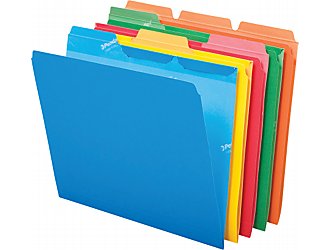
image credit: Staples

You can make a mini office for each of your children, with the material appropriate for his/her grade level.   With a few file folders and a couple of clicks of a mouse, you can create a portable reference library  for practically pennies.  Here are some great links to get you started on the road to creating an inexpensive but useful resource for your homeschool.

*Easy directions for putting file folders together to create the foundation of your mini office.

*Homeschool Creations shares some great photographs of very nicely made mini offices.

*Mrs. Meacham’s mini office page- my personal favorite for inspiration and printables.

*Jimmie’s Squidoo mini office page- be sure to bookmark this page, it’s FULL of great links!
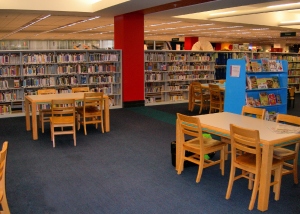
Making Maximum Use of the Library

The local public library can be a homeschooling family’s best resource. Here are some ideas for taking maximum advantage of libraries in your area:

  1. Don’t just try the nearest library, make an effort to visit all of the libraries available to you in your area. Different amenities may be available at each location. Get cards from multiple libraries if necessary. Don’t forget to see if the colleges and universities in your area will allow you to check out materials. Colleges with teacher education programs often have excellent educational materials.
  2. Be sure to pick up fliers listing the resources and activities available at each library. What classes, story times, lecture series and tutoring programs are available?
  3. Take time to meet the children’s librarian as well as the reference librarian. These librarians are excellent resources for unit study ideas and research projects. They can alert you to resources that you may not know about. Share what you are planning to study for the year. Many times children’s and reference librarians are looking for ideas on new books to order, and your curriculum plans may help.
  4. Check to see if your library offers inter-library loans for books and videos.
  5. What online resources does your library offer? Online catalogs are very helpful for searching from the comfort of home. Can you renew your library books online? Does your library give out passwords for special online collections and sites?
  6. If your library does not give receipts for books checked out, make it a habit to have your children complete a library book log to keep track of how many books to return. Assign a child to mark the due date on a calendar as soon as you return home.
  7. Are there conference or meeting rooms available for you to reserve to work on a project? A conference room may be a more comfortable space to work in if you are also bringing younger children along.
  8. Does the library have display space available for larger homeschool projects? Perhaps your library may allow your child to display his science project for a week or two.
  9. Are there special library privileges for teachers that you can also use, such as longer check-out dates, or sets of themed materials. It never hurts to ask!
  10. Are there library-related service projects available for your child to participate in? Sorting books for a book sale, organizing display cases, etc.

Motivation Monday

“Parents, set apart a little time each day for the study of the Sabbath school lesson with your children. Give up the social visit if need be, rather than sacrifice the hour devoted to the lessons of sacred history. Parents as well as children will receive benefit from this study. Let the more important passages of Scripture connected with the lesson be committed to memory, not as a task, but as a privilege. Though at first the memory be defective, it will gain strength by exercise, so that after a time you will delight thus to treasure up the words of truth. And the habit will prove a most valuable aid to spiritual growth.”

Counsels to Parents, Teachers, and Students, 137, 138.

Pre-Reading as a Study Skill – Free Printables Included

As your student moves into his late-elementary and middle school years, you may find that your student is beginning to use  textbooks for independent study.  Give your student a strong start in independent study by teaching them the habit of “pre-reading”.

Teaching your student to pre-read his textbooks and other non-fiction text is a valuable reading comprehension and study skill. Many students make the mistake of just opening their textbook and starting to read the assigned chapter “cold” without any prior preparation for reading.

Taking time to learn how the reading assignment is structured, and what will be taught helps your student organize his thinking before beginning to read.   Learning the habit of  pre-reading or previewing a chapter before actual study will improve comprehension  and retention of material.

Here is a helpful organizer chart to help you and your student practice the skill of  pre-reading.

Click on the links below to print a copy of the organizer sheet and instructions.

 Pre-Reader Organizer Instructions

Pre-Reading Organizer


Pre-Reading as a Study Skill – Free Printables Included

As your student moves into his late-elementary and middle school years, you may find that your student is beginning to use  textbooks for independent study.  Give your student a strong start in independent study by teaching them the habit of “pre-reading”.

Teaching your student to pre-read his textbooks and other non-fiction text is a valuable reading comprehension and study skill. Many students make the mistake of just opening their textbook and starting to read the assigned chapter “cold” without any prior preparation for reading.

Taking time to learn how the reading assignment is structured, and what will be taught helps your student organize his thinking before beginning to read.   Learning the habit of  pre-reading or previewing a chapter before actual study will improve comprehension  and retention of material.

Here is a helpful organizer chart to help you and your student practice the skill of  pre-reading.

Click on the links below to print a copy of the organizer sheet and instructions.

 Pre-Reader Organizer Instructions

Pre-Reading Organizer


Pre-Reading as a Study Skill – Free Printables Included

As your student moves into his late-elementary and middle school years, you may find that your student is beginning to use  textbooks for independent study.  Give your student a strong start in independent study by teaching them the habit of “pre-reading”.

Teaching your student to pre-read his textbooks and other non-fiction text is a valuable reading comprehension and study skill. Many students make the mistake of just opening their textbook and starting to read the assigned chapter “cold” without any prior preparation for reading.

Taking time to learn how the reading assignment is structured, and what will be taught helps your student organize his thinking before beginning to read.   Learning the habit of  pre-reading or previewing a chapter before actual study will improve comprehension  and retention of material.

Here is a helpful organizer chart to help you and your student practice the skill of  pre-reading.

Click on the links below to print a copy of the organizer sheet and instructions.

 Pre-Reader Organizer Instructions

Pre-Reading Organizer