The Fruit of Idleness

This  parent-teacher conference was to discuss a particular young man who sullenly dragged himself into class each day as if it were a terrible inconvenience.  Every day he sat in his desk without opening a book or lifting a pencil.   As was her custom, the school counselor started the meeting by asking the mother to share about the young man daily life at home.   The counselor asked if the young man had any chores or work responsibilities at home.  No, the mother responded, he was not expected to do any chores at home.  Not even take out the trash?  The mother responded that she took out the trash, and did not ask him to do anything in the way of work around the home.  With that response, the school counselor stood up, declared that the conference was over and that  all of the teachers could leave the meeting.    Incredulous,  the mother asked why.  I’ll never forget the counselor’s response:

“If you have never taught him to work at home,

  how do you expect that we will get him to work at school?”
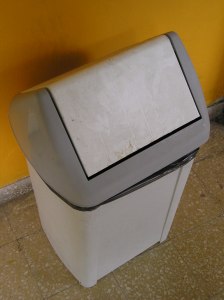
“He doesn’t even take out the trash?”

Of all of the parent conferences I attended in my years as a classroom teacher, that particular conference will forever stand out in my mind.   The look on the poor mother’s face as she realized her mistake!  Thankfully, the counselor sat back down to discuss with the stricken mother ways to begin to solve the problem.   As I left that conference, I was convicted anew of  the eternal  importance of teaching children the value of work.   Now, as parent-teacher to my own children, teaching habits of industry is a vital part of my True Education goals.

“Parents cannot commit a greater sin than to neglect their God-given responsibilities in leaving their children with nothing to do; for these children will soon learn to love idleness and grow up to be shiftless, useless men and women. When they become old enough to earn their living and are taken into employment, they will work in a lazy, droning way and will think they will be paid just the same if they idle away their time, as if they did faithful work. There is every difference between this class of worker and the one who realizes that he must be a faithful steward. In whatever line of work they engage, the youth should be “diligent in business, fervent in spirit, serving the Lord”; for he that is unfaithful in that which is least is unfaithful also in much.”

Child Guidance – 122,123

September Brings

Warm September brings the fruit;

Sportsmen then begin to shoot.*

September's flower, Forget-me-not

September is Children’s Eye Health and Safety Month.  It’s a great time to learn more about how our eyes work.  Here are some free activities from the American Optometric Association.

John Chapman, better known as Johnny Appleseed was born in September.  Enjoy a unit study of apples and create a lapbook of Johnny Appleseed and celebrate with an apple pie!

September 22 is the first day of Autumn.  As the leaves begin to change color, this is a great time to do a study and lapbook on trees and leaves. Your older students may enjoy completing the Pathfinder club Tree honor.

*The Garden Year, by Sara Coleridge

September Brings

Warm September brings the fruit;

Sportsmen then begin to shoot.*

September's flower, Forget-me-not

September is Children’s Eye Health and Safety Month.  It’s a great time to learn more about how our eyes work.  Here are some free activities from the American Optometric Association.

John Chapman, better known as Johnny Appleseed was born in September.  Enjoy a unit study of apples and create a lapbook of Johnny Appleseed and celebrate with an apple pie!

September 22 is the first day of Autumn.  As the leaves begin to change color, this is a great time to do a study and lapbook on trees and leaves. Your older students may enjoy completing the Pathfinder club Tree honor.

*The Garden Year, by Sara Coleridge

September Brings

Warm September brings the fruit;

Sportsmen then begin to shoot.*

September's flower, Forget-me-not

September is Children’s Eye Health and Safety Month.  It’s a great time to learn more about how our eyes work.  Here are some free activities from the American Optometric Association.

John Chapman, better known as Johnny Appleseed was born in September.  Enjoy a unit study of apples and create a lapbook of Johnny Appleseed and celebrate with an apple pie!

September 22 is the first day of Autumn.  As the leaves begin to change color, this is a great time to do a study and lapbook on trees and leaves. Your older students may enjoy completing the Pathfinder club Tree honor.

*The Garden Year, by Sara Coleridge

Motivation Monday

“Let the study of books be combined with useful manual labor, and by faithful endeavor, watchfulness, and prayer, secure the wisdom that is from above.    This will give you an all-round education.”

Messages to Young People, 174

Play Dough For More Than Just Playtime

It’s time to rethink play dough.   More than just a playtime toy, play dough can also be a fun addition to your collection of manipulatives to facilitate creative learning. There lots of ways to use play dough as part of your lessons, but first we need to start our learning by making some homemade dough! Let your older children join the fun by having them make the recipe for younger siblings. The older children will get valuable practice in reading a recipe and following directions, as well as proper measuring. Once the play dough is made, you will find that older children will enjoy using it as much as younger ones!

Play Dough

2 cups flour
3 tbsp cream of tartar
1/2 cup salt
4 tbsp oil
1/2 cup boiling water
food coloring
Mix dry ingredients together. Mix oil, food coloring and boiling water in a separate container. Stir liquid mixture until cool enough to knead. Knead until smooth. If play-dough is too dry, add more water, a little at a time. If play-dough is too crumbly, knead in a small amount of oil. Store in an airtight container.

No-Cook Play Dough

4 cups flour
1 cup salt
4 tbsp oil
1 and 1/2 cup water
Mix oil and food color together before adding to dry mixture. Mix until pliable. Keep in container or plastic bag.

Play dough recipes courtesy of Prekinders.com

Now that you have a batch of dough in fun colors, what can you do with it to add educational value?

FIDGET WIDGET – My favorite use for play dough is as a “fidget widget”. A small ball of dough kneaded in an active child’s hands can help them listen more carefully as a lesson is being taught. Having something to hold and squeeze instead of wiggling in a seat or tapping a pencil or foot can help a kinesthetic child concentrate more easily.

COUNTERS – Beginning math students will have fun creating their own counters for the day’s lesson. Line them up and teach ordinal numbers, create patterns with different colors or practice simple addition and subtraction.

ROPE LETTER/NUMBERS – Print a single letter of the alphabet on a sheet of paper, and let your student make a long rope with the dough, then form the letter over the outline on the paper. Your kinesthetic learner will love the hands-on time. Works great with numbers as well.

READING COMPREHENSION – At the start of your read-aloud time, give each child a portion of the play dough Have them create something from the story to share with everyone at the end of the read-aloud session. It could be an important character or item from the story, an aspect of the setting, or a symbol representing something from the reading.

EARLY MATH SKILLS – Play dough is a fun and easy way to teach concepts like large/small, tall/short, etc. Add some fun cookie cutters and you can work on learning shapes.

FINE MOTOR SKILLS – Practice cutting with a small slab of play dough and an extra pair of safety scissors. Little fingers will find play dough much easier to cut and handle than a sheet of paper.

NATURE IMPRESSIONS – Items collected on nature walks often make interesting impressions. You could even create a guess-the-nature-item game based on the impression in the play dough.

Geocaching- Part 1 ~ Guest Post

Vicky Duran is a homeschooling mother from near Minneapolis, Minnesota. She has two children, ages 11 and 4, and is also known to educate other children through homeschooling at her house. Vicky and her family discovered geocaching about a year ago and have a great time exploring parts of their area they had never explored before.  This week we will feature a 3-part series where Vicky shares about geocaching as an educational family activity.


Hey there, I keep hearing this word “Geocaching,” but I don’t know what it is, can you tell me?

Geocaching is word that came into existence nine or ten years ago when the military opened up the Global Positioning Satellite system for public/commercial use. Geo comes from “Of the Earth,” and “Caching” means to hide or store away. So we have “to hide away on the earth.” Geocaching started when GPS enthusiast Dave Ulmer hid a navigational target in the woods, and posted the coordinates on a GPS users group online. The idea was simple: Hide a container out in the woods and note the coordinates with a GPS unit. Someone with a GPS unit copied his coordinates down, and then searched for his hidden cache using only his GPS unit. Ulmer’s idea was a hit, and geocaching was born.

Tell me more.

Geocaching is a family-friendly activity with two parts – hiding caches and finding them. Let me explain. With the increasing popularity of GPS units, in particular camping and trail devices, it is easy to hide a container containing small trinkets and a logbook somewhere in the world – generally close to where you live.

It sounds like this might be a pretty expensive activity – you’re talking GPS units and “hiding containers.” How much is all this going to cost?

Ready to go, with GPS unit in hand!

Well, as with any activity, there is some cost to it, but getting started is not as much as you may think. You do need a GPS unit, of course; a kid-oriented Geomate Jr. runs about $70. For something more programmable, a Garmin ETrex is about $99. The price of a unit can go up from there. As far as containers go, you can use an empty peanut butter container or even an empty 35mm film canister. Some people get creative and use empty fire extinguishers, or even a cheap water bottle inside a hollowed-out stump. For fun, some people buy “trick” containers such as fake rocks or even fake outdoor faucets.

Inside the container, would be at minimum a log book of some kind. Larger containers would hold trinkets for trade – often little toys from party favors, from kids’ meals at fast food joints, or things you would find at a dollar store.

That doesn’t sound too bad. But what do you with all of that stuff?

First of all, let’s talk about finding a cache since that is the way many people begin. Let me share what our family did. Like you, I had heard the word “geocaching” kicked around in various conversations and once in the while, the news. My husband and I finally decided to stop at one of our state parks on the way home from a camping trip. There, we checked out a unit and went on our very first geocaching adventure. It was a multi-cache, meaning we had several stops to go to (like a treasure hunt) before we finally found the real cache. Managing the GPS unit was simple as we programmed in the various coordinates….

Wait, that is the second time I have heard coordinates from you. Can you explain that?

Sure, you know about lines of latitude and lines of longitude. That is what I am talking about. A GPS coordinate is a series of numbers that indicate your latitude and longitude down to the minutes and seconds. Dave Ulmer’s first cache was hidden at N 45° 17.460 W 122° 24.800.

I understand. Go on…

Anyway, we finally found the cache located tucked away in a washed up log on a beach at our state park. The cache was an old military ammo box which is very popular in caching. Inside were trinkets of all sorts, most of which were of very little value. There was also a log to sign as proof that we really did find it. Once we signed the log and made a trinket trade, we made sure to rehide the cache exactly as we found it. That was our first experience.

There was one more step. When we got home, we logged our find at www.geocaching.com.

Tomorrow – Hidden caches and Travel bugs