Fun Links for January

Happy New Year! 2011 is before us, full of possibility.  Here are some links to start off the new year.
**Looking for a Bible Reading Plan for younger children? Here’s the Adventist Junior Youth Bible Year Plan.   It is a four -year plan that divides the Bible readings into themes by chapters, such as Prophecy, Praises and Peace.

** If this is your year to get organized as a homeschooling mom, here are some great ideas for creating a home management binder. Pick and choose ideas that fit your needs.

**Here are some Pathfinder Honors that would make great unit studies for the new year.   These are most appropriate for upper elementary age students and above.

Personal Evangelism

Temperance

Stewardship

**If you are studying Adventist Pioneers in the coming year, AdventSource has a set of posters that may be helpful to your study.
Nature Study-themed Gift Ideas

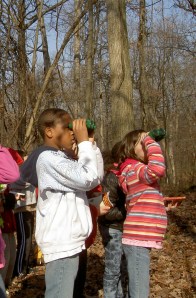
Binoculars – It is not necessary to spend hundreds of dollars for a binoculars. A good quality pair can be had in the $20-$40 range. With a little practice, children will enjoy using binoculars to observe nature.

Magnifying Glass– There is nothing more fun than a sturdy magnifying glass! Even very young children will enjoy examining collected items using a magnifying glass.

Field Guides – Field guides will help make your nature study experiences much more informative and satisfying. If at all possible, try to purchase local field guides, specific to your area, for birds, insects and wildlife.

Butterfly Net – A good quality butterfly net is fun for catching insects. Be sure to find one with a sturdy handle and frame: the net will get vigorous use in younger hands.

Collection Jars – These can be fun to make. A sturdy plastic container, like a peanut butter jar makes a good collection jar. A bit of netting and a canning jar ring will provide air for any live creatures you may find.

Sketch Pad and Writing/Drawing Pencils– A sketch pad with a sturdy backing or attached to a clipboard will make creating nature sketches and notes much easier.

Watercolor materials– Most children love to experiment with watercolors. A pad of watercolor paper, a few nice brushes and some paints or watercolor pencils will provide lots of fun creating nature paintings.

December Brings…

Chill December brings the sleet,

Blazing fire, and Christmas treat.*

Here we are at the start of December! 2010 is nearly over! Here are some fun links for the month of December and to take you into the new year.

The Centers for Disease Control and Prevention has a fun website focusing on the importance of eating fruits and vegetables. Here’s a fun challenge: use the CDC’s Fruit and Vegetable of the Month calendar to introduce a new fruit or vegetable to your family’s diet.

Looking for Physical Education ideas to add to your homeschool? Here’s the homeschooler page for the President’s Challenge fitness program.


Take a winter zoo trip. We tend to go to the zoo in warmer months, but winter can be a great time to visit your local zoo. Many zoos feature special winter programs that show how the animals handle winter weather.

This is snowflake making season in the US. How about some ideas for integrating math or language arts with an afternoon of paper cutting fun? Here’s an article with a few ideas to get you started. It’s also fun to make virtual snowflakes— no paper scraps to clean up!!

* The Garden Year, by Sara Coleridge

Making Maximum Use of the Library

The local public library can be a homeschooling family’s best resource. Here are some ideas for taking maximum advantage of libraries in your area:

  1. Don’t just try the nearest library, make an effort to visit all of the libraries available to you in your area. Different amenities may be available at each location. Get cards from multiple libraries if necessary. Don’t forget to see if the colleges and universities in your area will allow you to check out materials. Colleges with teacher education programs often have excellent educational materials.
  2. Be sure to pick up fliers listing the resources and activities available at each library. What classes, story times, lecture series and tutoring programs are available?
  3. Take time to meet the children’s librarian as well as the reference librarian. These librarians are excellent resources for unit study ideas and research projects. They can alert you to resources that you may not know about. Share what you are planning to study for the year. Many times children’s and reference librarians are looking for ideas on new books to order, and your curriculum plans may help.
  4. Check to see if your library offers inter-library loans for books and videos.
  5. What online resources does your library offer? Online catalogs are very helpful for searching from the comfort of home. Can you renew your library books online? Does your library give out passwords for special online collections and sites?
  6. If your library does not give receipts for books checked out, make it a habit to have your children complete a library book log to keep track of how many books to return. Assign a child to mark the due date on a calendar as soon as you return home.
  7. Are there conference or meeting rooms available for you to reserve to work on a project? A conference room may be a more comfortable space to work in if you are also bringing younger children along.
  8. Does the library have display space available for larger homeschool projects? Perhaps your library may allow your child to display his science project for a week or two.
  9. Are there special library privileges for teachers that you can also use, such as longer check-out dates, or sets of themed materials. It never hurts to ask!
  10. Are there library-related service projects available for your child to participate in? Sorting books for a book sale, organizing display cases, etc.

November Brings…

Dull November brings the blast;

Then the leaves are whirling fast.*

November! The year 2010 will soon be in the history books. If you need printable calendars for 2011, Donna Young offers a nice variety for homeschool planning as well as for homemaker notebooks.

A Thanksgiving lapbook is a fun way to do a mini US history unit study. This Squidoo page is full of great links to printables and ideas. It even features two links to AHE Mom Rhonda’s photos of Thanksgiving lapbooks her children made few years ago! (Zippy, JD Boy)

For a Thanksgiving lapbook from another perspective, here’s a great link full of ideas for a Native American lapbook. Remember, lapbooks can be expanded or simplified based on your child’s abilities and your time and resources.

The Ellen G. White Estate features a set of Adventist heritage lessons for students K-12. Included are lesson plans, worksheets and mp3 stories of Adventist pioneers.

Do you need basic math fact printables? Math Fact Cafe features flashcards, drill worksheets, and build-your-own worksheet printables as well as materials for working with time and money.

*The Garden Year, by Sara Coleridge

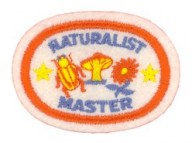
Become a Naturalist Master

Become a Naturalist Master!

How about a fun nature study curriculum for your older student courtesy of Pathfinders! Your student may enjoy becoming a Naturalist Master using the Pathfinder Club honors for a curriculum. Your student will need to complete six of the following honors:

Amphibians

Birds, Advanced

Ferns

Fungi

Insects

Mammals

Moths and Butterflies

Trees

Shrubs

Stars

Weather

and one honor from the following list:

Bird Pets

Cats

Dogs

Fishes

Poultry

Small Mammal Pets

Don’t know enough about fungi to work on the honor? That’s okay, the Adventist Youth Answer Book at Wikibooks is a great resource for completing the honor requirements. If you’d like the patches that go with each honor, ask your pastor to put you in contact with the Area Coordinator for Pathfinder Clubs in your conference.

Pre-Reading as a Study Skill – Free Printables Included

As your student moves into his late-elementary and middle school years, you may find that your student is beginning to use  textbooks for independent study.  Give your student a strong start in independent study by teaching them the habit of “pre-reading”.

Teaching your student to pre-read his textbooks and other non-fiction text is a valuable reading comprehension and study skill. Many students make the mistake of just opening their textbook and starting to read the assigned chapter “cold” without any prior preparation for reading.

Taking time to learn how the reading assignment is structured, and what will be taught helps your student organize his thinking before beginning to read.   Learning the habit of  pre-reading or previewing a chapter before actual study will improve comprehension  and retention of material.

Here is a helpful organizer chart to help you and your student practice the skill of  pre-reading.

Click on the links below to print a copy of the organizer sheet and instructions.

 Pre-Reader Organizer Instructions

Pre-Reading Organizer