Motivation Monday

“Let every youth and every child be taught, not merely to solve imaginary problems, but to keep an accurate account of his own income and outgoes. Let him learn the right use of money by using it. Whether supplied by their parents or by their own earnings, let boys and girls learn to select and purchase their own clothing, their books, and other necessities; and by keeping an account of their expenses, they will learn, as they could learn in no other way, the value and the use of money.”

Counsels on Stewardship, 294.

Bird Unit Study Resources

Are you thinking of participating in the Great Backyard Bird Count but need a few ideas to “flesh out” your unit study on birds?  Here are a some links that will get your creative juices flowing to create a project of interest for students of all ages:

Bird unit study ideas from Adventist Home Educator

All About Birds from Cornell Lab of Ornithology

Bird crafts from DLTK Kids

More Bird crafts from Family Fun

Cross-curricular ideas for bird unit study at Squidoo

Bird coloring pages at Squidoo

Printable Map Resources

Printable outline maps are always valuable to homeschool families. Here is a selection of maps to meet a variety of geographical and historical needs.

Online Map Bank – A huge selection of maps categorized by country, region empire and event. Middle to high school level.

NASA Outline Maps- A downloadable .pdf file of continents and regions. Upper elementary to high school level.

Eduplace Outline Maps – Historical and geographical maps. Primary to upper elementary level.

US Dept. of the Interior printable maps- A variety of US maps, including some with climate or other science information. Upper elementary to high school level.

National Geographic Education – A beta (test) site from National Geographic featuring customizable, printable maps. Upper elementary to high school level.

Free SDA Resources to Use in Your Homeschool

Here is a list of free SDA resources that you can use/adapt to fit the needs of your homeschool program.   This is not a comprehensive list,  so look for a new list with even more resources coming soon!


Bible/Church History/SDA pioneers

God’s Messenger – Lesson plans and mp3s on SDA pioneers.

Youth Bible Reading Plan – A four year Bible reading plan for young people.

The Bible Story lesson plans Volumes 1-6 and Volumes 7-10. – From the South Pacific Division, lesson plans to accompany the “blue books” that so many of us have on our bookshelves. Download Note: the documents are large!

Planning a study of Adventist pioneers ? This gallery of drawings of Adventist pioneers will be helpful to your study. Adventist Pioneer Library has a nice page with brief biographical sketches and pictures as well. If you are also creating a time-line of church history, here’s a sample parallel timeline showing key events in US history, world history and SDA church history. Makes a great model to help your student create their own parallel time-line.

Free study guides for 22 E.G. White books.

History/Geography/Missions/Biographies

Maranatha Volunteers International – Lots of inspiration for hands-on mission work.  Free DVDs available.

Adventist Missions– Lots of ideas and resources.  Be sure to check the past children’s quarterlies for games, puzzles and recipes.

Adventist Frontier Missions– Inspiring first-hand accounts of reaching the unreached.

CIRCLE : Browsing Adventist Missions – A page full of Adventist mission websites and resources.

Visionary for Kids – Online kids magazine issue focusing on Adventist missions.


Unit Studies

Adventurer and Pathfinder awards make great outlines for creating fun unit studies.

Adventurer Club Awards- Award requirements

Adventurer Awards Wikibook Helps for completing awards.

Pathfinder Club Honors Honors requirements

Pathfinder Honors Wikibook Helps and answers for honors


Bible Memorization Motivation

  A few weeks ago we were privileged to participate in a Bible Memorization Seminar in our area.  The four Nebblett siblings came fromNew Mexicoto teach and train on this and other spiritual topics.  What a blessing!

As a child, my brain memorized pretty fast.  I remember earning a beautiful new Bible for memorizing a large number of verses one time.  The verses I learned then have stuck with me, at least in part, until this day.  But the verses I’ve worked on in the last couple of decades are only there in general meaning, or paraphrase.  The older I get, the harder it seems to be to memorize, so sadly, I have kind of given up on memorization, making excuses, like I’m too busy to do that right now. 

I thought the seminar would be really good for my kids, motivating them to make the best of their brain while it is young, but I found it was very helpful for me too.
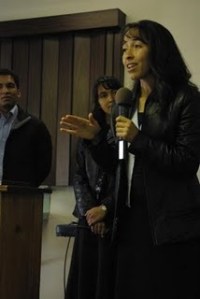
 

Our guest speakers are all in their 20’s.  They come from the same family, but they have different personalities, and learning styles.  They have figured out that they all memorize best a little differently.  One is more auditory, saying the verses out loud, or listening to them.  One is more visual, reading the verses, and remembering how the verse looks on the page.  One is more creative, drawing stick figures to help illustrate the verses.  One like to be more active when memorizing.

Here are some of the points our guest speakers shared with us, taken from their own experience and from a survey they conducted among some other young people.

1.  Don’t try to memorize laying down.  Our cozy warm bed is better for putting us to sleep then memorizing scripture.  It is better to be upright, or even active while memorizing.

2.  Experiment with different ways of memorizing to see which one(s) work better for you.

3.  Try including more then one method of memorization while working on specific verses.

4.  It might help you if you memorize out loud with someone else.

5.  Accountability is very important.  Find a friend to check on you and see if you’ve memorized your verses, and to encourage you to keep working on more.



The most fun aspect of the seminar was when they divided us up into four groups.  Each group was assigned a section of Revelation 22 to memorize.  Then each of the siblings went to one of the groups and worked with them on their verses.  After 15 minutes, the siblings rotated, and the next sibling worked on our verses with us in a different way.  At the end of an hour, I didn’t have my verses completely memorized, but I was well on the way.  Each group then stood up, one group at a time, and recited their section, so the whole chapter of Revelation 22 was recited, in order.  We relied on other members of our group to help us, but all in all, I thought it was a great success, and a thrill to hear the whole chapter aloud.

I have since thought about Bible memorization and my old brain, and realized I am really good at excuses.  Is it impossible for me, at my age to memorize?  No.  I know I could.  I just haven’t put in the time.  Do I want to have scripture in my heart and mind?  Yes, absolutely yes!  I have decided that even if I don’t memorize quickly, that I should keep working on it, because the more I work at it, the more of it I will have in my brain, even if it is just fragments and pieces.  God can use fragments and pieces at the right time to encourage me, or keep me out of trouble.

I am excited to say that after a search of the Internet, I have found something that is helping me memorize much faster.  At Scripture Typer there is free online software to help you practice typing verses until they are memorized.  It is simple, and uses the visual and kinesthetic modalities all at once as you type the verses you wish to memorize.  I have been working on it for a couple weeks now and have to excitedly report that I’ve already memorized Romans 8: 1 – 5.  I know that doesn’t look like much, but it is major progress for me, and I’m working now on verses 6 – 9.  At Scripture Typer you can download the verses you wish to work on, in the Bible version of your choice, and it will keep track of your progress for you, and even give you reminders to go back and review the verses you have worked on in past weeks.  The only draw back is that you must have an Internet connection to use it.  And my only suggestion to make it better, is if you would speak the verses out loud as you type, because then you would be using three learning modalities, and it might even stick a little quicker.

I really encourage young people to memorize all they can, while their brain is still active and quick, but not to give up when it starts showing its age.  I encourage people with middle age and older brains to try again, and not give up.  I think it might even help to keep us younger, and will certainly help our spiritual lives.  I’ve already been blessed by several special new thoughts I’ve gained in my work on Romans 8, and as you can see, I’ve only completed a very few verses.  I’m not going to give up.  And next time you see me, you can quiz me to see if I can remember any of them.

Heartfelt thanks goes to Barbara at A Wildflower Morning for sharing with us this encouraging post.   Originally posted on her blog on 5/16/11.   *All photos in this post by William.

Nature Study Ideas for Older Students

Many times when nature study is discussed as a part of homeschooling, it is within the context of introducing nature to younger children. We often think of nature study as helping small children to understand the natural world around them. What about middle and high school aged students? How can we make nature study attractive to them? It just might be that we are not thinking creatively enough. Nature study with older students is not just about getting out in nature, but about combining their interests and abilities with the enjoyment of nature.

Photography- Whether it’s learning the art of closeup botanical shots or action shots of nature, many older students will eagerly get out in nature if a camera is put in their hands.

Fine Art- Your artistic older student may enjoy time learning to draw or paint plants or landscapes. A series of works featuring a particular plant or animal makes a great project that combines both art and science.

Birdwatching- Birdwatching can be as simple or involved as you desire to make it. Add in photography, drawing or painting and creating bird-friendly habitats, and the list of activities is nearly endless.

Beekeeping- Just recently in my area there was a news report of a car being swarmed with bees. The certified beekeeper who came to collect the bees was a 17-year-old young man with his own business. Many beekeeping clubs are actively looking for young people to join and learn to keep the craft from dying out.

Hiking- What better way to enjoy nature up close and personal? Most areas of the country feature hiking/trekking clubs that also teach orienteering skills and can introduce your student to new areas to explore.

Canoeing/Kayaking – The physical exercise of canoeing is just an added benefit to the fun of enjoying nature from the vantage point of the water.

Astronomy- A quality telescope may be all your student needs to become interested in the stars. It also an excellent science study.

Gardening- Be it flower or vegetable gardening, perhaps your student is happy digging in the soil. Why not encourage your student’s green thumb?

Animal -Care/Training- Raising a service animal might be a good idea for a disciplined young person. There are also often opportunities to do volunteer work in a local shelter or rescue facility. There are also many nursing homes that might appreciate a young person bringing a well -trained pet to visit with the residents.

For older students, nature study can often be combined with other activities to create very enjoyable learning and service opportunities. Some of these activities may lead your student to a not just an enjoyable hobby, but also a lifelong career.

Nature Study Inspiration

Nature Study is mentioned quite often here on Shaping Hearts and Hands.  Nature is a vitally important learning environment, especially for very young learners.  Many families enjoy getting outdoors and seem to naturally pick up on things to explore and do.  Some households are not outdoor-oriented and  getting started in nature study may be harder.  For those who need a bit of inspiration and practical direction in getting started, the Handbook of Nature Study blog is a perfect resource. This fabulous blog by a homeschool mom is one of the best nature study resources you will find on the web.   Using Anna Comstock’s Handbook of Nature Study (available free online) as a foundation, this blog will give you valuable ideas for a weekly outdoor hour as well as seasonal nature challenges and information on creating nature journals. There are lots of great freebies on the sidebar to get you going in the right direction. Now that we are about to experience a change in the seasons, this is a great time to incorporate nature study into your homeschool curriculum.    Exploring the nooks and crannies of this valuable blog will take time, so grab a cup of tea and prepare to be inspired!