Is Folding Laundry in Your Lesson Plans?

Training children to be helpers at home lightens the mother’s load as well as teaching children responsibility and diligence.

It can be overwhelming; a home to care for, meals to prepare, laundry, errands. Then there are the children that you feel convicted to educate at home. How do you get it all done?

You don’t. Meaning, YOU- the mother, should not bear the burden of “getting it all done” alone. Children are the junior partners in the home, and as such, must learn to take on a portion of the responsibility of keeping the family firm running smoothly.

God wants the children of all believers to be trained from their earliest years to share the burdens that their parents must bear in caring for them.” AH, 238

We as parents take great care in planning an excellent curriculum for our children, but often forget an important detail: True Education involves not only the head, but also the hands. Teaching our children to participate in the running of the household is just as much a part of True Education as is scripture memory, or nature study or mathematics.

Children and youth should take pleasure in making lighter the cares of father and mother, showing an unselfish interest in the home. As they cheerfully lift the burdens that fall to their share, they are receiving a training which will fit them for positions of trust and usefulness. Each year they are to make steady advancement, gradually but surely laying aside the inexperience of boyhood and girlhood for the experience of manhood and womanhood. In the faithful performance of the simple duties of the home boys and girls lay the foundation for mental, moral, and spiritual excellence” AH 288

Is there a simple task that your younger child could do with a little training? Sweeping, folding laundry, collecting the trash? What simple meal that your older child could learn to prepare independently? Do your children rinse their own plates and stack them in the dishwasher after each meal? Have you taught ironing so that your child can prepare everyone’s clothes for Sabbath?   As you consider your lessons for the coming weeks, remember to include lessons on appropriate homemaking skills for your children. True Education is educating the whole child.

The Saviour’s early years were useful years. He was His mother’s helper in the home; and He was just as verily fulfilling His commission when performing the duties of the home and working at the carpenter’s bench as when He engaged in His public work of ministry. In His earth life Christ was an example to all the human family, and He was obedient and helpful in the home. He learned the carpenter’s trade and worked with His own hands in the little shop at Nazareth…. As He worked in childhood and youth, mind and body were developed. He did not use His physical powers recklessly, but in such a way as to keep them in health, that He might do the best work in every line.” AH, 290

The First Lesson

The most important thing that you can teach your preschooler is obedience. This is often true for kindergartener too, and maybe for some students that are even older. Before starting on a phonics program or a writing program, teach obedience. Consider the mastery of obedience a prerequisite to all other school subjects. If you do this, your homeschool journey will be so much easier.  If you don’t and you spend your days in a power struggle, not much learning will take place. Your child will end up hating homeschool and so will you. So teach your child obedience before anything else.

Teach your child to be obedient as a result of his/her love for you. If you do not have a good relationship with your child, that will be where you will need to start. Some children obey out of fear and some obey from love. Love is a much better incentive. Children will not learn to love you if you do not love them first. So teach obedience with love. The Lord will bless your efforts.

“In His wisdom the Lord has decreed that the family shall be the greatest of all educational agencies. It is in the home that the education of the child is to begin. Here is his first school. Here, with his parents as instructors, he is to learn the lessons that are to guide him throughout life—lessons of respect, obedience, reverence, self-control. The educational influences of the home are a decided power for good or for evil. They are in many respects silent and gradual, but if exerted on the right side, they become a far-reaching power for truth and righteousness. If the child is not instructed aright here, Satan will educate him through agencies of his choosing. How important, then, is the school in the home!”Adventist Home, 182

Not only will your homeschool venture be so much happier if you teach obedience first, you will prepare your child both for this life and the life to come.

Play Dough For More Than Just Playtime

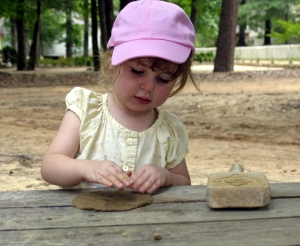
It’s time to rethink play dough.   More than just a playtime toy, play dough can also be a fun addition to your collection of manipulatives to facilitate creative learning. There lots of ways to use play dough as part of your lessons, but first we need to start our learning by making some homemade dough! Let your older children join the fun by having them make the recipe for younger siblings. The older children will get valuable practice in reading a recipe and following directions, as well as proper measuring. Once the play dough is made, you will find that older children will enjoy using it as much as younger ones!

Play Dough

2 cups flour
3 tbsp cream of tartar
1/2 cup salt
4 tbsp oil
1/2 cup boiling water
food coloring
Mix dry ingredients together. Mix oil, food coloring and boiling water in a separate container. Stir liquid mixture until cool enough to knead. Knead until smooth. If play-dough is too dry, add more water, a little at a time. If play-dough is too crumbly, knead in a small amount of oil. Store in an airtight container.

No-Cook Play Dough

4 cups flour
1 cup salt
4 tbsp oil
1 and 1/2 cup water
Mix oil and food color together before adding to dry mixture. Mix until pliable. Keep in container or plastic bag.

Play dough recipes courtesy of Prekinders.com

Now that you have a batch of dough in fun colors, what can you do with it to add educational value?

FIDGET WIDGET – My favorite use for play dough is as a “fidget widget”. A small ball of dough kneaded in an active child’s hands can help them listen more carefully as a lesson is being taught. Having something to hold and squeeze instead of wiggling in a seat or tapping a pencil or foot can help a kinesthetic child concentrate more easily.

COUNTERS – Beginning math students will have fun creating their own counters for the day’s lesson. Line them up and teach ordinal numbers, create patterns with different colors or practice simple addition and subtraction.

ROPE LETTER/NUMBERS – Print a single letter of the alphabet on a sheet of paper, and let your student make a long rope with the dough, then form the letter over the outline on the paper. Your kinesthetic learner will love the hands-on time. Works great with numbers as well.

READING COMPREHENSION – At the start of your read-aloud time, give each child a portion of the play dough Have them create something from the story to share with everyone at the end of the read-aloud session. It could be an important character or item from the story, an aspect of the setting, or a symbol representing something from the reading.

EARLY MATH SKILLS – Play dough is a fun and easy way to teach concepts like large/small, tall/short, etc. Add some fun cookie cutters and you can work on learning shapes.

FINE MOTOR SKILLS – Practice cutting with a small slab of play dough and an extra pair of safety scissors. Little fingers will find play dough much easier to cut and handle than a sheet of paper.

NATURE IMPRESSIONS – Items collected on nature walks often make interesting impressions. You could even create a guess-the-nature-item game based on the impression in the play dough.

Moore Homeschooling Podcast Series

If you haven’t heard thatmom.com’s podcast  interview with Ellen Dana from the Moore Academy, you owe it to yourself to take time to listen.  Ellen Dana, a veteran homeschool mom who was homeschooled herself for a time, talks about the practical application of True Education principles.

New homeschooling parents will be blessed and inspired, and experienced homeschool parents will be re-invigorated.   The podcasts are also available on itunes – look for thatmom’s podcasts 93-100.

Motivation Monday


The Book of Nature

To the little child, not yet capable of learning from the printed page or of being introduced to the routine of the schoolroom, nature presents an unfailing source of instruction and delight.  The heart not yet hardened by contact with evil is quick to recognize the Presence that pervades all created things.  The ear as yet undulled by the world’s clamor is attentive to the Voice that speaks through nature’s utterances.  And for those of older years, needing continually its silent reminders of the spiritual and eternal, nature’s teachings will be no less a source of pleasure and of instruction.

Child Guidance, 45

Read to Me!

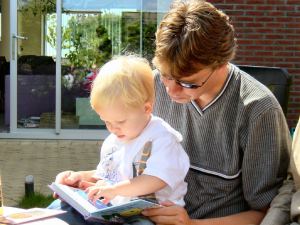
I’d like to share one of the best and most important learning strategies that every family can apply to their homeschool program today. It takes up only a tiny portion of the day but has lasting and profound effects on the entire household. It is fun for all ages and best of all it’s free! What could this amazing learning strategy be? Simple. Reading aloud.

Reading is such a fundamentally important skill. It is the foundation for a strong education. One of the best ways to create a firm foundation for the learners in your home is to start reading to them from the very beginning.

For the very young child, being read aloud to sends a multitude of important messages. The time spent with the reading parent is a vitally important bonding time. The young child gets the message that the act of reading is important, fun, and desirable. Even though the child may not begin to read himself for several years, the underlying knowledge needed for reading success is being developed.

As a child enters his emerging reader years, the act of being read to still maintains a place of importance. Motivation becomes a key factor in reading success and being read aloud to keeps that motivation alive. It shows that reading is important and is a skill valued by the family. While the emerging reader listens, he takes note of the sounds of words, how punctuation is used, and begins to develop a personal vocabulary.

One might think that reading to an older child is not a valuable exercise, but that is far from the truth. Reading aloud may motivate a reluctant reader to try material previously thought too difficult. Reading aloud to older readers also stimulates fluency and vocabulary growth. In addition, taking the time to discuss the reading material is excellent preparation for higher-level critical thinking and writing.

It is so simple! Setting aside a 10-20 minute block of time each day for reading aloud will benefit your family at all levels of learning. What a wonderfully productive way to spend quality time together!


Originally posted on May 19, 2010

Motivation Monday

Allow (children) to help you in every way they can, and show them that you appreciate their help. Let them feel that they are a part of the family firm. Teach them to use their minds as much as possible, so to plan their work that they may do it quickly and thoroughly. Teach them to be prompt and energetic in their work, to economize time so that no minutes may be lost in their allotted hours of work.

CG126


Originally posted May 17, 2010