Blog

The Lesson of Work

Have you ever wondered if teach children to work is really part of their education? Here is some profound admonition on the subject. (Notice the last quote in which work is referred to as school.)

“Parents should awaken to the fact that the most important lesson for their children to learn is that they must act their part in bearing the burdens of the home.” (Adventist Home, p. 285)

“Work is good for children; they are happier to be usefully employed a large share of the time; their innocent amusements are enjoyed with a keener zest after the successful completion of their tasks. Labor strengthens both the muscles and the mind. Mothers may make precious little helpers of their children; and, while teaching them to be useful, they may themselves gain knowledge of human nature and how to deal with these fresh, young beings and keep their hearts warm and youthful by contact with the little ones. And as their children look to them in confidence and love, so may they look to the dear Saviour for help and guidance. Children that are properly trained, as they advance in years, learn to love that labor which makes the burdens of their friends lighter.” (Adventist Home, p. 286)

“If children were taught to regard the humble round of everyday duties as the course marked out for them by the Lord, as a school in which they were to be trained to render faithful and efficient service, how much more pleasant and honorable would their work appear! To perform every duty as unto the Lord throws a charm around the humblest employment and links the workers on earth with the holy beings who do God’s will in heaven.”  (Adventist Home, p. 287)
Motivation Monday

“If children and youth seek to be kind and courteous at home thoughtfulness will become an abiding habit. Every-day politeness will cause them to be always polite. Home is the very place in which to practice self-denial and thoughtfulness to each member of the family; thus it is with the family in heaven, thus it will be when the scattered families of earth are reunited in the heavenly home.”

The Youth’s Instructor, April 14, 1886.

Rest

Mountain Goats at Glacier National Park

“For in six days the Lord made heaven and earth, the sea, and all that in them is, and rested the seventh day: wherefore the Lord blessed the sabbath day, and hallowed it.” Exodus 20:11

Photo Credit: Mountain Kids ©2009 Nathan Clark. Used by permission.

Motivation Monday

“Are you all preparing to become members of the heavenly family? Are you seeking in the home life to be fitted to become members of the Lord’s family? If so, make the home life happy by mutual self-sacrifice. If we want Jesus in our home, let kind words only be spoken there. The angels of God will not abide in a home where there is strife and contention. Let love be cherished, and peace and Christian politeness, and angels will be your guests.”

The Youth’s Instructor, April 14, 1886.

Rest

garden 3

“For in six days the Lord made heaven and earth, the sea, and all that in them is, and rested the seventh day: wherefore the Lord blessed the sabbath day, and hallowed it.” Exodus 20:11

Photo Credit: Garden Peppers © 2011 Nathan Clark. Used by permission.

Courtesy

While you are reviewing the subjects that you have taught your child this year—mathematics, language arts, history, science, Bible—have you included courtesy? It’s time to add courtesy to our list of subjects to teach our children.

“Christian courtesy is the golden clasp which unites the members of the family in bonds of love, becoming closer and stronger every day.” “These thoughtful courtesies that, commencing in our families, extend outside the family circle help make up the sum of life’s happiness; and the neglect of these little things makes up the sum of life’s bitterness and sorrow.”  (Adventist Home, 423 & 428)

Here are some interesting resources for teaching manners.

Of course, the most effective way to teach our children manners and courtesy is by being courteous and well mannered ourselves. “Gentle manners, cheerful conversation, and loving acts will bind the hearts of children to their parents by the silken cords of affection and will do more to make home attractive than the rarest ornaments that can be bought for gold.” (Adventist Home, 426)


”Be kindly affectionate to one another with brotherly love, in honor giving preference to one another;” Romans 12:10

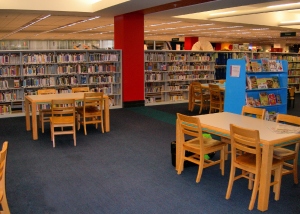
Making Maximum Use of the Library

The local public library can be a homeschooling family’s best resource. Here are some ideas for taking maximum advantage of libraries in your area:

  1. Don’t just try the nearest library, make an effort to visit all of the libraries available to you in your area. Different amenities may be available at each location. Get cards from multiple libraries if necessary. Don’t forget to see if the colleges and universities in your area will allow you to check out materials. Colleges with teacher education programs often have excellent educational materials.
  2. Be sure to pick up fliers listing the resources and activities available at each library. What classes, story times, lecture series and tutoring programs are available?
  3. Take time to meet the children’s librarian as well as the reference librarian. These librarians are excellent resources for unit study ideas and research projects. They can alert you to resources that you may not know about. Share what you are planning to study for the year. Many times children’s and reference librarians are looking for ideas on new books to order, and your curriculum plans may help.
  4. Check to see if your library offers inter-library loans for books and videos.
  5. What online resources does your library offer? Online catalogs are very helpful for searching from the comfort of home. Can you renew your library books online? Does your library give out passwords for special online collections and sites?
  6. If your library does not give receipts for books checked out, make it a habit to have your children complete a library book log to keep track of how many books to return. Assign a child to mark the due date on a calendar as soon as you return home.
  7. Are there conference or meeting rooms available for you to reserve to work on a project? A conference room may be a more comfortable space to work in if you are also bringing younger children along.
  8. Does the library have display space available for larger homeschool projects? Perhaps your library may allow your child to display his science project for a week or two.
  9. Are there special library privileges for teachers that you can also use, such as longer check-out dates, or sets of themed materials. It never hurts to ask!
  10. Are there library-related service projects available for your child to participate in? Sorting books for a book sale, organizing display cases, etc.

Originally posted in November, 2010.