The Joy of Your Journey

If you wander around the internet long enough, you’ll come across some pretty cool homeschool blogs and websites. Those sites will be full of fresh-faced children playing multiple musical instruments, raising show quality livestock and making homemade bread for dinner. Mom’s hair will look great and the kitchen is spotless! Beautiful science projects and well-written reports make you feel a bit envious. You’ll go to bed a bit heavy-hearted, wishing you could have amazing experiences with your children as well.

But you DO have amazing experiences with your children! Didn’t you teach your youngest to tie his shoe this week? Remember the butterfly that landed on a flower close enough for everyone to examine? The joy you shared with your child when he read his first word on his own?

credit: thinkingfountain.org

We must remember to take what we see going on in other homeschool families’ lives with a grain of salt. Most of the time we hear and read about the final result, but we’re not always privy to the process that led to that result. Every family deals with bad days, sickness, burnt dinners and piles of laundry, but that’s not the side we normally show to the world.

Don’t fret if you see what seems to be families living and homeschooling in a way that makes your life seem less than perfect. Remember that one of the main reasons for homeschooling is to provide your family with unique experiences tailored to the needs and interests of your household. Forget about sculpted Roman aqueducts made from hand-dug clay. Embrace the joy of pyramids made from mini-marshmallows and dry spaghetti!




Motivation Monday

“Parents, give your children to the Lord, and ever keep before their minds that they belong to Him, that they are the lambs of Christ’s flock, watched over by the True Shepherd. Hannah dedicated Samuel to the Lord; and it is said of him, ‘Samuel grew, and the Lord was with him, and did let none of his words [the Lord’s words through Samuel] fall to the ground.’ 1 Samuel 3:19. In the case of this prophet and judge in Israel are presented the possibilities that are placed before the child whose parents co-operate with God, doing their appointed work.”

Counsels to Parents, Teachers, and Students, 143

October Newsletter

The October newsletter is now available.  Join our newsletter group to receive new issues automatically and read past issues you may have missed.

Scripture Song Resource

Memorizing scripture is an important part of True Education.   One way to learn new verses is to sing  scripture songs. Wayne Hooper’s Sing A Bible Verse is great resource for learning new scripture songs.   Sing A Bible Verse is free printable sheet music for more than 300 original scripture songs.  If you don’t have a musician in your home, you can find the CDs for these songs at Children’s Ministry Place. The CDs are also available at AdventSource.

Creating a Schedule for the Year

There are no hard and fast rules on exactly how you should organize your family’s homeschool year. That’s the underlying beauty of homeschooling, creating a schedule for the year that fits your family’s needs.

If your state or province requires a particular amount of hours or days of schooling, that is where you can start planning your schedule. For example, if you are required to have 180 days of school, then divide that by the number of days per week you plan to “do school”. Now you know how many weeks of schooling to arrange in your schedule as you see fit.

How many days of schooling each week should you complete? Depends on the age and academic maturity of your children. Younger children may only need two days a week of formal schooling, where older, more independent students can handle 4 or 5 days. Do you have music lessons or homeschool co-op programs to attend? Don’t forget to add those to your schedule.

I happen to live in a state with no required amount of days, so I use the 140 lessons in our math textbooks as the foundation for our schedule. Our family completes the “book work” portion of our schooling for 4 days each week with Fridays saved for informal learning , so now I know that I have to have a minimum of 35 weeks of school to schedule.

When do you want to start your school year? In the US, many families like to start after the Labor Day holiday, when most summer travel and activities have ended. Outside of the US, many start the new school year at the start of the new calendar year. Start your school year when it best fits the needs of your family. We started our new school year the first week of August, because it was too hot for outdoor activities. For us, that means we can enjoy some breaks when the weather gets cooler.

Be sure to add some room in your schedule for catching up and the unexpected. Every 4-6 weeks I add a “catch-up” week to our calendar, where no new lessons or very few lessons are planned. If no catch up time is needed, we have the option to get ahead if things are going well or take a break if needed.

What if a new baby joins the family or an illness, move or unexpected event throws your schedule off kilter? What if you are not finished with your science curriculum and the schedule says the school year is over? Don’t feel pressured to continue if you and your family needs a break. The science curriculum will be waiting when you return. Enjoy family time with baby, or unpack and settle in, get some rest and start fresh when you are ready. Remember that a homeschool schedule is simply a helpful guide to keep you on track. Don’t let it become a harsh taskmaster.

Beyond School-In-A-Box

When a family decides that True Education is their goal, they have chosen to move beyond a “school-in-a- box” approach to homeschooling. True Education is not just a stack of books and lesson plans to complete, it is a complete life focus, not just for the children, but the entire household.

The scope of True Education is much broader and deeper than any publisher’s curriculum outline. True Education is not just about conquering the multiplication table or learning a set of spelling rules. With True Education, there is not just a mind to fill, but also a character to shape, and a body to train for work and service for God- a complete education of the whole person.

Let’s not limit ourselves to what the table of contents in a textbook says we should know. True Education challenges us to strive for more than a perfect score on the SAT. It “embraces more than merely having a knowledge of books. It takes in everything that is good, virtuous, righteous, and holy. It comprehends the practice of temperance, godliness, brotherly kindness, and love to God and to one another.” {CG 297}

Want to know learn more about True Education? Read the chapter 50 of Child Guidance, entitled, “What Comprises True Education”. You can read online at  E.G. White Writings.

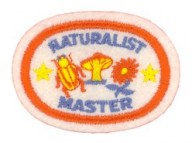
Become a Naturalist Master

Become a Naturalist Master!

How about a fun nature study curriculum for your older student courtesy of Pathfinders! Your student may enjoy becoming a Naturalist Master using the Pathfinder Club honors for a curriculum. Your student will need to complete six of the following honors:

Amphibians

Birds, Advanced

Ferns

Fungi

Insects

Mammals

Moths and Butterflies

Trees

Shrubs

Stars

Weather

and one honor from the following list:

Bird Pets

Cats

Dogs

Fishes

Poultry

Small Mammal Pets

Don’t know enough about fungi to work on the honor? That’s okay, the Adventist Youth Answer Book at Wikibooks is a great resource for completing the honor requirements. If you’d like the patches that go with each honor, ask your pastor to put you in contact with the Area Coordinator for Pathfinder Clubs in your conference.