Motivation Monday

“Our heavenly Father, in giving His Word, did not overlook the children. In all that men have written, where can be found anything that has such a hold upon the heart, anything so well adapted to awaken the interest of the little ones, as the stories of the Bible? ” Child Guidance, p. 514

Motivation Monday

“In His wisdom the Lord has decreed that the family shall be the greatest of all educational agencies. It is in the home that the education of the child is to begin. Here is his first school. Here, with his parents as instructors, he is to learn the lessons that are to guide him throughout life—lessons of respect, obedience, reverence, self-control.” Adventist Home, p. 182

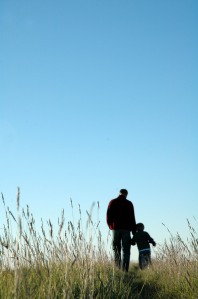
Parent’s Priceless Privilege

The little child that’s by your side is placing trust in you.

He wants to watch just what you do, and then he’ll try it too.

His little hand is placed in yours to lead him in the way.

His voice is waiting now for you to help him sing and pray.

His little mind is seeking truth, so teach him while he’s small.

God gave this precious child to  you – He’ll give you grace for all.

~found in  Rod & Staff preschool activity book

Nature Study Inspiration

Nature Study is mentioned quite often here on Shaping Hearts and Hands.  Nature is a vitally important learning environment, especially for very young learners.  Many families enjoy getting outdoors and seem to naturally pick up on things to explore and do.  Some households are not outdoor-oriented and  getting started in nature study may be harder.  For those who need a bit of inspiration and practical direction in getting started, the Handbook of Nature Study blog is a perfect resource. This fabulous blog by a homeschool mom is one of the best nature study resources you will find on the web.   Using Anna Comstock’s Handbook of Nature Study (available free online) as a foundation, this blog will give you valuable ideas for a weekly outdoor hour as well as seasonal nature challenges and information on creating nature journals. There are lots of great freebies on the sidebar to get you going in the right direction. Now that we are about to experience a change in the seasons, this is a great time to incorporate nature study into your homeschool curriculum.    Exploring the nooks and crannies of this valuable blog will take time, so grab a cup of tea and prepare to be inspired!

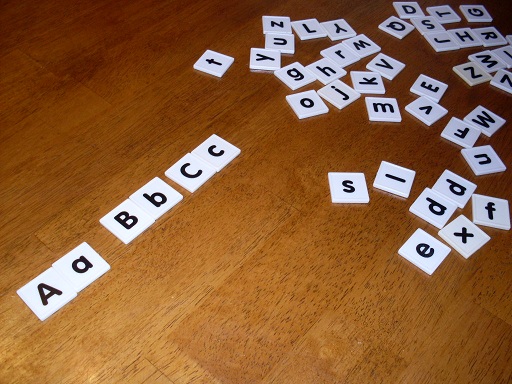
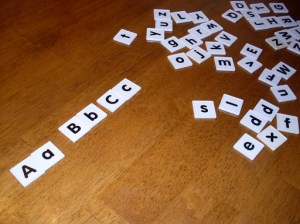
Fun with Letter Tiles!

Letter tiles can be a great learning tool for learning the alphabet, the sounds of the alphabet, as well as spelling.  Some activities you can do with your letter tiles are:

Memory Game – Match upper case and lower case letters by placing tiles upside down and taking turns by turning two tiles over each turn.

Matching – Place a group of tiles of matching letters; example:  t, t, a, a, p, p, b, b. Have child match pairs.

Letter Name Game – Say the letter name and have child find the letter from a selection of tiled letters.

Letter Sound Game – Speak the sound of a letter and have child find the letter from a group of tiled letters.

Spell Names – Spell the names of family members and friends.

Spell simple words (or more complex words, as skill develops) – this can be done by choosing an ending such as “-at” and having the child put different beginning sounds to create new words (word families).

Here are a couple websites for creating some matching activities to use with your letter tiles:

Letter Tile Mats (beginning recognition activities for identifying letters and sounds)

Blank Letter Tile Cards (concept similar to Boggle Jr, but you get to choose the words)

Enjoy some fun activities learning with your child.  If you think of additional ideas that Letter Tiles can be used, please comment and share with us (and each other)!

Seeds + Dirt =

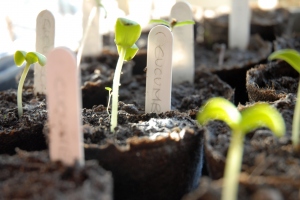
Seeds + Dirt = the beginnings of a great nature study!

 You will find that even  very young children love the idea of helping to grow a plant.   There are lots of options for learning how a seed becomes a plant.   A wet paper towel inside of a sealed sandwich bag is a fun way to watch a seed sprout.   A small pot with soil will create great interest as your child waits for the seed to pop through the soil.  Quick germinating seeds like radishes, melons, or lettuce will be exciting to wait for.   If  you have the space outdoors, a  manageable-sized vegetable or flower garden for the entire family to enjoy is a worthwhile project.

Dropping a seed into soil is more than just a fun school project.  There are valuable character lessons for your children to to learn: responsibility, diligence, perseverance, and more.

“The parable of the sower and the seed conveys a deep spiritual lesson. The seed represents the principles sown in the heart, and its growth the development of character. Make the teaching on this point practical. The children can prepare the soiland sow the seed; and as they work, the parent or teacher can explain to them the garden of the heart, with the good or bad seed sown there; and that as the garden must be prepared for the natural seed, so the heart must be prepared for the seed of truth. As the plant grows, the correspondence between the natural and the spiritual sowing can be continued.”

Child Guidance, 56

Here are a few links to give you inspiration:

My First Garden

Nature Garden Activities

Children in the Garden

Planting a Garden with your Child

The Plant–An Object Lesson in Child Training

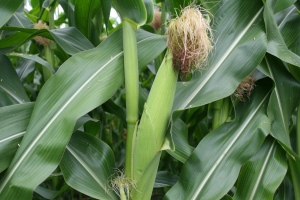
” The gradual development of the plant from the seed is an object lesson in child training. There is “first the blade, then the ear, after that the full corn in the ear.” Mark 4:28.  He who gave this parable created the tiny seed, gave it its vital properties, and ordained the laws that govern its growth.

And the truths taught by the parable were made a reality in His own life. He, the Majesty of heaven, the King of glory, became a babe in Bethlehem, and for a time represented the helpless infant in its mother’s care. In childhood He spoke and acted as a child, honoring His parents, and carrying out their wishes in helpful ways. But from the first dawning of intelligence He was constantly growing in grace and in a knowledge of truth.”

Child Guidance, 27