Great Resource ~ Acorn Math Ideas

Young children love  to collect acorns when playing outdoors and while on nature walks.   Here are some ideas on how to use those ‘treasures’ as  a fun seasonal math manipulative.

Click on the image or the links above to read the ideas.

Nature Study Week ~ Craft Ideas

Creative play ideas that incorporate nature study abound all over the internet.  Here are a few links to get you started.   Click on the source link below each picture to go directly to each site.

Objects found on a nature walk become nature-based crafts.

Source: momenttomomentdk.blogspot.com

15 Crafts Inspired by the Great Outdoors

                                                                 Source: blogs.babble.com

Craft Idea for Toddlers

Make a Bug!

33 Nature Art, Craft and Play Ideas for Kids

How to “Do” Nature Study

The ways to incorporate nature study into your homeschool program are as vast and varied as nature itself. There is no single right way to “do” nature study. My family attempted to keep nature journals, but found that they did not hold our interest as well as creating bug or rock collections, gardening and raising animals. Consider the learning styles of your children when exploring nature study activities or projects.  You can be as simple or detailed as you’d like.  It may take a few tries before you find your nature study niche.

Nature Study Possibilities – each idea is a link that shows an example or gives more ideas.  Check them out!

  1. Nature Journals
  2. Collections – bugs, pressed flowers, seeds, etc.
  3. Gardening – flowers, vegetables, fruits
  4. Seasonal studies – exploring how the change of seasons affects a particular area.
  5. Specific location – natural activity near a spring or stream, in a forest or park, etc.
  6. Birdwatching – in the wild or from feeders at home
  7. Color – study of  color in nature
  8. Mini unit study on one subject
  9. Photography – developing photography skills while enjoying nature
  10. Jr. Naturalist – taking part in classes at a local nature center
  11. Edibles – focus on learning to identify the wild edibles in your area
  12. Checklist – use local field guides to find as many local birds/fish/insects/etc for your area
  13. Specialize – learn all you can about one item
  14. Fine Arts – develop drawing or painting skills while keeping record of things seen
  15. Animal husbandry – learn to keep bees, incubate and hatch ducklings, raise and train a puppy

Nature Study Week ~ The Spirtual Importance of Nature Study

Today we share a collection of inspired quotes that remind us of the spiritual blessings to be gained from nature study.  Be sure to explore the links at the end for easy-to-implement ideas.

An Unfailing Source of Instruction—Next to the Bible, nature is to be our great lesson book. Testimonies For The Church 6:185.

Growth in Grace—Tell your children about the miracle-working power of God. As they study the great lesson book of nature, God will impress their minds. The farmer plows his land and sows his seed, but he cannot make the seed grow. He must depend on God to do that which no human power can do. The Lord puts His vital power into the seed, causing it to spring forth into life. Under His care the germ of life breaks through the hard crust encasing it, and springs up to bear fruit. First appears the blade, then the ear, then the full corn in the ear. As the children are told of the work that God does for the seed, they learn the secret of growth in grace.

Counsels to Parents, Teachers, and Students, 124, 125.
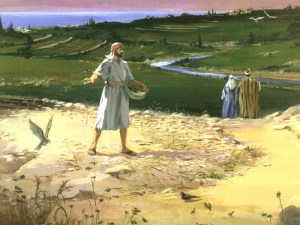
Nature Illustrates Bible Lessons—Many illustrations from nature are used by the Bible writers; and as we observe the things of the natural world, we shall be enabled, under the guiding of the Holy Spirit, more fully to understand the lessons of God’s Word.

Education, 120.

Nature and the Bible Were Jesus’ Textbooks

His [Jesus’] education was gained from Heaven-appointed sources, from useful work, from the study of the Scriptures, from nature, and from the experiences of life—God’s lesson books, full of instruction to all who bring to them the willing hand, the seeing eye, and the understanding heart.

The Ministry of Healing, 400.

His intimate acquaintance with the Scriptures shows how diligently His early years were given to the study of God’s Word. And spread out before Him was the great library of God’s created works. He who had made all things studied the lessons which His own hand had written in earth and sea and sky. Apart from the unholy ways of the world, He gathered stores of scientific knowledge from nature. He studied the life of plants and animals, and the life of man. From His earliest years He was possessed of one purpose; He lived to bless others. For this He found resources in nature; new ideas of ways and means flashed into His mind as He studied plant life and animal life….
Thus to Jesus the significance of the Word and the works of God was unfolded, as He was trying to understand the reason of things. Heavenly beings were His attendants, and the culture of holy thoughts and communings was His. From the first dawning of intelligence He was constantly growing in spiritual grace and knowledge of truth.
Every child may gain knowledge as Jesus did. As we try to become acquainted with our heavenly Father through His Word, angels will draw near, our minds will be strengthened, our characters will be elevated and refined.

The Desire of Ages, 70.

Ideas for adding a spiritual component to your nature study:

Bible verses to add to a winter or spring nature journal –  Look under “Winter Journal” and “Spring Journal”

My Bible First : Nature Corner –  Nature object lessons with a Bible verse.  Great for copywork! **SDA resource

Child’s Nature Journal example with Bible verse

Clouds in the Heavens– Nature unit study based on Psalms 19:1.  Free nine-page printable.

Nature Provides Object Lessons –  A simple activity that lays the foundation of a wonderful Bible/nature study. **SDA resource.

Tomorrow:  How to “DO” nature study.

Making Maximum Use of the Library

The local public library can be a homeschooling family’s best resource. Here are some ideas for taking maximum advantage of libraries in your area:

  1. Don’t just try the nearest library, make an effort to visit all of the libraries available to you in your area. Different amenities may be available at each location. Get cards from multiple libraries if necessary. Don’t forget to see if the colleges and universities in your area will allow you to check out materials. Colleges with teacher education programs often have excellent educational materials.
  2. Be sure to pick up fliers listing the resources and activities available at each library. What classes, story times, lecture series and tutoring programs are available?
  3. Take time to meet the children’s librarian as well as the reference librarian. These librarians are excellent resources for unit study ideas and research projects. They can alert you to resources that you may not know about. Share what you are planning to study for the year. Many times children’s and reference librarians are looking for ideas on new books to order, and your curriculum plans may help.
  4. Check to see if your library offers inter-library loans for books and videos.
  5. What online resources does your library offer? Online catalogs are very helpful for searching from the comfort of home. Can you renew your library books online? Does your library give out passwords for special online collections and sites?
  6. If your library does not give receipts for books checked out, make it a habit to have your children complete a library book log to keep track of how many books to return. Assign a child to mark the due date on a calendar as soon as you return home.
  7. Are there conference or meeting rooms available for you to reserve to work on a project? A conference room may be a more comfortable space to work in if you are also bringing younger children along.
  8. Does the library have display space available for larger homeschool projects? Perhaps your library may allow your child to display his science project for a week or two.
  9. Are there special library privileges for teachers that you can also use, such as longer check-out dates, or sets of themed materials. It never hurts to ask!
  10. Are there library-related service projects available for your child to participate in? Sorting books for a book sale, organizing display cases, etc.

Originally posted in November, 2010.

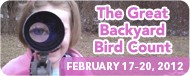
The Great Backyard Bird Count 2012

The Great Backyard Bird count is a fun way  to incorporate nature study into your program and make a contribution to science at the same time!

The Great Backyard Bird Count is an annual four-day event that engages bird watchers of all ages in counting birds to create a real-time snapshot of where the birds are across the continent. Anyone can participate, from beginning bird watchers to experts. It takes as little as 15 minutes on one day, or you can count for as long as you like each day of the event.

Click on the image to head over to the GBBC website where you can learn more about the count, download activity pages and tally sheets and learn more about birds in preparation for the count.

The Great Backyard Bird Count takes place February 17-20, 2012. Why not use the Adventurer Feathered Friends award and the Pathfinder Birds and Birds-Advanced honors to turn the bird count into a fun unit study?

Fun Links for July


It’s summer time in the USA. Summer is a great time to get the family into the great outdoors. Go hiking. Go canoeing. Go camping. Go swimming. Have bonfires and hotdog roasts. You name it. Don’t let the summer fly past without making some good memories with your family this year. Here are a few links with ideas of things you can do to make your summer more memorable.

Parks and Campgrounds has links for 10,000 campsites worldwide.

The National Park Service not only provides a way to reserve a campsite at any National Parks in the USA, but also has lots of interesting history and natural history about many of the parks. Be sure to check out the section on Junior Rangers. Your children will love earning pins or badges as they learn more about the parks that you visit.

While you’re camping or hiking, be sure to take time to learn about the nature around you. Take your magnifying glasses and binoculars. And take your favorite field guides. If you don’t own field guides, eNature provides some great online field guides. When you’re done looking through this blog post at Wonder in the Woods, you’ll have too many ideas of fun nature study to do while camping. Whatever you do, don’t forget your water bottle!

If you want to make sure everything you do counts for school, then check out all of the Pathfinder honors you can earn while camping: Camping Skills 1, 2, 3, 4 and Camp Craft.

So it’s time to get out the tent and the sleeping bags and take your kids camping. You’ll make memories that you and your children will cherish for the rest of your lives.