What a family project really accomplished.
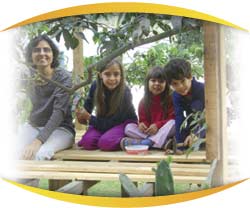
“The best test of the Christianity of a home is the type of character that results from its influence. The very first work of parents is to secure the blessing of God in their own hearts, and then bring this blessing into their homes.
God commanded the Hebrews to teach their children His requirements, and to make them acquainted with all His dealings with their fathers. This was one of the special duties of every parent,—one that was not to be delegated to another. In the place of stranger lips, instruction was to come warm from the loving hearts of father and mother. Thoughts of God were to be associated with all the events of daily life; the mind was to be trained to see God alike in the scenes of nature and the words of revelation.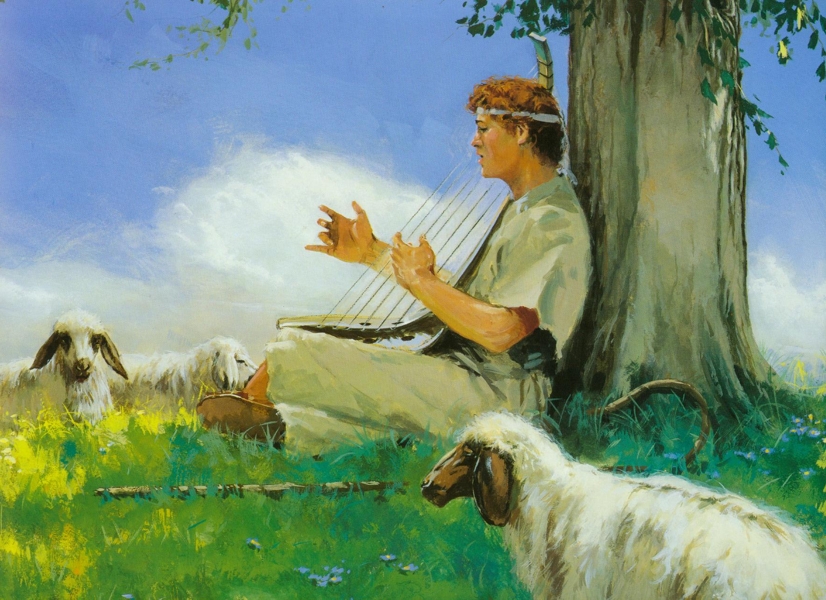
Such was the training of Moses in the lowly cabin home in Goshen; of Samuel, by the faithful Hannah; of David in the hill dwelling at Bethlehem; of Daniel, before the scenes of the captivity separated him from the home of his fathers. Such, too, was the early life of Christ at Nazareth; such the training by which the child Timothy learned from the lips of his “grandmother Lois and his mother Eunice” the truths of Holy Writ.”
The Bible Echo – October, 1894
 “Parents, who are the responsible agencies in the home life, should set their children a godly example, learning daily lessons of duty and obedience to God’s requirements. They should themselves become missionaries. They should consecrate themselves entirely to God, remembering that the greatest work that devolves upon them is to train their children to be Christlike, faithful soldiers. This should be the essential work of their life, and, by training their children, they will be constantly repeating the lessons they have learned in their youth, and thus the wise, God-fearing parents will diffuse an influence from their own home circle to that of others that will act as did the leaven that was hid in three measures of meal. Home missionary work is the highest service that parents can render to God.”
The Signs of the Times – September 17, 1894

“Are you all preparing to become members of the heavenly family? Are you seeking in the home life to be fitted to become members of the Lord’s family? If so, make the home life happy by mutual self-sacrifice. If we want Jesus in our home, let kind words only be spoken there. The angels of God will not abide in a home where there is strife and contention. Let love be cherished, and peace and Christian politeness, and angels will be your guests.”
The Youth’s Instructor, April 14, 1886.
While you are reviewing the subjects that you have taught your child this year—mathematics, language arts, history, science, Bible—have you included courtesy? It’s time to add courtesy to our list of subjects to teach our children.
“Christian courtesy is the golden clasp which unites the members of the family in bonds of love, becoming closer and stronger every day.” “These thoughtful courtesies that, commencing in our families, extend outside the family circle help make up the sum of life’s happiness; and the neglect of these little things makes up the sum of life’s bitterness and sorrow.” (Adventist Home, 423 & 428)

Here are some interesting resources for teaching manners.
Of course, the most effective way to teach our children manners and courtesy is by being courteous and well mannered ourselves. “Gentle manners, cheerful conversation, and loving acts will bind the hearts of children to their parents by the silken cords of affection and will do more to make home attractive than the rarest ornaments that can be bought for gold.” (Adventist Home, 426)
”Be kindly affectionate to one another with brotherly love, in honor giving preference to one another;” Romans 12:10
 “The disposition and habits of youth will be very likely to be manifested in mature manhood. You may bend a young tree into almost any shape that you choose, and if it remains and grows as you have bent it, it will be a deformed tree, and will ever tell of the injury and abuse received at your hands. You may, after it has had years of growth, try to straighten the tree, but all efforts will prove unavailing. It will ever be a crooked tree.
This is the case with the minds of youth. They should be carefully and tenderly trained in childhood. They may be trained in the right direction or in the wrong, and in their future lives they will pursue the course in which they were directed in youth. The habits formed in youth will grow with the growth and strengthen with the strength….”
Counsels to Parents, Teachers and Students p.81
Often, we consider the influence of adults on children, but have you recently considered that children are also to be teachers of adults? Today, I would like to specifically address the children in their responsibility to be good teachers.
Jesus said, “Verily I say unto you, Except ye be converted, and become as little children, ye shall not enter into the kingdom of heaven.” (Matthew 18:3) Parents/teachers/adults are to observe children and become more like them, according to Jesus. Children, are you teaching the adult world what it means to be a child of the King? I don’t know about you, but I have observed several children over my lifetime, and have concluded that some children much more readily represent the kingdom of heaven.
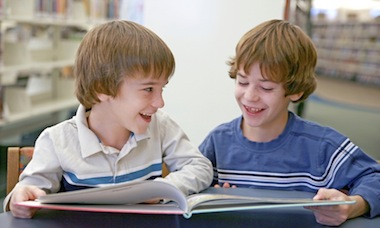
Over the past weeks, I have become more acquainted with a non-Christian lady that lives nearby. She has visited our home quite a few times. I have noticed that she has been observing my children closely. My children haven’t necessarily been noticing how closely she observes them, but I have been watching. She has observed that we pray when we eat. She has observed that my children don’t even know about some of the pop stars that she talks about. She’s learned that we attend church on the Sabbath. She has told her whole family that my one and a half year old sings “Jesus Loves Me” all day long. She has observed that my children have learned to do dishes and do helpful things around the house. She has children about the same age as my children, who haven’t learned yet to do these helpful chores. She also observes when my children obey immediately and when they delay. She observes when they are kind to each other and when they have arguments. She observes when the speak respectfully or disrespectfully to me or to each other or to her. I have noticed her just watching what my children are doing. What is she thinking? Is she thinking, I want my children to be Christians, like these children? Is she realizing that Christ changes the heart of even children who give their hearts to Him? Or is she thinking that the profession of Christianity in our home is a facade? These are the questions that I have been wondering.
Children, you have an opportunity to teach others about Jesus, that adults don’t have. The only way, however, that you can teach others about how wonderful Jesus is, is if you act like Him. If you reflect the love of Jesus, those who have never known Jesus will look at you and say to themselves, “If Jesus can make this child into such a nice one, then I want Jesus.” So, children, what are you teaching others about Jesus? If you have not chosen Him to come in and change your life, please do so today. You will make a difference on the world perhaps even more profound by being a Christian today, than you will be able to in your adult life.
“A well-ordered Christian household is a powerful argument in favor of the reality of the Christian religion—an argument that the infidel cannot gainsay. All can see that there is an influence at work in the family that affects the children.” (Adventist Home, p. 36)
What kind of teacher are you?

 The Adventist Home Educator