An Uncertain Sound…

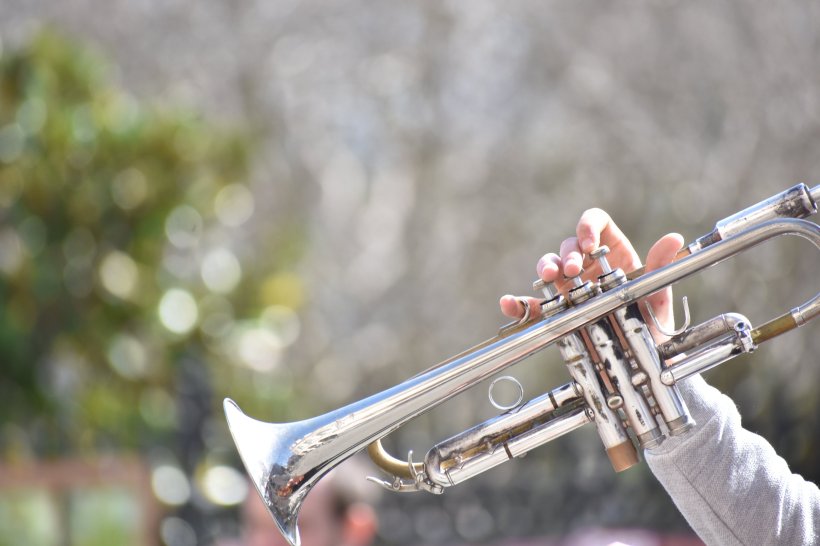
“For if the trumpet give an uncertain sound, who shall prepare himself to the battle?” 1 Corinthians 14:8

My heart was drawn to this text this morning. While in context, this portion is speaking about speaking in tongues, I was drawn in my thinking to look at the battle ahead. My thoughts went to the three angels’ messages and how if we are not prepared, how will we be able to share the messages. As we raise up our children, are we not to train them up for the battle ahead?

There is an important work to be finished in the last days. We know it, we claim it, but do we live it? Are we living to prepare ourselves, and our children, for these events on the horizon? As homeschooling parents, do we have this battle in mind as we go through our days? Are we preparing them in their education to face this battle? Are we giving them the tools? Are we teaching them knowledge that they can use to share the message of Jesus with others? Are we helping them develop a character that is worthy to declare the messages that Jesus is coming soon?

Or rather, are we a trumpet with an uncertain sound? Are we jumping from program to program? Are we continually looking for the next best curriculum that is fancy and colorful to get their attention? Where are our attentions? Are they on our children? Or are they on visiting social media to find the next best thing out there? Are we so busy that we don’t have time to prepare and rather just survive each day doing the minimum possible just to check it off our list so we can get to other fun stuff in our days?

There are many good things out there, but often times we get so busy with the fun, new, exciting things, that we forget our calling to prepare our children for the battle ahead. Is your focus clear? Is your battle plan understandable? Do you know what trumpet sound you need to prepare your children for? How much of our focus is on this soon coming event?

This verse today, really spoke to me. Am I being a clear sounding trumpet to my children? Am I understandable? Am I declaring the Lord’s messages to my children, all day long, so they are prepared for the times ahead? Am I focusing on their character? Am I giving them knowledge so that they may be better prepared for this season? Or am I spending too much time bumping shoulders with others that I forget the vision the Lord has put in front of me? Do my educational methods prepare my children with understanding that they can stand alone (without my guidance) and do the work of the Lord?

This verse certainly brought a lot of thoughts to my mind. Did it strike a cord with you? “For if the trumpet give an uncertain sound, who shall prepare himself to the battle?” 1 Corinthians 14:8

On Thursdays, we will begin to focus on preparation, here at The Adventist Home Educator. It’s a perfect day, as it is preparation day, and a perfect day to not only prepare for the Sabbath, but to do a little self-check and see how we are doing with our battle plans. May we keep in mind the fight that is before us.
Happy Sabbath!

Growing in the Garden: Determinate or Indeterminate

Tomatoes – Determinate or Indeterminate

Did you know there are two distinct types of tomatoes?  Tomatoes grow in two different ways.  The two types of plants are referred to as determinate and indeterminate tomatoes.  Here are some differences that I have found.

Determinates grow for their growing period and put on fruit all at once.  The plant has a definite limit to its growing capacity or ability to put on fruit.  This is a type of tomato that you would like to have in your garden if you are choosing to can your tomatoes.  You will get a large crop all at once.  They do well being supported with tomato cages.

wp-image-423967573jpg.jpeg

Indeterminates do not have a limit to its growing capacity, except by its external physical limitations.  Indeterminates will continue to grow, as long as they are supported and the weather allows.  These vines have been known to grow up to 12 feet or longer.  They grow best with a strong support system so the long vines do not break.  These plants put on tomatoes at regular intervals, so if you only have a couple plants, you will need to be creative with your planning for preserving your tomatoes.  If you have a lot of these plants, you will have a continuous supply of tomatoes for processing, eating fresh, and sharing.

What type of tomato plant you choose will be largely determined by your garden space, your ability to support the plant and your plans for the fruit.

I find that for canning, I like a paste or Roma tomato or a smaller round tomato like Marglobe.  Many of these are determinates (but not all of them).  I like the determinate varieties because they all come ripe at one time so I can pretty much be done with tomatoes in a 2 week period of time.  This is wonderful for canning purposes.

For fresh eating, I like to have tomatoes over a longer period.  I have found that indeterminate varieties are wonderful for this purpose.  As long as you keep the tomatoes picked, they seem to continue to produce until the end of your growing season.  These plants are good to get in early in your garden season so you have a longer continuous supply.

Over the years, the seed companies did not always (and still do not) mention whether a tomato variety is a determinate or an indeterminate type of growing tomato. Gardeners would get jealous over their neighbor’s tomato plants that grew 10 feet tall, while their own remained at a meager 4 feet height.  Others watched as some picked a large crop for canning purposes and they were struggling to find enough tomatoes to get a batch for canning.   I have been in both categories and it wasn’t until the last couple years that I finally discovered this interesting fact about tomatoes.

So, what can we learn from the types of tomatoes?

We each have different styles of growing and producing fruit.

A typical evangelistic campaign of sending out flyers and having a 3-4 week long session of meetings produces a crop of believers that we work with to produce a harvest.  Does it work?  Yes.

We also have another style of witnessing in which we put out feelers and have Bible studies with a smaller group, but on a more continuous basis.  It produces fruit often in smaller quantities, but in a more continual pattern. Does this work?  Yes.

In our homeschool setting, we will find that some children thrive with a large motivated project while others thrive with smaller more steady forms of input and output expectations.

Each style has its own type of work associated with it and its own expected response of success.  I have learned there are benefits to the two different types of tomatoes for my home garden.  I believe there are also benefits to the different styles of sharing Jesus with those we meet, to the learning styles within our families/homeschools, and to the style of teaching (sometimes switching it up is better for obtaining a different response). Knowing the growing style of the plant helps you to care for it better; knowing the learning styles of those around us, helps us to help them grow better, as well.

To learn more about determinate and indeterminate tomatoes, see the link below:

Should You Grow Determinate or Indeterminate Tomato Plants? 

Please share more spiritual insights that determinate and indeterminate tomatoes bring to mind with you in the comments below.

Growing in the Garden: Rhubarb

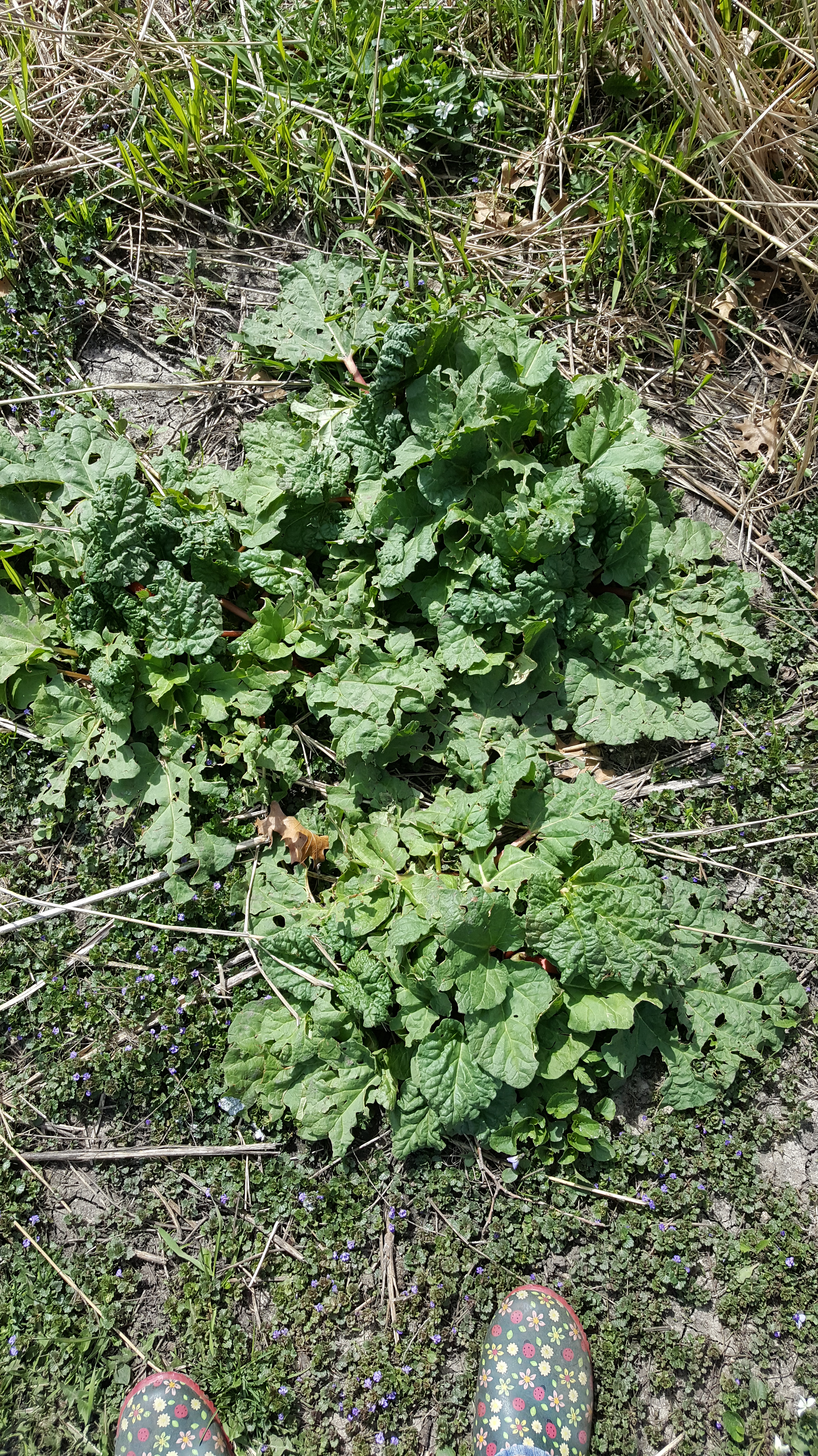
Old patch of rhubarb, 3 plants

While working at Farmer’s Market several years ago, we met another vendor who shared with us a great tip for reviving an old patch of rhubarb.  I hadn’t had a chance to try it out until last year and I am pretty excited about the results!

Tip:  Rhubarb plant roots will continue to thicken and twist around one another.  Heavy picking can increase the timing of this process.  This will decrease the productivity of the plant.  To keep the plant healthy and to increase yields, you will want to dig up the roots and divide your plant in early spring…just as the buds are coming up, but before leaves begin to open.

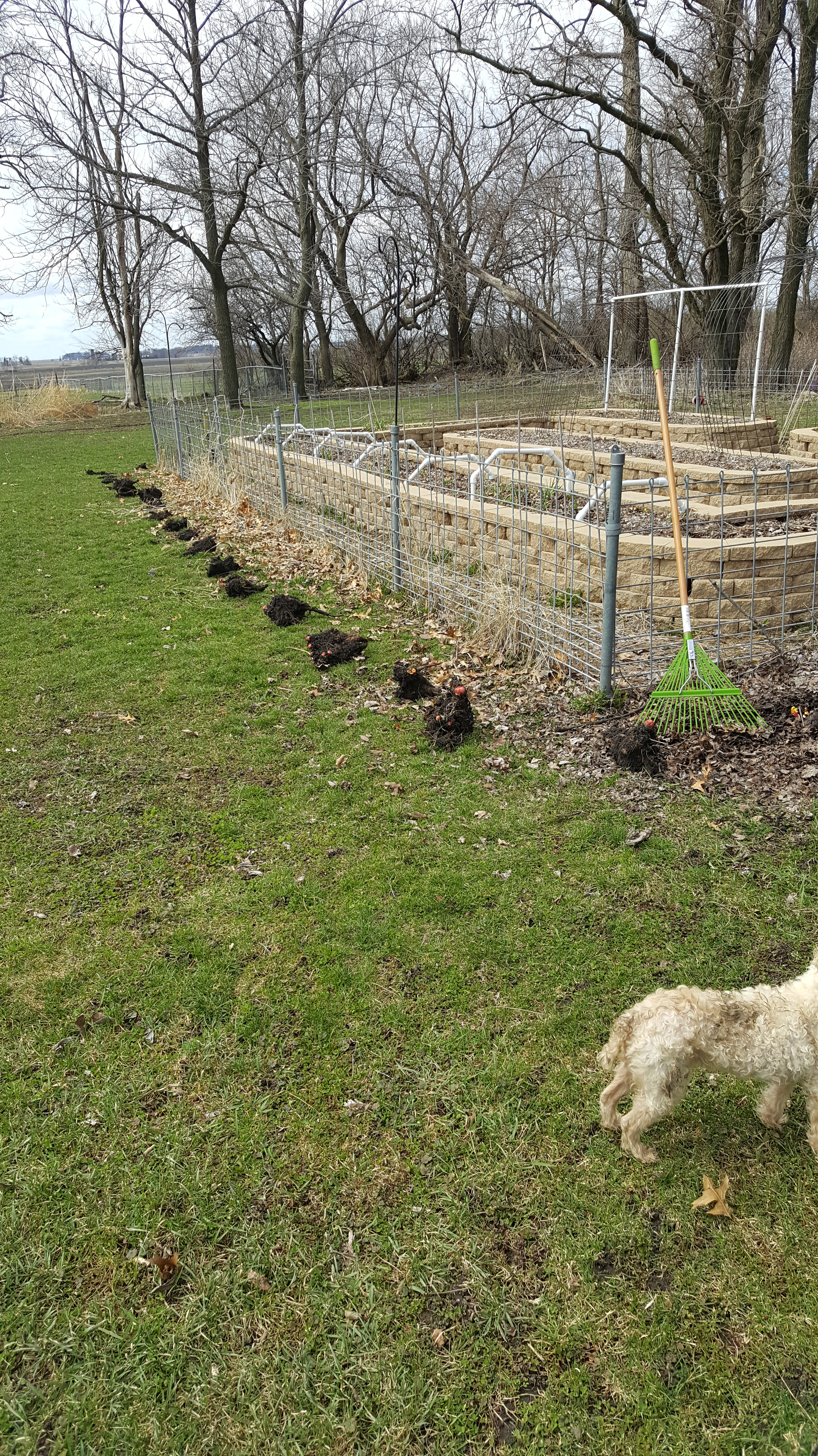
Last year I divided two older plants into 10 new plants.  (If you have no room for that many new plants, consider giving some away to your neighbors or friends).  This year I divided 3 plants into 20.

You will need to dig about a foot away from the plant and dig down at least a foot to 18 inches to get underneath the established roots of the plant you intend to divide.  After digging it up, you will want to divide it into smaller pieces.  Twist the roots to try to divide with minimal breaking.  I found I still heard roots breaking and snapping off, but the plants still all grew back.  I tried to keep each clump with at least one bud (up to 2-4 buds) with some roots connected to it.  Plant in a new hole, like you would for a bush, dig a hole twice as wide and much deeper so that the soil is not as compacted around the new transplant.  Keep the buds at ground level as they were before. Fill soil under and around the transplant.  Rhubarb enjoys full sun and even partial shade (if you are trying to figure out where to place them in your yard).

This first year, do not pick from the new plants, let them get established.  The second year, pick lightly so you do not stress the transplant.  The third year you can pick as heavily as desired.

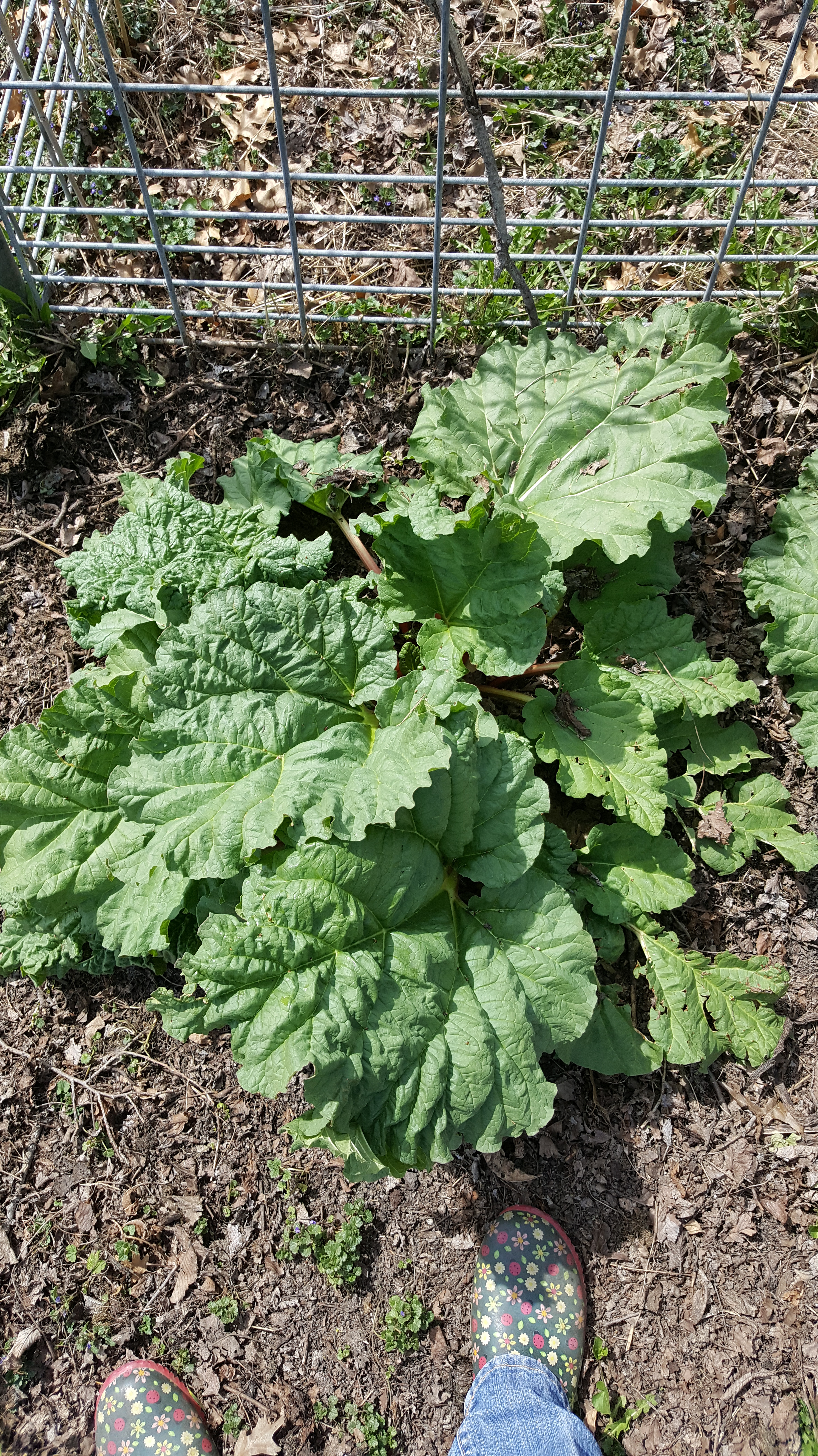
I stood the same distance from an old patch above (first picture in this post) and the 2nd year transplants below.  You can visibly see how much healthier the transplant is.  It has larger leaves and longer thicker stems.

I thought of a few spiritual applications as I was writing this post.  I will share a couple below, but I invite you to comment additional thoughts, as well.  This helps all of us to recognize spiritual thoughts in nature/gardening and we can share these with our children, too.

*We can wear ourselves out by too much work and not enough rest, just like over-picking can decrease the productivity of a rhubarb plant.

*Challenges in our lives can be like the dividing of the plant and help us grow to be more productive.

*It reminds me of the Stewardship of Talents found in Matthew 25:14-30.

* One plant can supply our family with a couple rhubarb desserts or a batch or two of jam .  If I divide that plant into 5, I now can share with others and still have plenty for us at home.   When I share of what the Lord has given me, He will bless what is left and often you will find what’s left is enough to supply our needs.

Please share your additional thoughts below.

Growing in the Garden, Introduction

As in the case with most things we tackle, if we stand back and look, we find there are many lessons to be learned and pondered in just about everything we attempt.  One place we are told there are many ways to learn is in the garden.

wp-image-814947476jpg.jpeg

The system of education instituted at the beginning of the world was to be a model for man throughout all aftertime. As an illustration of its principles a model school was established in Eden, the home of our first parents. The Garden of Eden was the schoolroom, nature was the lesson book, the Creator Himself was the instructor, and the parents of the human family were the students. Education p. 20 (read entire chapter)

For the first eight or ten years of a child’s life the field or garden is the best schoolroom, the mother the best teacher, nature the best lesson book. Education p. 208

In their gardening, question them as to what they learn from the care of their plants. As they look on a beautiful landscape, ask them why God clothed the fields and woods with such lovely and varied hues. Why was not all colored a somber brown? When they gather the flowers, lead them to think why He spared us the beauty of these wanderers from Eden. Teach them to notice the evidences everywhere manifest in nature of God’s thought for us, the wonderful adaptation of all things to our need and happiness. Education p. 119

We are starting a new series on our blog about gardening called “Growing in the Garden”.  In this series, we hope to share some simple gardening advice and some object lessons that can be learned with some observations in the area we are mentioning.  We would love to hear your thoughts, so feel free to add to the comments any added discussion on the topics presented.  The challenge is for us to learn to recognize true learning and how to teach with real experiences in the garden.

We are open to submissions in this series, if you would like to write about some of your gardening experiences.  Submissions from parents and your children (students) are welcome.  Please contact Ann for more information on how you can share your experiences.  Just email adventisthomeducator@gmail.com and we will forward any blog requests to her.

SonLight Education Downloads Update

11188238_410675309117355_1814140339859068805_n

We have an update.  Lesson 10 of the 2-8 Grade Lessons has been scanned and uploaded to the Google Drive.  This is a scan of the masters; it has not been revised.  I added folders in the 2-8 Grade Lessons that say “Unrevised – Scanned Older Books”.  This is the folder in which you will now find Lessons 9 and 10.  They are in the subject folders.  We hope this is not too confusing for you.  Click for the link to the Google Drive.

Please let us know if you have trouble finding the materials.  Happy Teaching!


SonLight Education Ministry Update

11188238_410675309117355_1814140339859068805_n

We have completed scans of Lesson 9 of the 2-8 Grade Lessons.

They are available on the Google Drive at this time.  You will find them by clicking the link and then looking for the folder for 2-8 Grade Lessons.  Each subject should now have 9 lessons.

Feel free to share with those who would like to know!