Fun Links for April

Many homeschool families like to add missions/missionaries units to their world history or geography lessons.  Here are some great resources to help you create a custom  unit or year-long study of missions/missionaries.  Seventh-day Adventist resources are marked with an *.

Missionary Stories for Kids – A Squidoo page with lots of ideas and links for biographies of missionaries.

Teaching with God’s Heart for the World – A free year-long curriculum that incorporates world missions with other subjects.

Missions and Missionaries Unit Study – Resources and ideas from Eclectic Homeschool Online.

Resources for Parents and Teachers from Wycliffe Bible Translators

*Maranatha Volunteers International – Lots of inspiration for hands-on mission work.  Free DVDs available.

*Adventist Missions– Lots of ideas and resources.  Be sure to check the past children’s quarterlies for games, puzzles and recipes.

*Adventist Frontier Missions– Inspiring first-hand accounts of reaching the unreached.

*CIRCLE : Browsing Adventist Missions – A page full of Adventist mission websites and resources.

*Visionary for Kids – Online kids magazine issue focusing on Adventist missions.


Nature Study Ideas for Older Students

Many times when nature study is discussed as a part of homeschooling, it is within the context of introducing nature to younger children. We often think of nature study as helping small children to understand the natural world around them. What about middle and high school aged students? How can we make nature study attractive to them? It just might be that we are not thinking creatively enough. Nature study with older students is not just about getting out in nature, but about combining their interests and abilities with the enjoyment of nature.

Photography- Whether it’s learning the art of closeup botanical shots or action shots of nature, many older students will eagerly get out in nature if a camera is put in their hands.

Fine Art- Your artistic older student may enjoy time learning to draw or paint plants or landscapes. A series of works featuring a particular plant or animal makes a great project that combines both art and science.

Birdwatching- Birdwatching can be as simple or involved as you desire to make it. Add in photography, drawing or painting and creating bird-friendly habitats, and the list of activities is nearly endless.

Beekeeping- Just recently in my area there was a news report of a car being swarmed with bees. The certified beekeeper who came to collect the bees was a 17-year-old young man with his own business. Many beekeeping clubs are actively looking for young people to join and learn to keep the craft from dying out.

Hiking- What better way to enjoy nature up close and personal? Most areas of the country feature hiking/trekking clubs that also teach orienteering skills and can introduce your student to new areas to explore.

Canoeing/Kayaking – The physical exercise of canoeing is just an added benefit to the fun of enjoying nature from the vantage point of the water.

Astronomy- A quality telescope may be all your student needs to become interested in the stars. It also an excellent science study.

Gardening- Be it flower or vegetable gardening, perhaps your student is happy digging in the soil. Why not encourage your student’s green thumb?

Animal -Care/Training- Raising a service animal might be a good idea for a disciplined young person. There are also often opportunities to do volunteer work in a local shelter or rescue facility. There are also many nursing homes that might appreciate a young person bringing a well -trained pet to visit with the residents.

For older students, nature study can often be combined with other activities to create very enjoyable learning and service opportunities. Some of these activities may lead your student to a not just an enjoyable hobby, but also a lifelong career.
Weimar College Days

Weimar College Days

April 17-18, 2011

Come join us for College Days on the lovely campus of Weimar College!  Take a tour of the campus, sit in on a class, and visit with the students  and faculty. You’ll feel closer to God in nature while hiking up the beautiful trails surrounding our area.  We look forward to seeing you!

To reserve your complimentary room at Weimar Inn:  Contact Cyndi Keiser (530) 422-7923

Helpful Links for March

Planning a study  of Adventist pioneers ?  This gallery of drawings of Adventist pioneers will be helpful to your study.  Adventist Pioneer Library has a nice page with brief biographical sketches and pictures as well.   If you are also creating a timeline of church history,  here’s a sample parallel timeline showing key events in US history, world history and SDA church history.  Makes a great model to help your student create their own parallel timeline.

If you are looking for ideas and resources to do a Christian character traits lapbook or unit study, the Character lapbook page at Homeschool Share has some great ideas and printables to get you started.

It’s always handy to have a source for math drill worksheets.   Math-drills.com has thousands of free printable worksheets on many different math topics.

Nature Study Inspiration

Nature Study is mentioned quite often here on Shaping Hearts and Hands.  Nature is a vitally important learning environment, especially for very young learners.  Many families enjoy getting outdoors and seem to naturally pick up on things to explore and do.  Some households are not outdoor-oriented and  getting started in nature study may be harder.  For those who need a bit of inspiration and practical direction in getting started, the Handbook of Nature Study blog is a perfect resource. This fabulous blog by a homeschool mom is one of the best nature study resources you will find on the web.   Using Anna Comstock’s Handbook of Nature Study (available free online) as a foundation, this blog will give you valuable ideas for a weekly outdoor hour as well as seasonal nature challenges and information on creating nature journals. There are lots of great freebies on the sidebar to get you going in the right direction. Now that we are about to experience a change in the seasons, this is a great time to incorporate nature study into your homeschool curriculum.    Exploring the nooks and crannies of this valuable blog will take time, so grab a cup of tea and prepare to be inspired!

Seeds + Dirt =

Seeds + Dirt = the beginnings of a great nature study!

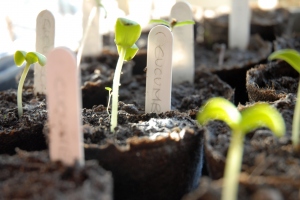
 You will find that even  very young children love the idea of helping to grow a plant.   There are lots of options for learning how a seed becomes a plant.   A wet paper towel inside of a sealed sandwich bag is a fun way to watch a seed sprout.   A small pot with soil will create great interest as your child waits for the seed to pop through the soil.  Quick germinating seeds like radishes, melons, or lettuce will be exciting to wait for.   If  you have the space outdoors, a  manageable-sized vegetable or flower garden for the entire family to enjoy is a worthwhile project.

Dropping a seed into soil is more than just a fun school project.  There are valuable character lessons for your children to to learn: responsibility, diligence, perseverance, and more.

“The parable of the sower and the seed conveys a deep spiritual lesson. The seed represents the principles sown in the heart, and its growth the development of character. Make the teaching on this point practical. The children can prepare the soiland sow the seed; and as they work, the parent or teacher can explain to them the garden of the heart, with the good or bad seed sown there; and that as the garden must be prepared for the natural seed, so the heart must be prepared for the seed of truth. As the plant grows, the correspondence between the natural and the spiritual sowing can be continued.”

Child Guidance, 56

Here are a few links to give you inspiration:

My First Garden

Nature Garden Activities

Children in the Garden

Planting a Garden with your Child

The Plant–An Object Lesson in Child Training

” The gradual development of the plant from the seed is an object lesson in child training. There is “first the blade, then the ear, after that the full corn in the ear.” Mark 4:28.  He who gave this parable created the tiny seed, gave it its vital properties, and ordained the laws that govern its growth.

And the truths taught by the parable were made a reality in His own life. He, the Majesty of heaven, the King of glory, became a babe in Bethlehem, and for a time represented the helpless infant in its mother’s care. In childhood He spoke and acted as a child, honoring His parents, and carrying out their wishes in helpful ways. But from the first dawning of intelligence He was constantly growing in grace and in a knowledge of truth.”

Child Guidance, 27